Margaret Thatcher Becomes the First Woman to Lead the British Conservative Party
1975 · London, United Kingdom
Margaret Thatcher becomes the first woman to lead the British Conservative Party.
November 28, 1919
Lady Astor becomes the first woman to take her seat as a Member of Parliament in the British House of Commons, representing the Plymouth Sutton constituency. Her election marked a significant moment in women's political history in the UK, paving the way for future female politicians.
London, United Kingdom | British Parliament
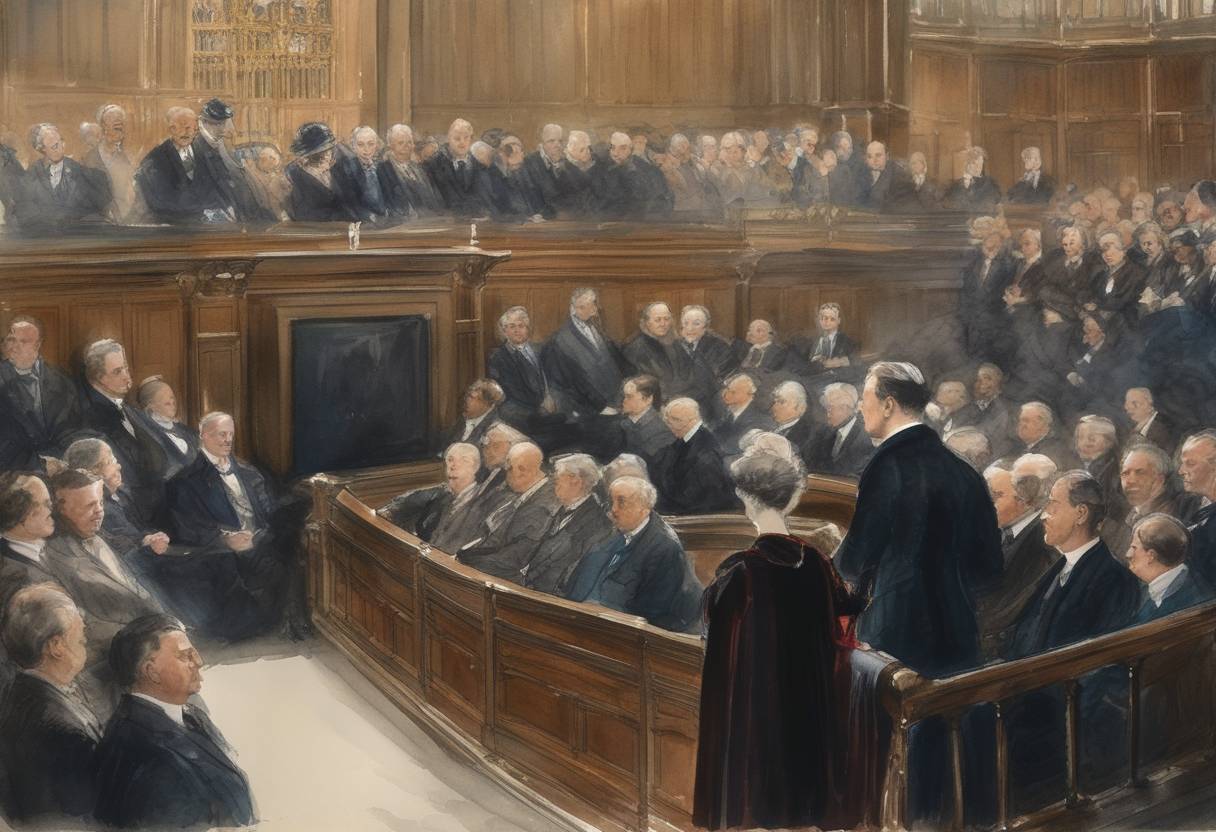
On November 28, 1919, Viscountess Nancy Astor made history as she became the first woman to take her seat in the British House of Commons. Representing the Plymouth Sutton constituency, her election symbolized a groundbreaking moment in the political landscape of the United Kingdom, reflecting the shifting attitudes towards women’s roles in society and governance after World War I.
Lady Astor was born Nancy Witcher Langhorne in 1879 in Virginia, USA. She married Waldorf Astor, an American-born British politician, in 1906. When her husband succeeded to the peerage and joined the House of Lords in 1919, his seat in the Commons, representing Plymouth Sutton, was vacated. Encouraged by her husband and supporters of the Conservative Party, Lady Astor campaigned and subsequently contested the by-election, which she won on November 28, 1919.
Her entry into Parliament was not without its challenges. The political environment of the time was heavily male-dominated, and Lady Astor faced skepticism and resistance from some of her male colleagues. Despite such hurdles, she utilized her platform to advocate for social issues, including child welfare, education, and the fight against alcohol abuse. Her American background and outspoken personality made her both a charismatic and sometimes controversial figure.
Lady Astor’s election marked a pivotal shift in the history of British politics. It came a year after the Parliament (Qualification of Women) Act 1918, which allowed women to stand for election to the House of Commons for the first time. Though not the first woman elected (that was Constance Markievicz, who did not take her seat), Astor’s assumption of her position made her a visible and influential role model for women in politics.
Her presence in Parliament helped foster a gradual change in public perception about women’s capabilities in leadership roles. Over the years, her work paved the way for more women to engage in public service, and today, her legacy is remembered as a catalyst for gender equality in British politics.
Source: www.parliament.uk