Overthrow of Michael V Kalaphates: December 11, 1041
1041 · Constantinople, Byzantine Empire (modern-day Istanbul, Turkey)
Michael V Kalaphates was overthrown as Byzantine Emperor following a popular uprising in Constantinople.
December 10, 1041
Michael IV, the Byzantine Emperor, dies. Following his death, his nephew Michael V is proclaimed emperor in Constantinople, marking a continuation of the Macedonian dynasty.
Constantinople, Byzantine Empire (modern-day Istanbul, Turkey) | Byzantine Empire
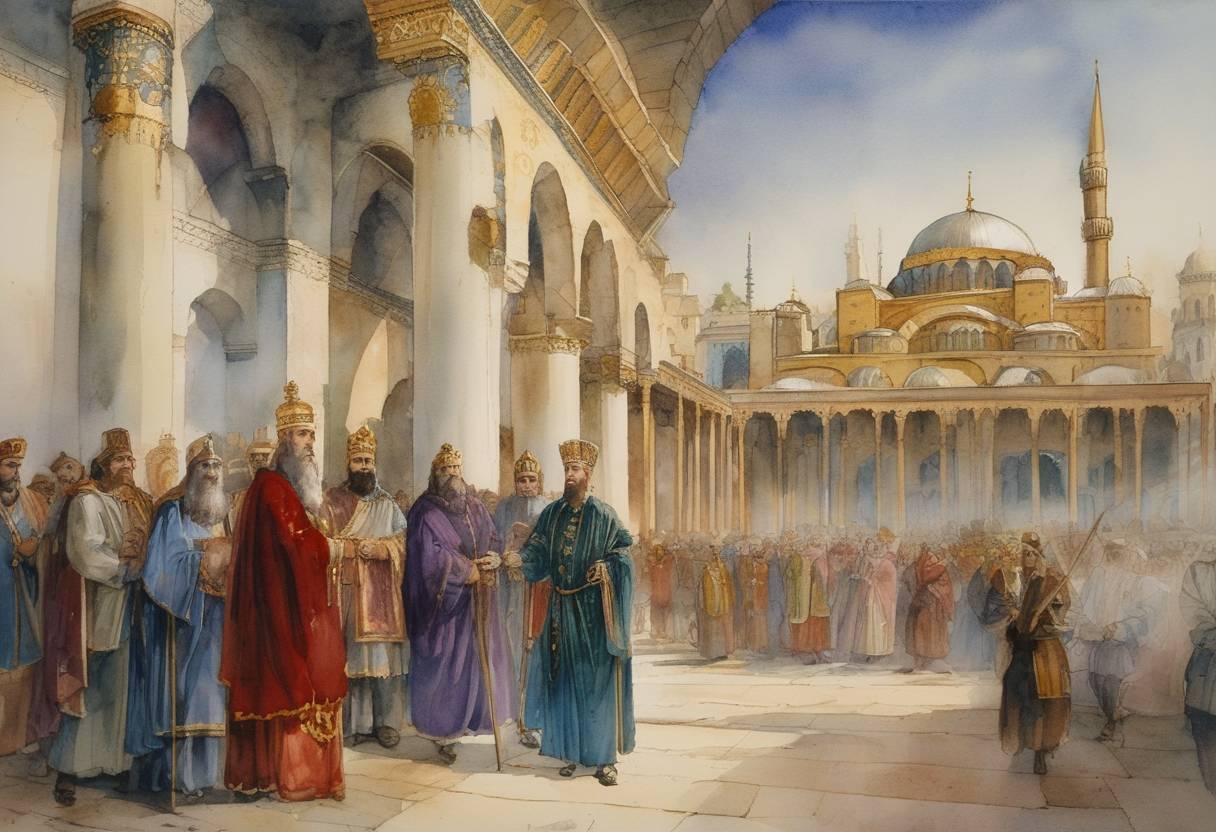
On December 10, 1041, the Byzantine Empire witnessed a significant transition in power with the death of Emperor Michael IV the Paphlagonian and the subsequent ascension of his nephew, Michael V, marking a continuation of the Macedonian dynasty.
Michael IV, who reigned from 1034 to 1041, came to power under complex circumstances. He was originally a chamberlain and became the Byzantine emperor by marrying the empress Zoe, following the death of her previous husband, Emperor Romanos III Argyros. Michael IV’s reign is noted for several military endeavors and attempts at reorganizing the empire’s tax system. His health was a persistent issue throughout his rule, particularly epilepsy, which affected his ability to govern effectively. Despite these challenges, Michael IV managed to suppress revolts and engage successfully in campaigns against the Bulgarians, culminating in a victory at the Battle of Ostrovo in 1041.
Upon Michael IV’s death, Michael V Kalaphates, his nephew and adopted son, was promptly declared the new emperor. Michael V’s ascent marked a brief and turbulent continuation of the Macedonian dynasty’s influence on the Byzantine throne. Known for his ambitious nature, Michael V was initially supported by his uncle’s widow, Empress Zoe, who hoped to maintain her influence in the empire. However, his reign would prove to be short-lived and characterized by unrest.
The transition from Michael IV to Michael V illustrates the persistent struggles for power within the Byzantine court, where intrigue and familial alliances played crucial roles in determining succession. Michael V’s brief reign highlighted the volatility of imperial rule during this period, foreshadowing the eventual decline of the Macedonian dynasty. The actions and policies of these emperors had lasting impacts on the stability of the Byzantine Empire, influencing the political and military challenges it faced in subsequent years.
Source: www.britannica.com