The Council of Pisa and the Election of Antipope Alexander V
1409 · Pisa, Italy
The Council of Pisa concluded its meetings with the election of Antipope Alexander V, which temporarily resolved the Western Schism by introducing a new papal line.
September 20, 1378
Cardinal Robert of Geneva was elected as Antipope Clement VII, marking the beginning of the Western Schism.
Fondi, Papal States (modern-day Italy) | Catholic Church
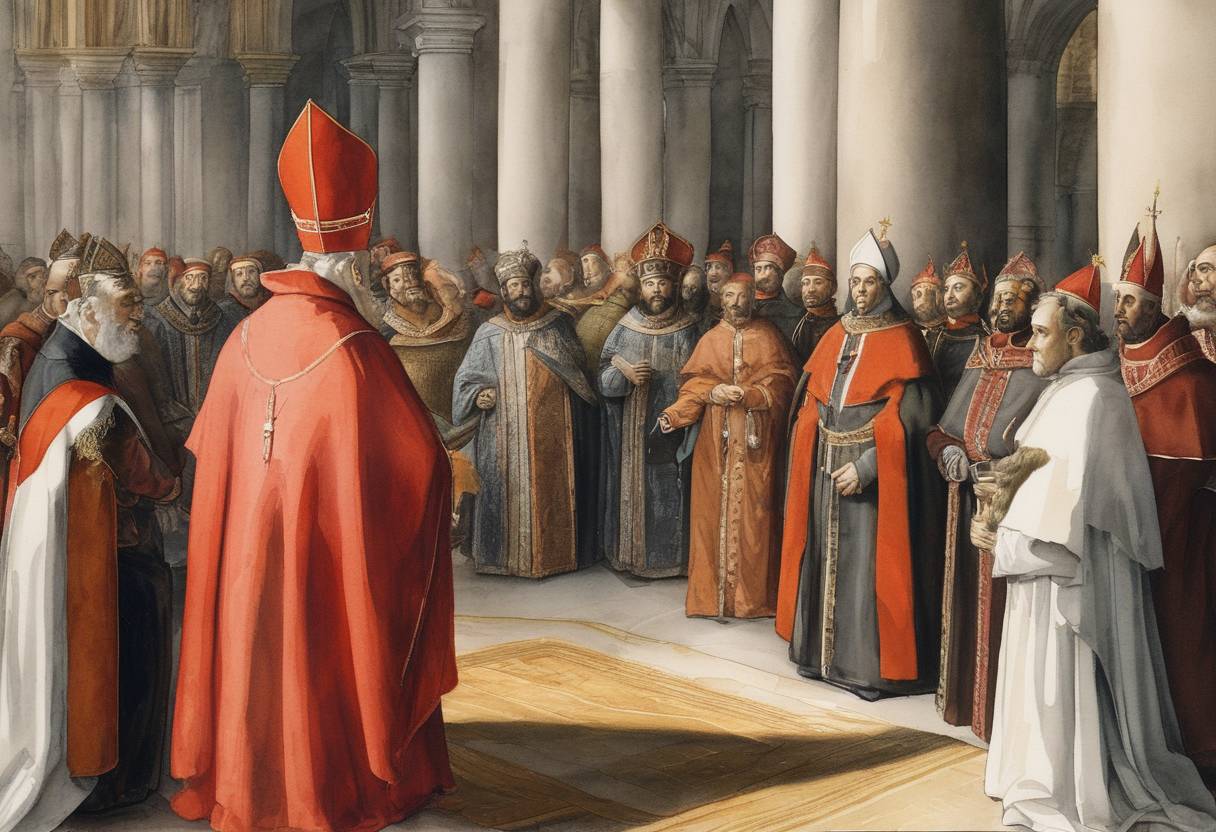
On September 20, 1378, Cardinal Robert of Geneva was elected as Antipope Clement VII, an event that initiated the Western Schism, a major division within the Catholic Church. This schism was a period of prolonged ecclesiastical conflict and division that had significant religious, political, and social implications across Europe.
The roots of the Western Schism can be traced back to the papacy’s return to Rome from Avignon in 1376. Pope Gregory XI’s move ended the Avignon Papacy, which had been criticized for being under French influence. Following Gregory XI’s death in March 1378, the College of Cardinals convened in a conclave amidst intense pressure from the Roman populace to elect an Italian pope, aiming to ensure the papacy remained in Rome.
In April 1378, the cardinals elected Bartolomeo Prignano as Pope Urban VI. However, Urban VI quickly became unpopular due to his obstinate and harsh demeanor. His alienation of the cardinals, particularly the French faction, fueled dissatisfaction and discord.
Discontent with Urban VI’s leadership, a group of cardinals, predominantly French, declared his election invalid due to alleged coercion by the Roman populace. In response, they convened a rival conclave at Fondi, Italy, on September 20, 1378, and elected Cardinal Robert of Geneva as Antipope Clement VII. Robert, known for his decisive and militaristic nature, was previously the Archbishop of Cambrai and had a strong following.
With Clement VII’s election, the Western Schism began, leading to nearly 40 years of division within the Church. Both Urban VI and Clement VII claimed the papacy, each supported by different political and national factions. Urban VI retained control in Rome, while Clement VII established a rival papal court in Avignon.
The schism significantly weakened the moral authority of the papacy as political maneuvering and church politics took precedence over spiritual leadership. European powers aligned with either Rome or Avignon based on political alliances rather than religious conviction, further entangling secular and ecclesiastical matters.
The Schism persisted through subsequent rival popes until the Council of Constance (1414-1418), which ultimately resolved the division by electing Pope Martin V, thereby restoring unity to the Catholic Church.
The Western Schism had profound implications for the Church’s authority and set the stage for subsequent reform movements, highlighting the complex interplay between religion and politics in medieval Europe.
Source: www.britannica.com