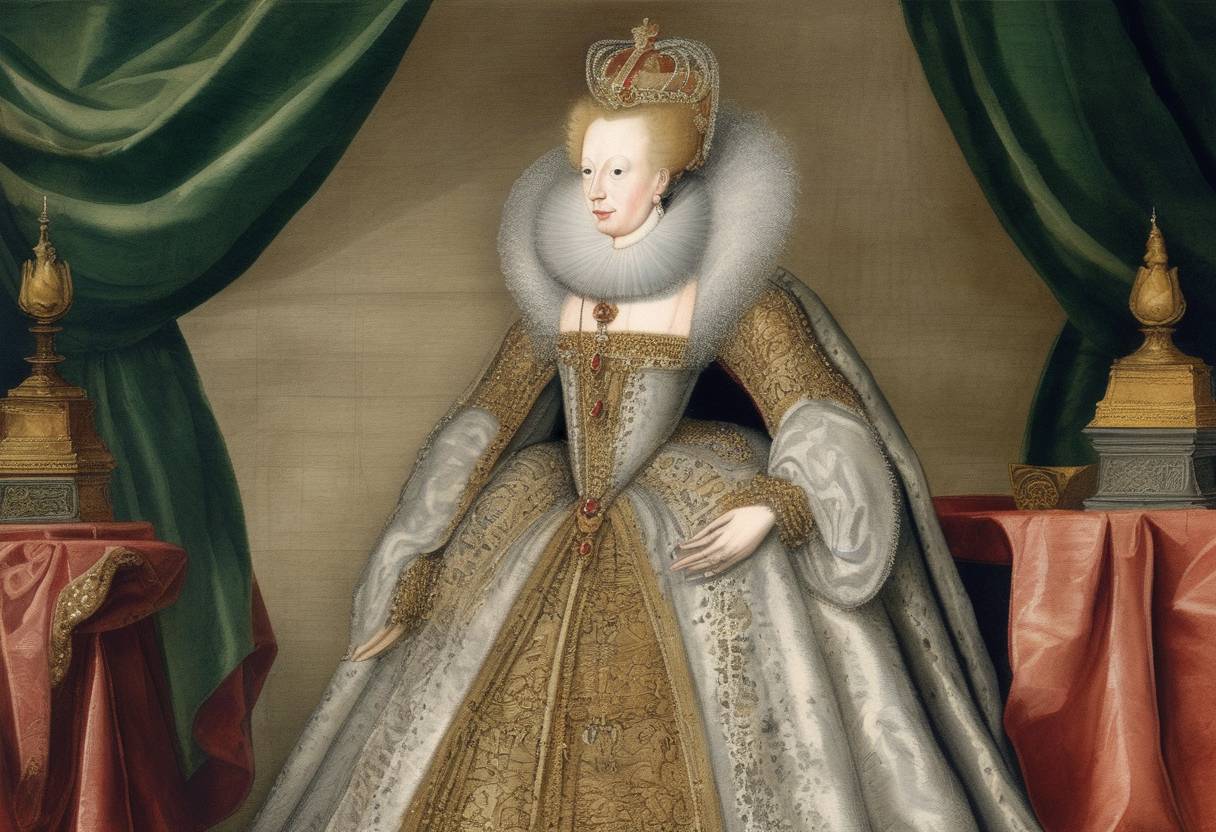
Anne of Denmark’s Coronation as Queen Consort of Scotland
On May 17, 1590, Anne of Denmark was officially crowned as the Queen Consort of Scotland at the Abbey Church of Holyrood in Edinburgh. She was the wife of James VI of Scotland, who later ascended to the English throne as James I, initiating the union of the Scottish and English crowns.
Background
Anne of Denmark was born on December 12, 1574, the daughter of King Frederick II of Denmark and Norway, and Sophie of Mecklenburg-Güstrow. Her marriage to James VI of Scotland, arranged as part of a political alliance, was formalized by proxy on August 20, 1589, and she physically arrived in Scotland later that year after a perilous journey.
The Coronation Event
The coronation on May 17, 1590, was a grandiose affair attended by Scottish nobility and dignitaries. The ceremony underscored the alliance between Scotland and Denmark, symbolized by the presence of Danish envoys and Anne’s own heritage. It was conducted with a blend of religious and cultural rituals, evidencing the shifting tides of religious practice as Reformation ideas shaped the Church of Scotland.
Historical Significance
Anne’s coronation as Queen Consort was more than a ceremonial rite; it played a crucial role in solidifying the ties between the two kingdoms through marriage. Her eventual transition to the English court alongside James in 1603 also symbolized the dynastic union between the two nations, as James VI of Scotland became James I of England, a union of crowns but not yet of parliaments.
Anne’s reign as Queen Consort was marked by her cultural patronage, most notably influencing the arts through her support of theatre and masques, which became significant cultural events in the early Stuart court. Her Danish origins and marriage further established her as a key figure in the interconnected European royal family dynamics of the time.
Aftermath
Anne’s influence waned in later years due to the shifting political landscape and financial hardships that plagued the English court. Despite this, her legacy persisted through the cultural contributions she championed and the dynastic connections she helped solidify, which had long-lasting effects on British and European history. Her life intertwined with the political and religious upheavals of the era, reflecting the complex nature of royal marriages in consolidating power and influence across nations.