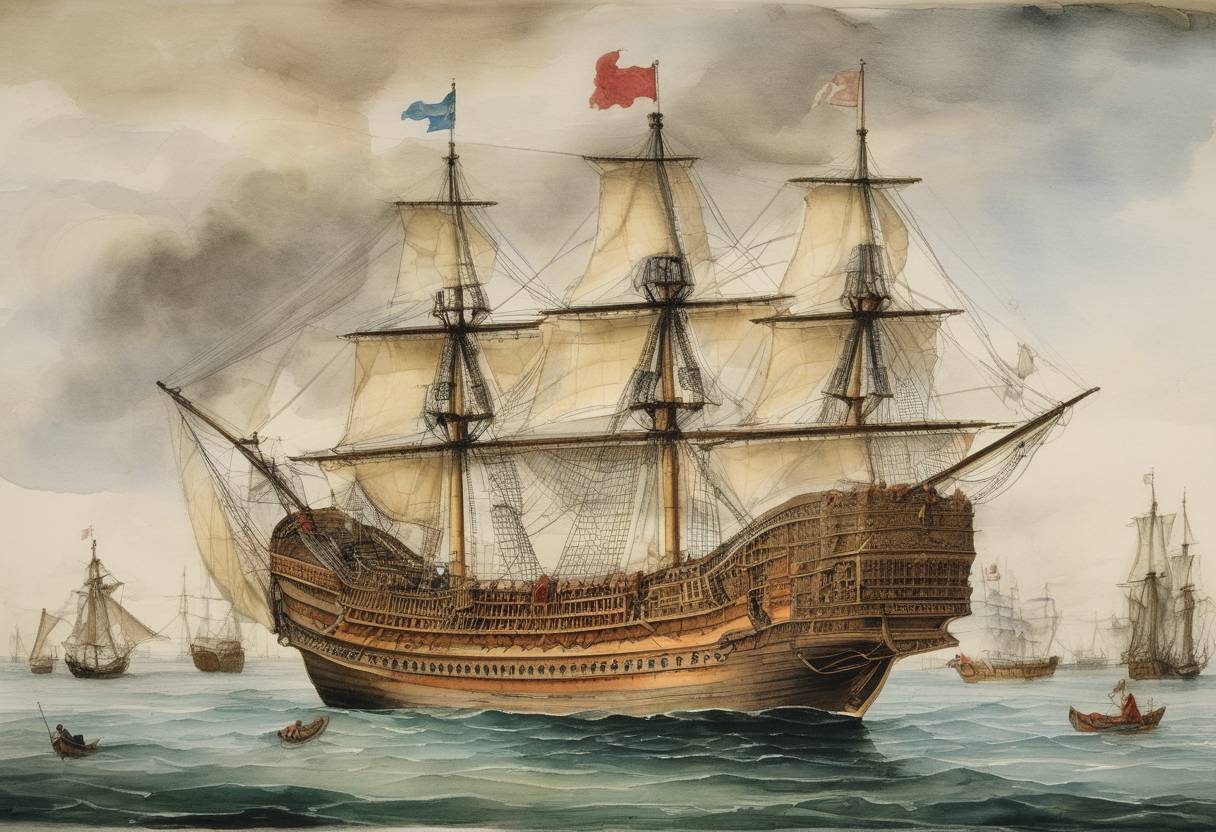
On November 21, 1589, the English ship Bonaventure embarked on a significant voyage transporting King James VI of Scotland to Denmark. The mission was to formalize his marriage to Anne of Denmark, a union initially arranged to strengthen diplomatic and political ties between the two nations. This journey represented not only a matrimonial alliance but also a strategic move to secure peace and improve relations between the kingdoms of Scotland and Denmark.
Context and Background
- Political Landscape: During the late 16th century, Europe was a tapestry of complex alliances and power struggles. Scotland sought to strengthen its political standing and security through strategic marriages.
- Betrothal and Marriage Treaty: The marriage proposal between James VI and Anne of Denmark was solidified by a treaty in 1589, designed to ensure mutual cooperation and stability, as well as to bolster Protestant alliances against potential Catholic threats.
The Journey
- Departure: The Bonaventure, known for its robust build and capability to withstand long voyages, set sail from Scotland on November 21, 1589.
- Pilot and Crew: Accompanied by skilled navigators and a selected crew, the ship was entrusted with the critical task of safely transporting the Scottish monarch across the North Sea to Danish territories.
Significance of the Marriage
- Diplomatic Alliance: The marriage underscored a deliberate effort to fortify a diplomatic alliance with Denmark, aligning their Protestant interests.
- Cultural Exchange: The union also encouraged cultural and intellectual exchanges between the Scottish and Danish courts, fostering an environment of shared learning and artistic collaboration.
Aftermath
- Peaceful Relations: Following the marriage, both nations enjoyed improved relations, which contributed to greater stability in the region.
- Foundation for Future Alliances: The success of this union paved the way for future diplomatic strategies, influencing subsequent European political maneuvers.
This event is a poignant reminder of how personal unions and maritime endeavors could influence the broader political landscape of the time, showcasing the interconnectivity of European monarchies during the Renaissance period.