Kevin Durant Secures NBA Scoring Title for the 2012–2013 Season
2013 · Oklahoma City, United States
The Oklahoma City Thunder's star player Kevin Durant won the NBA scoring title for the 2012–2013 season, after averaging 28.1 points per game.
November 19, 2004
Malice at the Palace, a brawl between players and fans, occurs during an NBA game between the Indiana Pacers and the Detroit Pistons.
Auburn Hills, United States | NBA
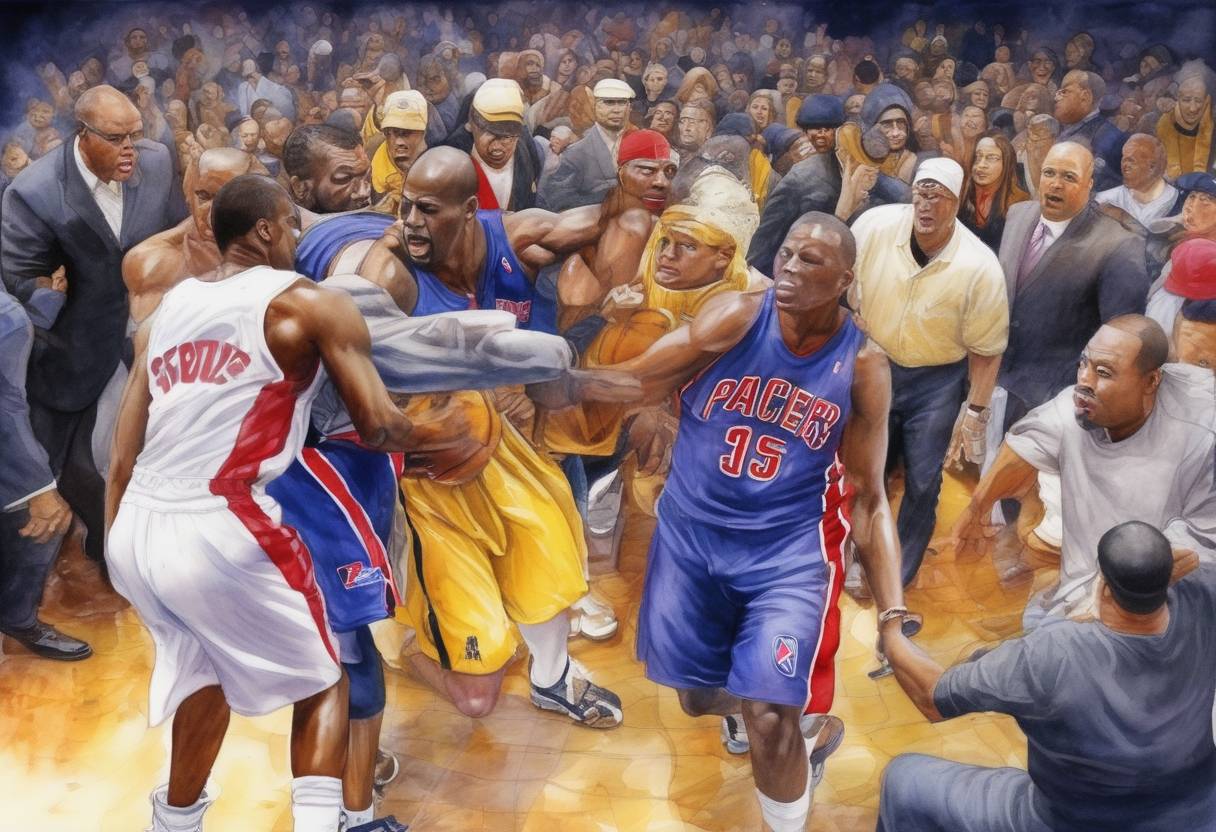
On November 19, 2004, one of the most notorious incidents in NBA history unfolded at The Palace of Auburn Hills in Auburn Hills, Michigan. The event, commonly referred to as the “Malice at the Palace,” was a massive brawl that erupted during a game between the Indiana Pacers and the Detroit Pistons. This altercation involved players, fans, and had significant repercussions for the league.
The game was a regular-season matchup between two Eastern Conference rivals. The Indiana Pacers were leading the game comfortably with less than a minute left on the clock. Tensions had been simmering throughout the game, as both teams were known for their physical style of play and had a history of intense competition.
The incident began when Ron Artest (now known as Metta Sandiford-Artest) of the Pacers committed a hard foul on Ben Wallace of the Pistons. Wallace retaliated by shoving Artest, which led to a confrontation between the two teams. As the situation seemed to be calming down, Artest lay down on the scorer’s table to distance himself from the fray.
The situation escalated dramatically when a fan threw a cup of beer at Artest, hitting him. In response, Artest charged into the stands to confront the fan he believed was responsible. This action triggered a chaotic scene, with players and fans engaging in physical altercations. Several Pacers players, including Stephen Jackson and Jermaine O’Neal, entered the stands to assist Artest, further intensifying the melee.
The brawl resulted in the game being called off with 45.9 seconds remaining, and the Pacers were awarded a 97-82 victory. The incident led to significant consequences for the players involved and the NBA as a whole:
Suspensions and Fines: The NBA handed out severe penalties. Ron Artest received the longest suspension, missing the remainder of the season (73 games plus playoffs). Stephen Jackson was suspended for 30 games, Jermaine O’Neal for 25 games (later reduced to 15), and Ben Wallace for 6 games. Several other players received shorter suspensions. The total fines and lost salaries amounted to millions of dollars.
Legal Actions: Several players faced legal consequences, including probation and community service. Fans involved in the brawl were also subject to legal action, with some receiving bans from attending future games.
NBA Policy Changes: In response to the incident, the NBA implemented stricter security measures at games, including increased police presence and revised alcohol policies. The league also emphasized promoting sportsmanship and improving player-fan interactions.
The “Malice at the Palace” had a lasting impact on the NBA, highlighting the need for improved security and the importance of maintaining professionalism on and off the court. It also sparked discussions about player conduct, fan behavior, and the role of alcohol in sports venues. The incident remains a pivotal moment in sports history, often cited in discussions about the relationship between athletes and spectators.
Overall, the brawl at The Palace of Auburn Hills serves as a cautionary tale about the volatility of sports environments and the importance of maintaining decorum in competitive settings.
Source: en.wikipedia.org