Discovery of California by Juan Rodríguez Cabrillo
1542 · San Diego, United States
Portuguese explorer Juan Rodríguez Cabrillo discovers California, landing at what is now San Diego Bay.
November 24, 1542
The expedition led by Spanish conquistador Juan Rodríguez Cabrillo was sighted sailing near the island of San Miguel, part of the Channel Islands off the coast of California.
Channel Islands, USA
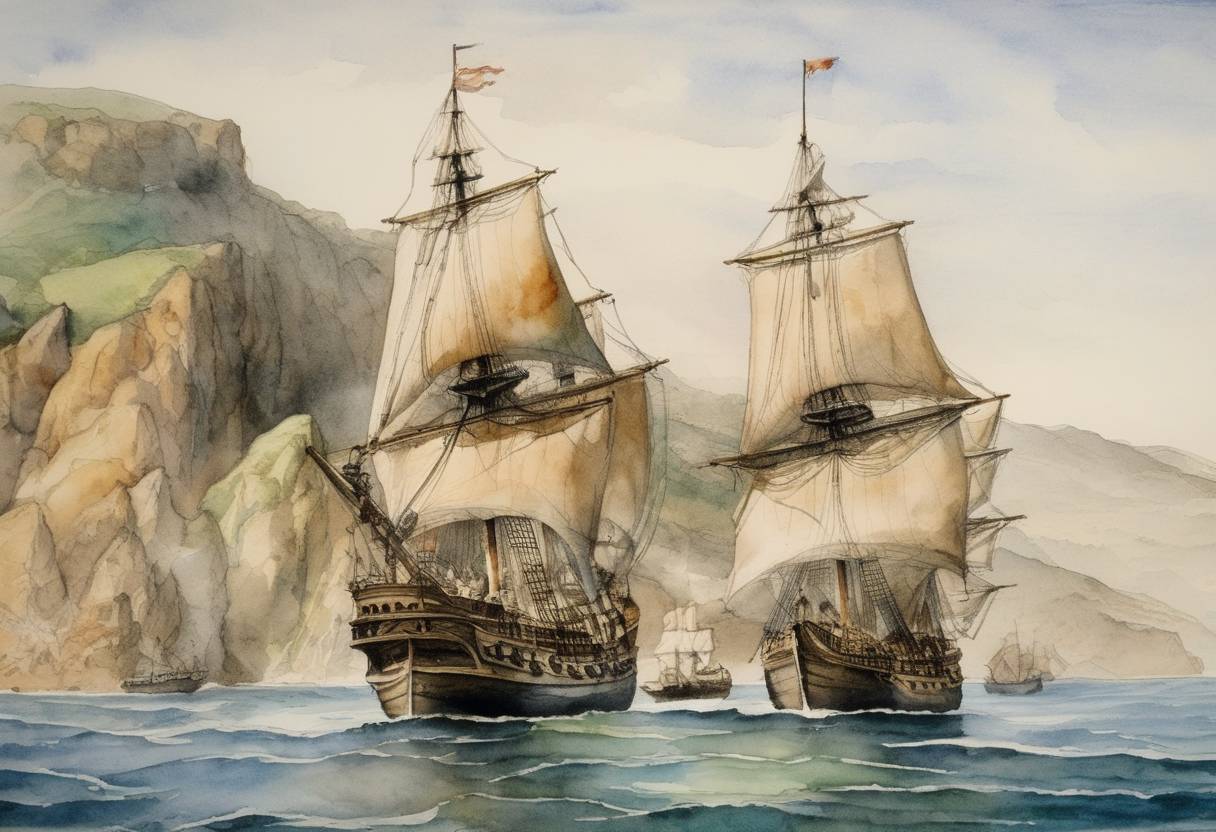
On November 24, 1542, the expedition led by Spanish conquistador Juan Rodríguez Cabrillo was documented as sighting the island of San Miguel, part of the Channel Islands off the coast of present-day California. Cabrillo’s voyage was among the earliest European explorations in the region, playing a critical role in the mapping and understanding of the North American west coast.
Juan Rodríguez Cabrillo set sail from the Mexican port of Navidad on June 27, 1542, under the auspices of the Viceroy of New Spain, Antonio de Mendoza. The primary objectives of Cabrillo’s expedition were to chart the Pacific coastline, search for a passage that connected the Pacific and Atlantic Oceans (the fabled Northwest Passage), and find wealth that could be exploited for Spain.
Cabrillo’s fleet explored several parts of the California coast throughout the summer and fall of 1542. Prior to reaching San Miguel Island, the expedition made notable stops, including the historic landing at what is today San Diego Bay on September 28, 1542, which Cabrillo named ‘San Miguel.’ His fleet subsequently traveled northward, documenting several geographical features and interacting with indigenous populations along the way.
By late November, Cabrillo’s ships, with the flagship being the San Salvador, had navigated to the Channel Islands, the northernmost islands of which included San Miguel. The sighting of San Miguel island on November 24 was part of Cabrillo’s broader exploration of the island chain, believed to be observed as potential strategic locations due to their proximity to the mainland and their navigational importance.
The Cabrillo expedition marks a significant point in Pacific maritime exploration by Europeans. While the search for the Northwest Passage was unsuccessful, Cabrillo’s detailed accounts and navigational charts significantly enhanced European understanding of the west coast, influencing subsequent exploration and colonial efforts in the region.
Chronicles of Cabrillo’s journey were kept by members of his expedition, providing valuable insights into the early encounters between Europeans and indigenous peoples. The event near San Miguel Island contributes to understanding the initial phases of exploration that ultimately led to the broader European colonization and cultural transformations in the Americas.
Cabrillo’s expedition came to an unfortunate end when he died on January 3, 1543, from injuries sustained after a fall while anchored near the Channel Islands. His death left the expedition without its leader, but the effort was continued by his lieutenant, Bartolomé Ferrer, who sailed further north beyond present-day Oregon before returning to Mexico.
The recorded insights and charts from Cabrillo’s exploration laid the foundation for future navigators and influenced Spain’s colonial policies and aspirations on the continent. His legacy is commemorated at various sites, most notably at the Cabrillo National Monument in San Diego, California.