Death of Richard the Lionheart
1199 · Châlus, France
Richard I of England, known as Richard the Lionheart, dies from an infection following an injury received during a siege, leading to his brother John ascending to the English throne.
March 25, 1199
King Richard I of England is struck by a crossbow bolt while besieging Châlus Castle in the Limousin region of France, an injury that would lead to his death on April 6th.
Châlus, France | Kingdom of England
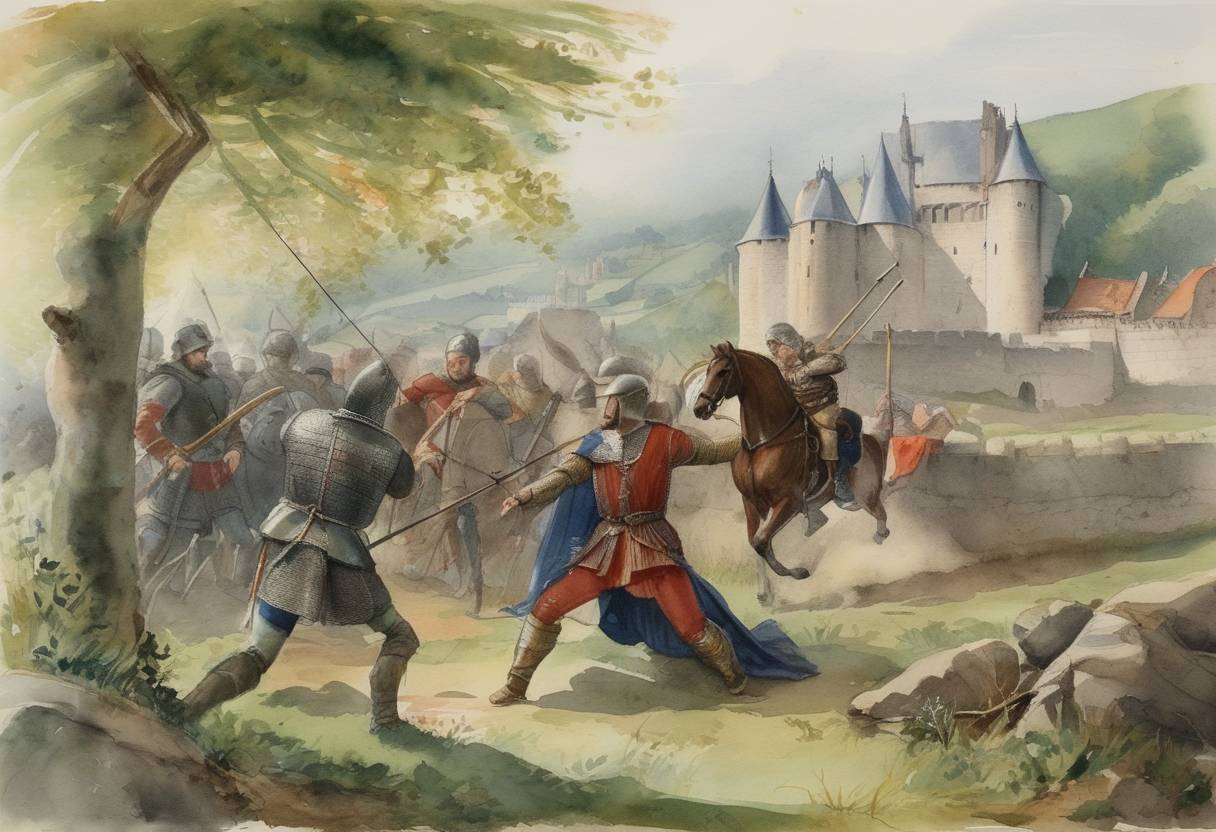
On March 25, 1199, King Richard I of England, famously known as Richard the Lionheart, was struck by a crossbow bolt while leading a siege on the small fortress of Châlus-Chabrol in the Limousin region of France. This incident would prove fatal, leading to his death on April 6, 1199.
Richard I’s campaign at Châlus was part of his broader efforts to consolidate his continental possessions and suppress rebellious barons. His reign, marked by extensive military campaigns and crusades, had seen him involved in constant conflicts to maintain control over his territories in France. The siege of Châlus was one of many skirmishes against rebellious nobles.
Following the injury, Richard’s condition deteriorated due to infection. His health worsened over the following days, leading to his death on April 6, 1199. Before he passed, Richard forgave the crossbowman, an act of chivalry consistent with his reputation as a warrior king.
Richard the Lionheart’s demise at Châlus symbolized the turbulent nature of medieval European politics, characterized by feudal conflicts and the enduring struggle for power and resources.
Source: www.history.com