The Battle of Stirling Bridge: September 11, 1297
1297 · Stirling, Scotland
The Battle of Stirling Bridge took place, where Scottish forces led by William Wallace and Andrew Moray defeated the English army.
March 8, 1296
The Battle of Dunbar took place, marking the beginning of the Second War of Scottish Independence. English forces, under the command of John de Warenne, defeated the Scottish army led by John Comyn, and Andrew Moray.
Dunbar, Scotland | Scottish Forces
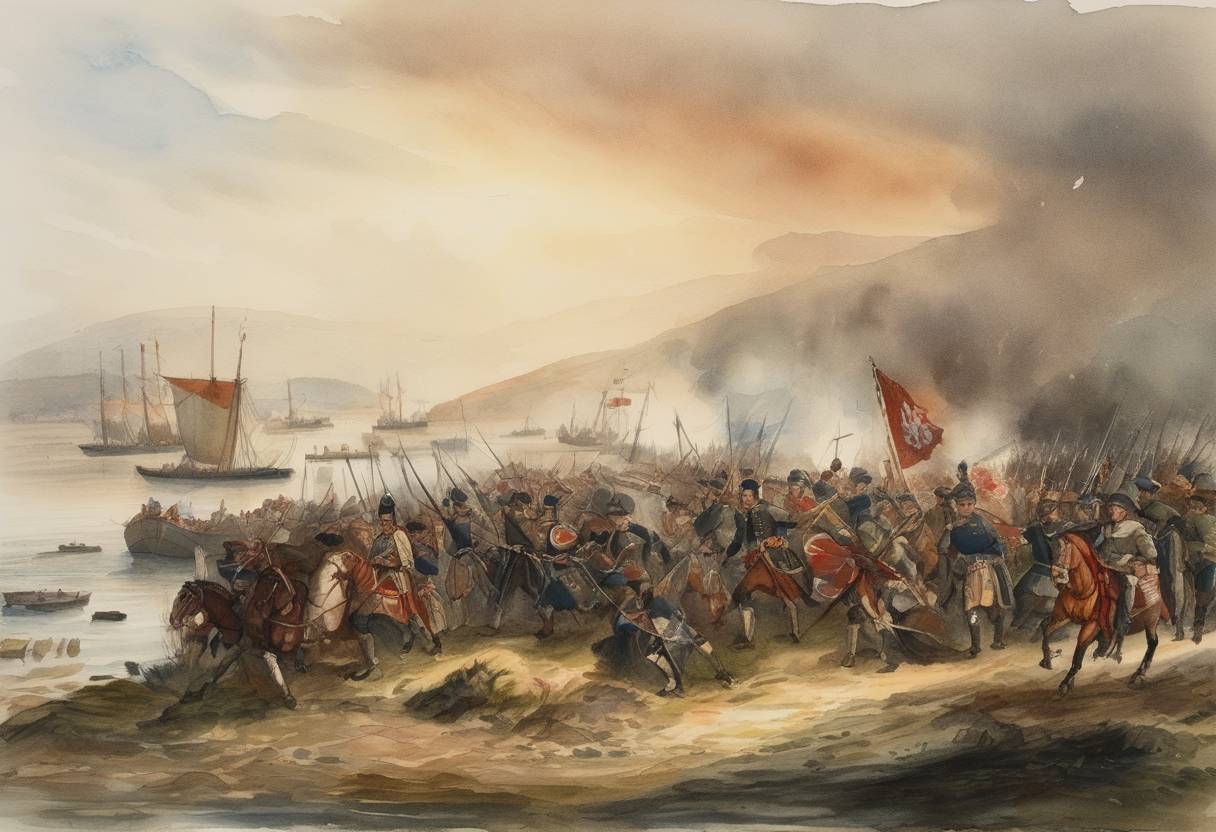
The Battle of Dunbar took place against the backdrop of rising tensions between Scotland and England during the late 13th century. The struggle for control of Scotland had escalated into a series of conflicts known as the Wars of Scottish Independence. The immediate precursor to the battle was King Edward I of England’s ambition to exert dominance over Scotland, following the death of the Scottish king, Alexander III, in 1286, which left a power vacuum and ignited rival claims to the throne.
The battle occurred at Dunbar, a strategically vital location on the southeast coast of Scotland. English forces led by John de Warenne clashed with the combined Scottish army under the leadership of John Comyn and Andrew Moray. It was decisive in its result, with powerful English heavy cavalry quickly overwhelming the Scottish lines. The Scots, less organized and equipped, were unable to sustain the momentum against the more disciplined English force.
In the wake of this battle, King John Balliol, then King of Scotland, experienced increased pressure and challenges in rallying support. The defeat at Dunbar further paved the way for Edward’s direct intervention in Scottish affairs, setting a tone for the oppressive measures that would follow as part of his campaign to dominate Scotland.
Source: en.wikipedia.org