Annexation of the Punjab Region - March 29, 1849
1849 · Punjab, India
The United Kingdom formally annexes the Punjab region after the Second Anglo-Sikh War, marking the end of Sikh sovereignty and the expansion of British rule in India.
August 15, 1947
India gained independence from British rule, marking the end of nearly 200 years of colonial rule.
New Delhi, India | British Empire
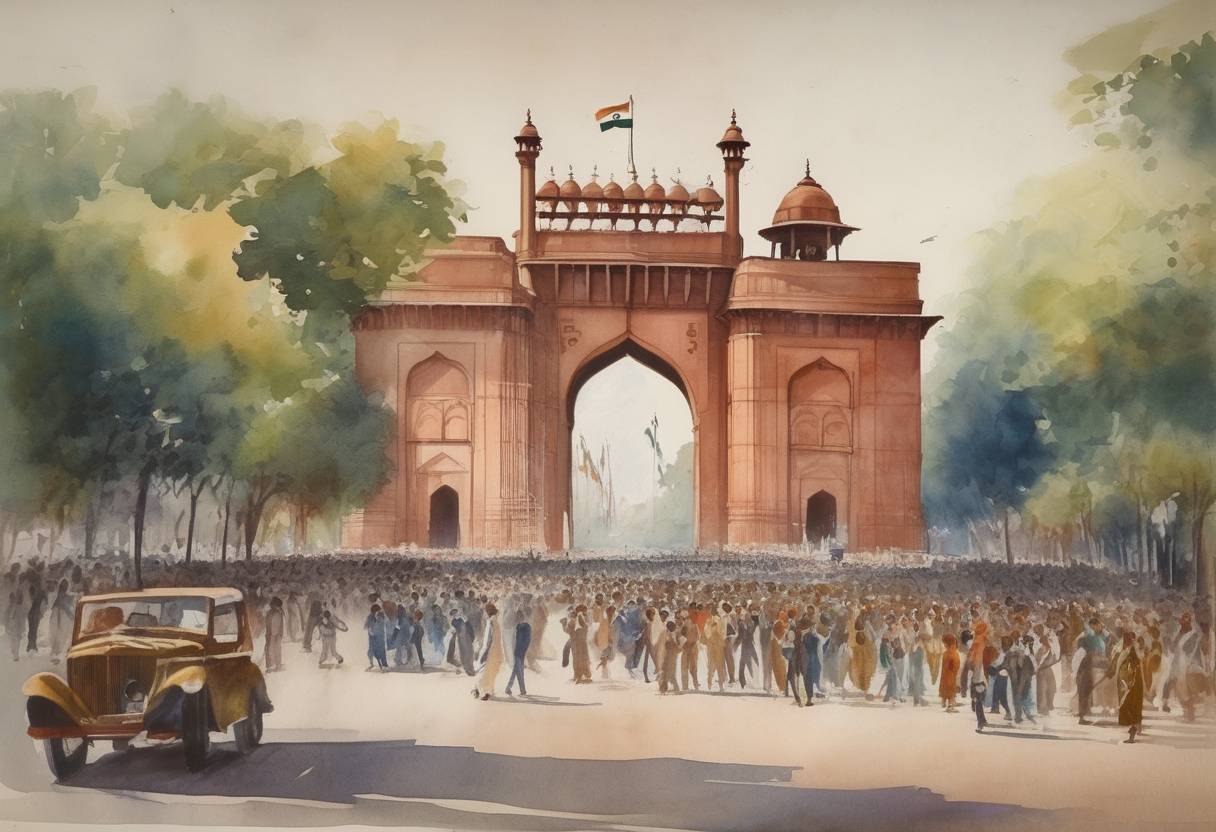
On August 15, 1947, India achieved independence from British colonial rule, marking the end of nearly 200 years of British dominance in the region. This monumental event was the culmination of a long and arduous struggle for freedom, characterized by widespread nationalistic movements, civil disobedience, and negotiations.
British Colonial Rule: The British East India Company began its trade operations in India in the early 17th century, gradually expanding its control over the Indian subcontinent. By the mid-19th century, following the Indian Rebellion of 1857, the British Crown assumed direct control, establishing the British Raj.
Nationalist Movements: The late 19th and early 20th centuries saw the rise of Indian nationalism. The Indian National Congress (INC), founded in 1885, became a pivotal force in the independence movement. Leaders like Mahatma Gandhi, Jawaharlal Nehru, and Subhas Chandra Bose played significant roles in mobilizing the masses.
Civil Disobedience and Non-Cooperation: Mahatma Gandhi’s philosophy of non-violent resistance, or Satyagraha, became a cornerstone of the independence movement. Campaigns such as the Non-Cooperation Movement (1920-22), the Salt March (1930), and the Quit India Movement (1942) galvanized public support against British rule.
World War II Impact: The economic and political strains of World War II weakened British control. The war effort required significant resources, and the British government faced increasing pressure to address Indian demands for self-governance.
Post-War Negotiations: After the war, the Labour government in Britain, led by Prime Minister Clement Attlee, was more amenable to Indian independence. The Cabinet Mission of 1946 attempted to negotiate a peaceful transfer of power.
Partition Plan: Communal tensions between Hindus and Muslims led to the demand for a separate Muslim state, advocated by the All-India Muslim League under Muhammad Ali Jinnah. The British government proposed the partition of India into two independent dominions: India and Pakistan.
Transfer of Power: On August 15, 1947, India was declared an independent nation. Jawaharlal Nehru became the first Prime Minister of India, delivering his famous “Tryst with Destiny” speech.
Partition and Its Consequences: The partition led to the creation of Pakistan, comprising two regions: West Pakistan (present-day Pakistan) and East Pakistan (now Bangladesh). The division resulted in one of the largest mass migrations in history, accompanied by widespread communal violence and loss of life.
Constitutional Development: India adopted its constitution on January 26, 1950, becoming a sovereign democratic republic. The constitution laid the foundation for a secular and pluralistic society.
Legacy of Independence: India’s independence inspired decolonization movements across Asia and Africa. The country’s journey from colonial rule to a democratic republic is a testament to the power of non-violent resistance and the resilience of its people.
India’s independence remains a pivotal moment in world history, symbolizing the end of colonialism and the beginning of a new era for the Indian subcontinent.
Source: en.wikipedia.org