Battle of Hormozdgan: The Rise of the Sassanian Empire
Context and Background
The Battle of Hormozdgan, fought on April 28, 224 CE, was a pivotal moment in ancient Persian history, marking the end of the Parthian Empire and the rise of the Sassanian Empire. The Parthian Empire, which had ruled over Persia for nearly five centuries, was characterized by a feudal system and frequent internal strife among its nobility. By the early 3rd century CE, the empire was weakened by internal divisions and external pressures, making it vulnerable to challenges from within.
Ardashir I: The founder of the Sassanian Empire, Ardashir was originally a local ruler in the region of Persis (modern-day Fars, Iran). He was a descendant of Sasan, from whom the Sassanian dynasty derives its name. Ardashir capitalized on the weakening Parthian state to expand his influence and power.
Artabanus IV: The last ruler of the Parthian Empire, Artabanus IV faced numerous challenges during his reign, including revolts and the ambitions of local rulers like Ardashir. His efforts to maintain the cohesion of the Parthian state ultimately failed at Hormozdgan.
The Battle
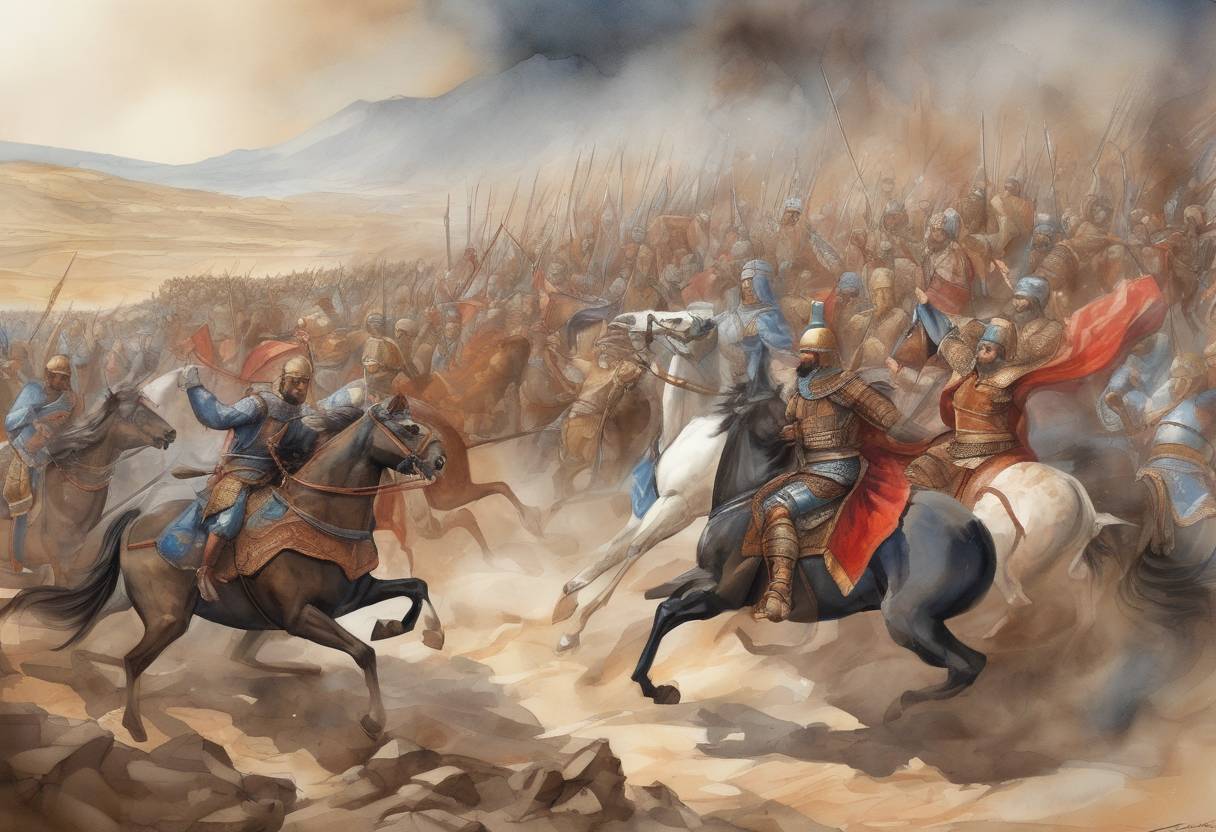
The Battle of Hormozdgan took place in the region of Media, near modern-day Shushtar in Iran. Ardashir’s forces, well-organized and motivated by a desire to establish a new order, clashed with the Parthian army led by Artabanus IV. The battle was decisive, with Ardashir’s forces emerging victorious. Artabanus IV was killed in the confrontation, effectively ending Parthian rule.
Aftermath and Significance
Establishment of the Sassanian Empire: Following his victory, Ardashir I declared himself the “King of Kings,” a title that underscored his ambition to restore Persian glory reminiscent of the Achaemenid Empire. He established the Sassanian Empire, which would become one of the leading powers of the ancient world, rivaling Rome in the west.
Cultural and Political Impact: The Sassanian Empire is noted for its significant contributions to art, architecture, and culture, as well as its centralization of power and establishment of a more cohesive state structure compared to the Parthian feudal system.
Legacy: The Sassanian period is often regarded as a high point in Persian history, with its influence extending into the Islamic period following the Arab conquests. The administrative and cultural achievements of the Sassanians left a lasting legacy in the region.
In summary, the Battle of Hormozdgan was a transformative event that reshaped the political landscape of ancient Persia, leading to the rise of the Sassanian Empire and setting the stage for centuries of Persian influence in the region.