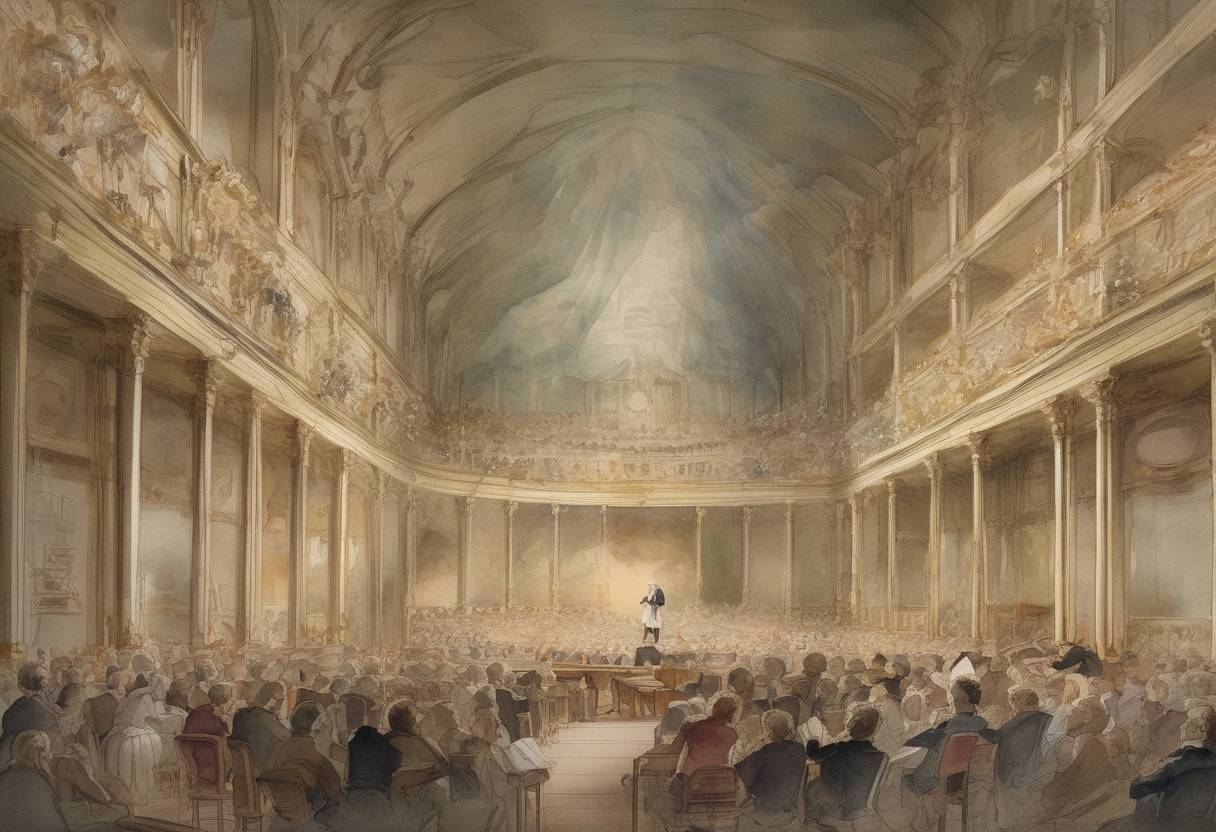
Beethoven’s Ninth Symphony Premiere
Date and Location
- Date: May 7, 1824
- Location: Kärntnertortheater, Vienna, Austria
Composer
- Ludwig van Beethoven (1770–1827), a pivotal figure in the transition between the Classical and Romantic eras in Western art music.
Symphony Overview
- Symphony No. 9 in D minor, Op. 125, commonly known as the “Choral Symphony.”
- It is Beethoven’s final complete symphony and one of the most celebrated works in the Western classical repertoire.
Notable Features
- Final Movement: The symphony is renowned for its innovative final movement, which includes a choral setting of Friedrich Schiller’s poem “An die Freude” (“Ode to Joy”). This was the first time a major composer used voices in a symphony, marking a significant departure from traditional symphonic form.
- Instrumentation: The symphony is scored for a large orchestra, four vocal soloists, and a mixed choir.
Historical Context
- Deafness: By the time of the Ninth Symphony’s premiere, Beethoven was almost completely deaf. Despite this, he continued to compose, relying on his inner sense of sound.
- Cultural Impact: The inclusion of a choral finale was groundbreaking and has since influenced countless composers. The “Ode to Joy” theme has become a universal symbol of unity and brotherhood.
Premiere Details
- Reception: The premiere was a significant cultural event in Vienna. Despite Beethoven’s inability to hear the performance, he was present on stage to guide the tempo. According to accounts, he was turned around to see the audience’s enthusiastic applause, as he could not hear it himself.
- Audience Reaction: The audience was reportedly moved by the performance, with multiple standing ovations. The symphony was well-received, although some critics were initially puzzled by its complexity and length.
Aftermath and Legacy
- Influence: Beethoven’s Ninth Symphony has had a profound impact on the development of music. It set a precedent for the integration of vocal and instrumental music in symphonic form.
- Cultural Significance: The “Ode to Joy” has been adopted as the Anthem of Europe by the Council of Europe and the European Union. It is often performed at significant cultural and political events worldwide.
Conclusion
Beethoven’s Ninth Symphony remains a monumental work in the history of music, celebrated for its innovative structure and profound message of universal brotherhood. Its premiere on May 7, 1824, marked a pivotal moment in the evolution of symphonic music and continues to resonate with audiences today.