The 1999 Australian Republic Referendum
1999 · Canberra, Australia
Australians voted in a referendum to decide whether to become a republic and replace the British monarch as head of state. The proposal was defeated.
March 12, 1913
Canberra is officially named as the capital of Australia.
Canberra, Australia | Australian Government
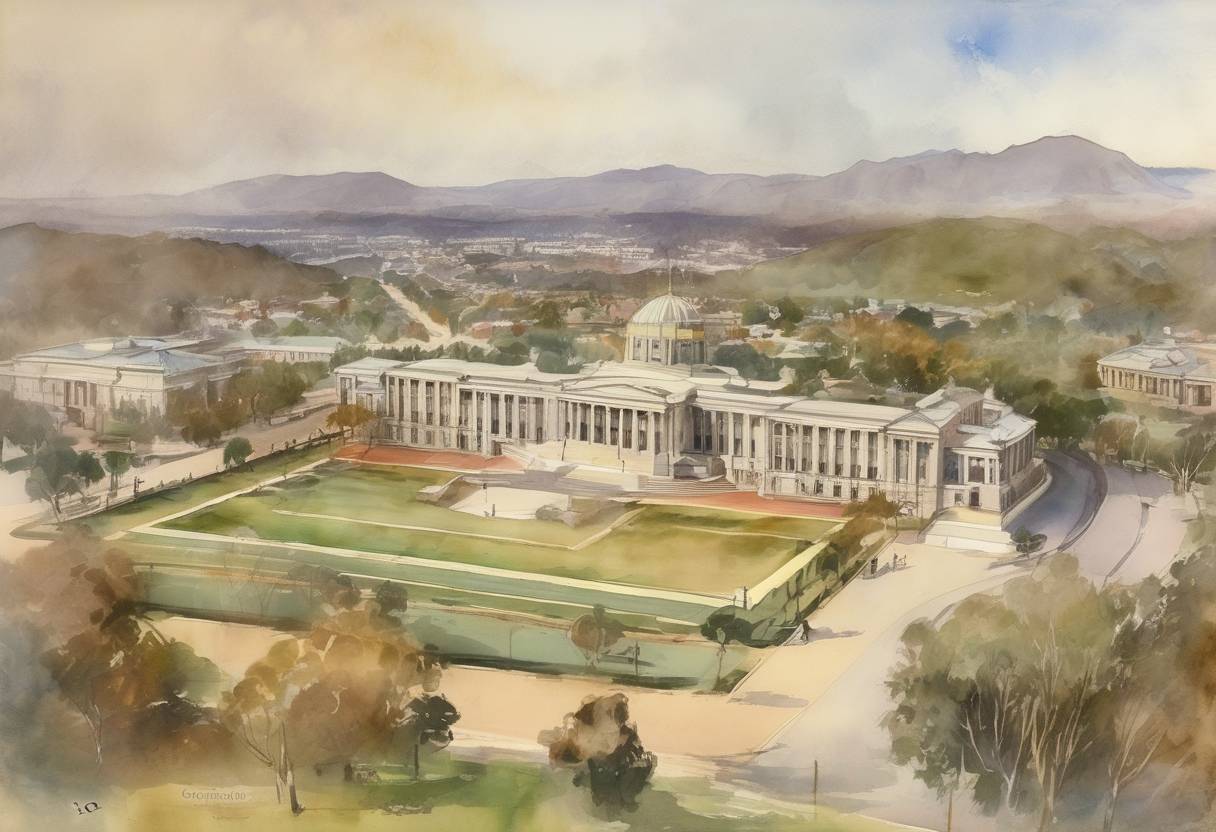
On March 12, 1913, Canberra was officially named the capital of Australia, marking a significant milestone in the country’s history. This event was the culmination of a series of decisions and developments that aimed to establish a new seat of government for the newly federated nation.
Federation of Australia: Australia became a federation on January 1, 1901, uniting six separate British colonies into one nation. The need for a capital city arose as part of the federation process.
Selection of the Capital: The choice of a capital was a contentious issue, primarily between Sydney and Melbourne, Australia’s two largest cities. To resolve this, the Australian Constitution stipulated that the capital should be located in New South Wales but at least 100 miles from Sydney.
Search for a Site: After extensive surveys and debates, the site for the new capital was selected in 1908. The location was chosen for its climate, water supply, and potential for development.
Date and Event: On March 12, 1913, a ceremony was held to officially name the new capital. The event was attended by prominent figures, including the Governor-General, Lord Denman, the Prime Minister, Andrew Fisher, and the Minister for Home Affairs, King O’Malley.
Naming of Canberra: Lady Denman, the wife of the Governor-General, announced the name “Canberra” during the ceremony. The name is believed to derive from the Indigenous Ngunnawal word “Kamberra,” meaning “meeting place.”
Development of Canberra: Following its naming, Canberra was designed by American architect Walter Burley Griffin, who won an international design competition in 1912. His vision for the city included a garden city layout with significant green spaces and a central lake.
Growth and Establishment: Construction of Canberra began shortly after its naming, but progress was slow due to World War I and the Great Depression. The city gradually developed over the decades, with the Parliament House opening in 1927.
Modern Canberra: Today, Canberra is not only the political center of Australia but also a cultural and educational hub, home to national institutions such as the Australian War Memorial, the National Gallery of Australia, and the Australian National University.
The official naming of Canberra as the capital was a pivotal moment in Australia’s history, symbolizing the unity and forward-looking vision of the newly federated nation.
Source: en.wikipedia.org