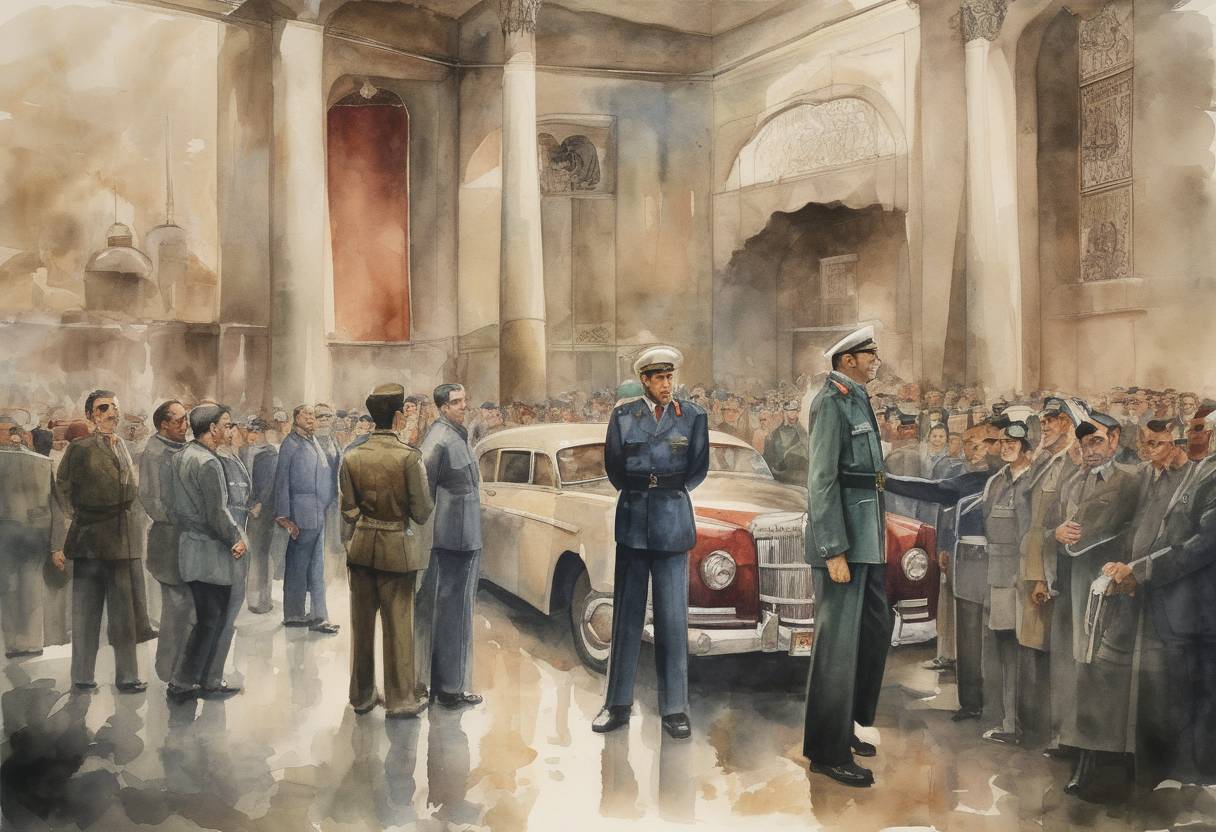
The 1953 Iranian Coup d’État
On August 19, 1953, a pivotal event unfolded in Iran that would have lasting implications for the country and its relations with the West. This was the day when a coup d’état, orchestrated by the Central Intelligence Agency (CIA) of the United States and the British Secret Intelligence Service (MI6), successfully overthrew Iran’s democratically elected Prime Minister, Mohammad Mosaddegh.
Background
Nationalization of the Oil Industry
- Mohammad Mosaddegh: Elected as Prime Minister in 1951, Mosaddegh was a prominent nationalist leader who sought to reduce foreign influence in Iran. His most significant move was the nationalization of the Iranian oil industry, which had been under British control through the Anglo-Iranian Oil Company (AIOC), later known as BP.
- British Reaction: The nationalization led to a severe economic and political crisis. Britain, heavily reliant on Iranian oil, imposed a global boycott on Iranian oil and sought to regain control over the oil industry.
Cold War Context
- Western Concerns: The coup occurred during the Cold War, a period marked by intense rivalry between the United States and the Soviet Union. Western powers feared that Mosaddegh’s policies might lead Iran closer to the Soviet sphere of influence.
- Operation Ajax: The CIA, with MI6 collaboration, initiated Operation Ajax, a covert operation aimed at overthrowing Mosaddegh and reinstating the Shah of Iran, Mohammad Reza Pahlavi, who was seen as more amenable to Western interests.
The Coup
- Initial Failure and Success: The coup initially faltered on August 15, 1953, when Mosaddegh was tipped off about the plan. However, with continued CIA efforts and support from pro-Shah military forces, the coup succeeded on August 19.
- Role of the Shah: The Shah, who had fled to Italy during the initial coup attempt, returned to Iran after Mosaddegh’s overthrow, consolidating his power with the backing of the United States and Britain.
Aftermath and Consequences
- Restoration of the Shah: The Shah’s return marked the beginning of a period of autocratic rule, characterized by modernization efforts and a strong pro-Western stance, but also by political repression.
- Impact on Iran-US Relations: The coup significantly impacted Iran-US relations, fostering resentment and distrust among many Iranians towards the United States and Britain.
- Long-term Effects: The event is often cited as a catalyst for the 1979 Iranian Revolution, which led to the establishment of the Islamic Republic under Ayatollah Khomeini, drastically altering the geopolitical landscape of the Middle East.
Historical Significance
The 1953 coup d’état in Iran is a critical example of Cold War-era interventionism by Western powers. It underscores the complex interplay of nationalism, resource control, and global ideological conflicts. The event remains a contentious topic in discussions of foreign policy and international relations, illustrating the profound and lasting impact of covert operations on national sovereignty and regional stability.