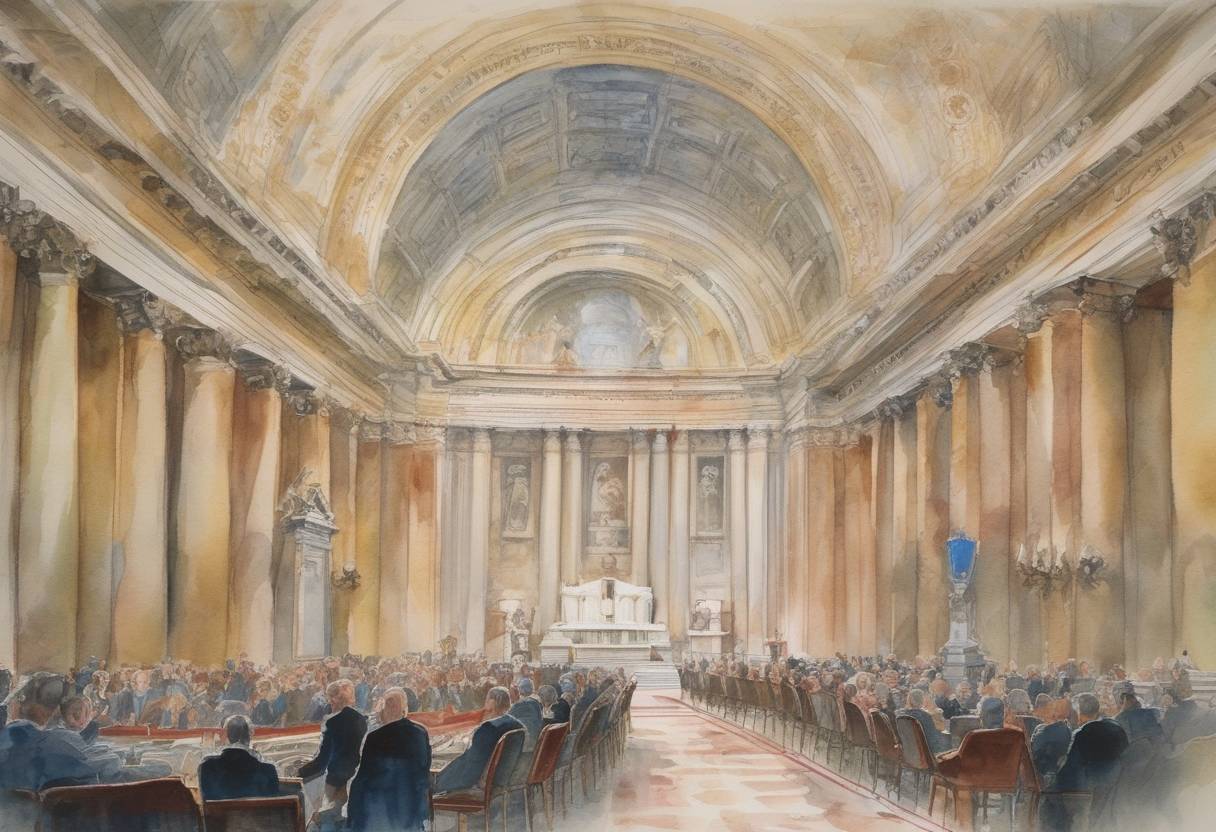
Establishment of Full Diplomatic Relations between the United States and Vatican City on January 10, 1984
On January 10, 1984, the United States and Vatican City formally established full diplomatic relations, marking a significant development in international relations. This event was the culmination of a complex historical relationship between the two entities, influenced by religious, political, and cultural factors.
Historical Context
Early Relations
- 19th Century: The United States had intermittent diplomatic interactions with the Papal States, the predecessor of Vatican City, but these were limited and often informal.
- 1870: The Papal States were absorbed into the newly unified Kingdom of Italy, and the Vatican’s temporal power was significantly reduced, complicating diplomatic relations.
20th Century Developments
- 1939: President Franklin D. Roosevelt appointed a personal representative to the Holy See, Myron C. Taylor, during World War II. This was a strategic move to foster cooperation during a time of global conflict, but it did not constitute formal diplomatic relations.
- Post-War Period: The Cold War era saw increased collaboration between the U.S. and the Vatican, particularly in their shared opposition to communism.
Establishment of Relations
- President Ronald Reagan: Played a pivotal role in establishing formal diplomatic ties, motivated by shared ideological goals with Pope John Paul II, particularly regarding anti-communism.
- Pope John Paul II: His papacy was marked by active engagement in global politics, and he was a significant figure in the fall of communism in Eastern Europe.
Diplomatic Milestones
- 1983: The U.S. Congress repealed a 1867 law that prohibited the use of federal funds for a diplomatic mission to the Holy See, removing a major legal obstacle.
- January 10, 1984: The U.S. and Vatican City officially established full diplomatic relations. William A. Wilson was appointed as the first U.S. Ambassador to the Holy See.
Significance and Impact
- Cold War Context: The establishment of diplomatic relations was partly driven by the geopolitical landscape of the Cold War. Both the U.S. and the Vatican were influential in supporting movements against communist regimes, particularly in Eastern Europe.
- Cultural and Religious Influence: The move was also seen as a recognition of the Vatican’s significant moral and cultural influence globally.
- Contemporary Relations: Since 1984, the U.S. and the Vatican have collaborated on various global issues, including human rights, peace efforts, and humanitarian aid.
Conclusion
The establishment of full diplomatic relations between the United States and Vatican City on January 10, 1984, was a landmark event that reflected the convergence of religious influence and political strategy. It underscored the Vatican’s role as a significant player in international diplomacy and highlighted the United States’ recognition of this influence in global affairs. This relationship has continued to evolve, addressing contemporary global challenges and fostering dialogue on issues of mutual concern.