July 23, 0685

The Battle of Nechtansmere took place, where the Picts, led by King Bridei III, defeated the Northumbrians, led by King Ecgfrith. This battle marked a significant turning point in the power dynamics of the British Isles, as it halted Northumbrian expansion into Pictish territory.


Dunnichen, Scotland | Pictish Kingdom
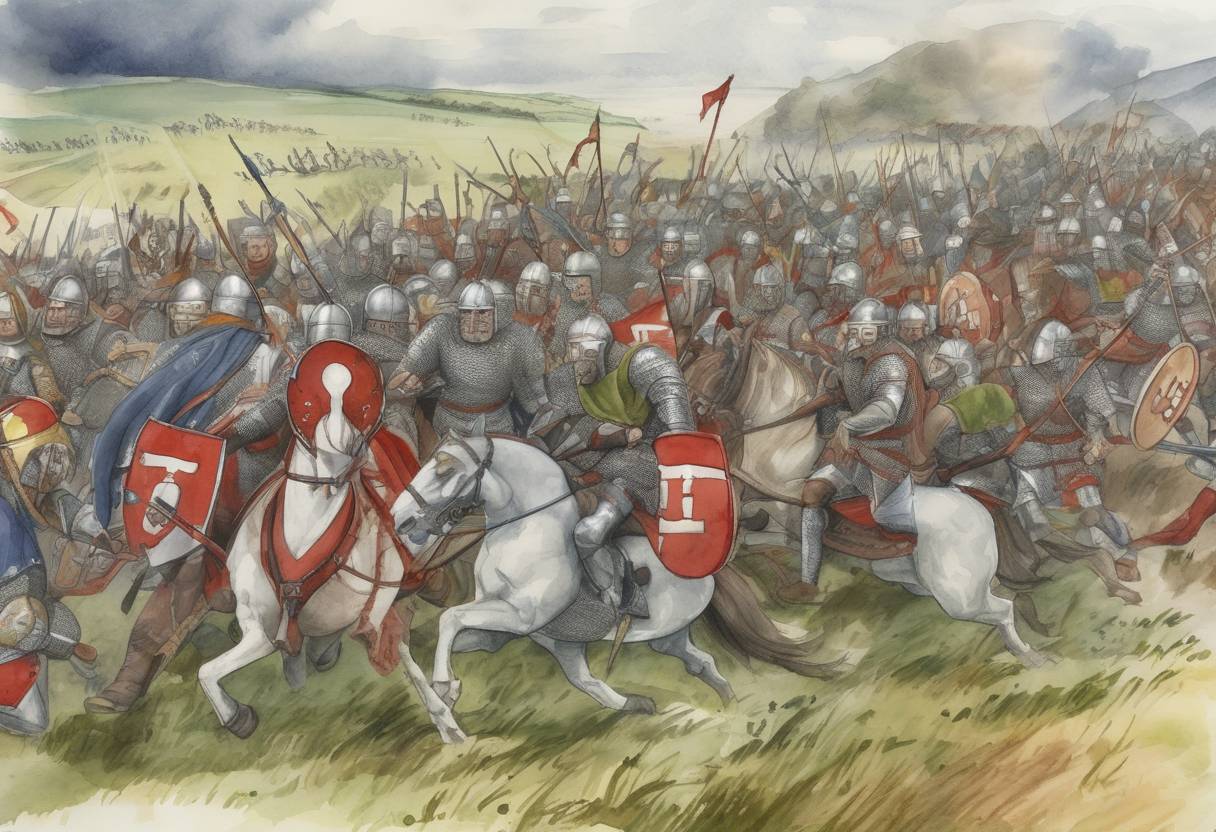
Watercolor painting based depiction of The Battle of Nechtansmere took place, where the Picts, led by King Bridei III, defeated the Northumbrians, led by King Ecgfrith. This battle marked a significant turning point in the power dynamics of the British Isles, as it halted Northumbrian expansion into Pictish territory. (685)

The Battle of Nechtansmere: A Turning Point in British Isles History

Date and Location

  • Date: May 20, 685 (Note: The date provided, July 23, 685, is incorrect. The battle occurred on May 20, 685.)
  • Location: Near Dunnichen, in present-day Angus, Scotland, traditionally identified with Nechtansmere.

Key Figures

  • Picts: Led by King Bridei III
  • Northumbrians: Led by King Ecgfrith

Background

The Battle of Nechtansmere was a pivotal conflict in the history of the British Isles, marking a significant shift in the balance of power between the Picts and the Northumbrians. Prior to the battle, Northumbria, under King Ecgfrith, was a dominant force in the region, exerting influence and control over large areas of what is now Scotland.

Events Leading to the Battle

  • Northumbrian Expansion: King Ecgfrith sought to expand his kingdom’s territory further north into Pictish lands, continuing a trend of aggressive expansionism.
  • Pictish Resistance: The Picts, under King Bridei III, resisted this encroachment, seeking to maintain their sovereignty and territorial integrity.

The Battle

  • Strategic Ambush: King Bridei III, aware of the Northumbrian threat, strategically lured King Ecgfrith’s forces into a trap near Nechtansmere.
  • Terrain Advantage: The Picts used the local terrain to their advantage, ambushing the Northumbrians in a marshy area that hindered their movement and combat effectiveness.
  • Decisive Victory: The Picts decisively defeated the Northumbrian army, and King Ecgfrith was killed during the battle.

Aftermath and Consequences

  • Halt of Northumbrian Expansion: The defeat at Nechtansmere effectively ended Northumbrian ambitions to expand further into Pictish territory.
  • Pictish Independence: The victory solidified Pictish independence and allowed them to maintain control over their lands.
  • Shift in Power Dynamics: The battle marked a significant shift in the power dynamics of the British Isles, with the Picts emerging as a formidable force against Northumbrian dominance.

Historical Significance

The Battle of Nechtansmere is considered a crucial turning point in early medieval British history. It not only preserved the Pictish kingdom but also set the stage for the eventual formation of the Kingdom of Scotland. The battle is remembered as a symbol of resistance against external domination and the resilience of the Pictish people.

By halting Northumbrian expansion, the battle reshaped the political landscape of the region, influencing the future interactions and boundaries between the various kingdoms of the British Isles.