The Battle of Berlin: Soviet Offensive Begins on April 16, 1945
1945 · Berlin, Germany
The Battle of Berlin began as Soviet forces launched their final offensive of World War II in Europe.
June 9, 1944
The Soviet Union launches the Vyborg–Petrozavodsk Offensive against Finland during World War II.
Vyborg, Russia | Soviet Armed Forces
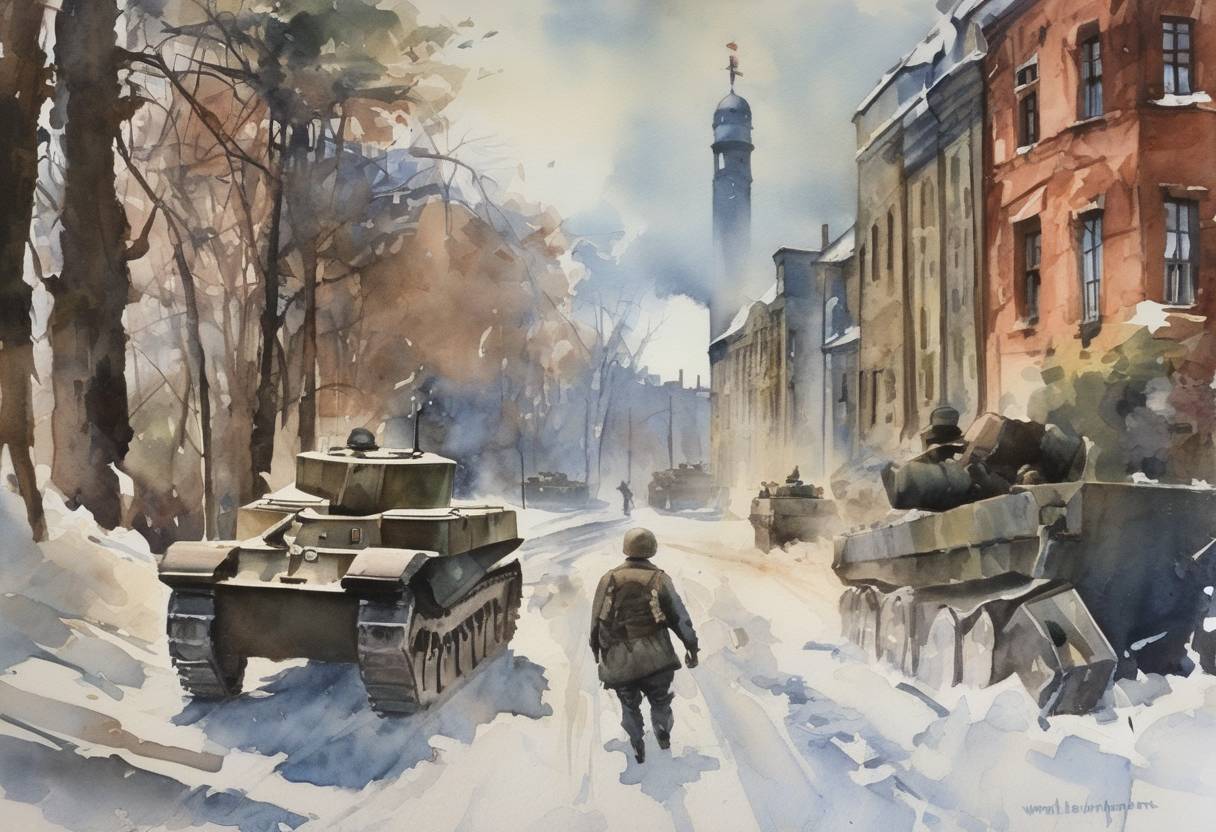
On June 9, 1944, the Soviet Union launched the Vyborg–Petrozavodsk Offensive against Finland, marking a significant phase in the Continuation War, which was part of the broader context of World War II. This offensive was a crucial Soviet military operation aimed at pushing Finnish forces back and securing the Karelian Isthmus and eastern Karelia.
Continuation War: The Continuation War (1941-1944) was fought between Finland and the Soviet Union, following the Winter War (1939-1940). Finland sought to regain territories lost to the Soviets in the Winter War, aligning with Nazi Germany against the Soviet Union.
Strategic Importance: The Karelian Isthmus and eastern Karelia were strategically important for both Finland and the Soviet Union. Control over these areas would provide the Soviets with a buffer zone to protect Leningrad (now Saint Petersburg) and allow them to exert pressure on Finland to exit the war.
Objective: The primary objective of the Vyborg–Petrozavodsk Offensive was to capture the city of Vyborg and push Finnish forces out of the Karelian Isthmus, thereby weakening Finland’s military position.
Soviet Forces: The offensive was conducted by the Leningrad and Karelian Fronts of the Soviet Red Army, commanded by General Leonid Govorov and General Kirill Meretskov, respectively. The operation involved a massive concentration of Soviet troops, artillery, and air support.
Finnish Defense: Finnish forces, under the command of Marshal Carl Gustaf Emil Mannerheim, were significantly outnumbered and faced a well-coordinated Soviet assault. Despite their defensive preparations, the Finnish lines were overwhelmed by the sheer scale of the Soviet attack.
Initial Assault: The offensive began with a massive artillery barrage on June 9, 1944, followed by a ground assault. The Soviet forces quickly breached Finnish defenses on the Karelian Isthmus.
Capture of Vyborg: By June 20, Soviet troops had captured Vyborg, a major Finnish city on the Karelian Isthmus, marking a significant victory for the Soviet Union.
Advance in Eastern Karelia: Simultaneously, Soviet forces advanced in eastern Karelia, capturing key positions and further pressuring Finnish defenses.
Finnish Retreat: The offensive forced Finnish troops to retreat, leading to significant territorial losses for Finland. The fall of Vyborg was a major blow to Finnish morale and military capability.
Peace Negotiations: The success of the Soviet offensive contributed to Finland seeking peace negotiations with the Soviet Union. By September 1944, Finland signed an armistice with the Soviet Union, effectively ending the Continuation War.
Territorial Changes: As part of the armistice, Finland ceded significant territories, including the Karelian Isthmus and parts of eastern Karelia, to the Soviet Union.
The Vyborg–Petrozavodsk Offensive was a pivotal moment in the Continuation War, demonstrating the Soviet Union’s military resurgence and strategic capabilities. It played a crucial role in Finland’s decision to exit World War II and highlighted the shifting balance of power in the Eastern Front during the latter stages of the war. The offensive also underscored the complex geopolitical dynamics of the Nordic region during World War II.
Source: en.wikipedia.org