The Death of Emperor Titus and the Succession of Domitian
81 · Rome, Roman Empire
The Roman Emperor Titus dies, and his brother Domitian succeeds him as Emperor of Rome.
January 27, 0098
Trajan becomes Roman Emperor, succeeding Nerva.
Rome, Roman Empire | Roman Empire
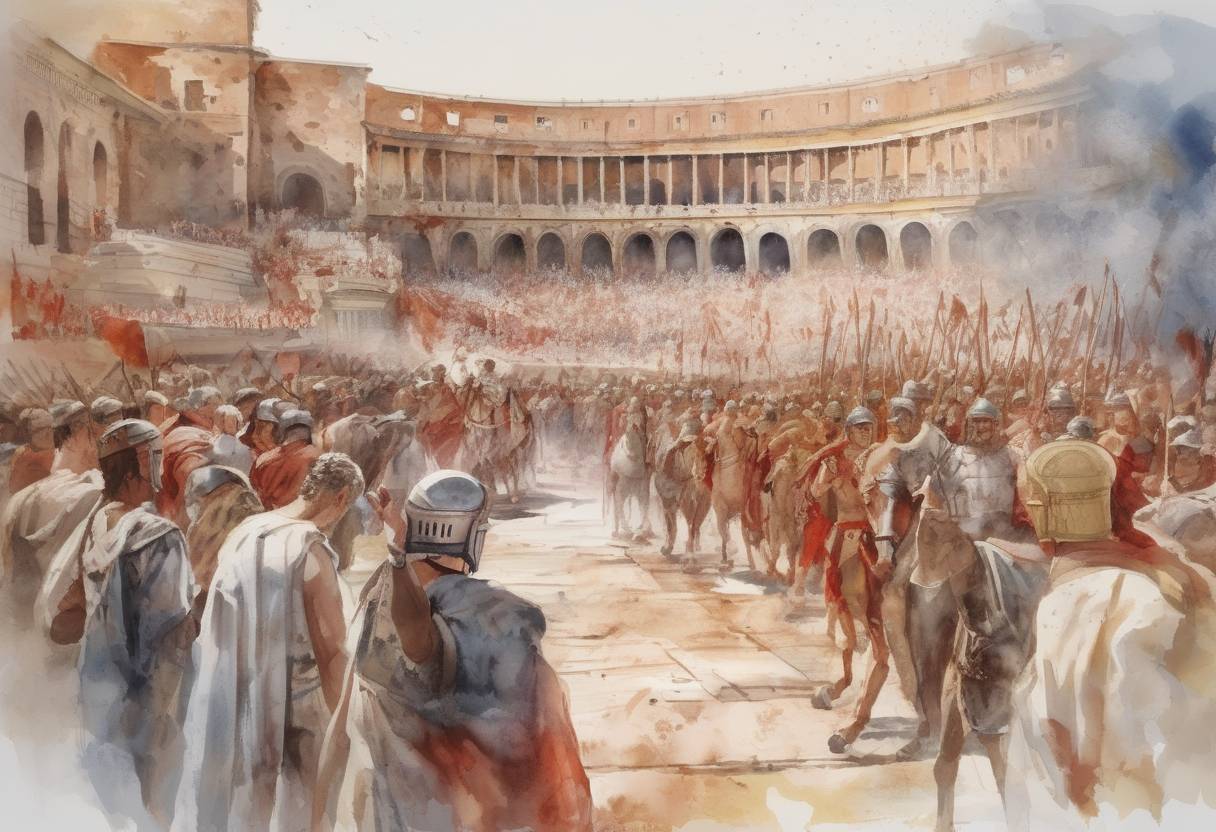
On January 27, 98 AD, Marcus Ulpius Traianus, commonly known as Trajan, ascended to the position of Roman Emperor following the death of his predecessor, Emperor Nerva. This transition marked a significant moment in Roman history, as Trajan would go on to be remembered as one of the “Five Good Emperors,” a term coined by the historian Edward Gibbon to describe a period of relative peace and prosperity for the Roman Empire.
Nerva’s Reign: Nerva became emperor in 96 AD after the assassination of Domitian, the last of the Flavian dynasty. His rule was characterized by efforts to stabilize the empire and restore senatorial authority. However, his reign was challenged by a lack of military support, which was crucial for maintaining power in Rome.
Adoption of Trajan: To secure his position and ensure a smooth succession, Nerva adopted Trajan as his heir in October 97 AD. Trajan was a respected military commander and governor of Upper Germany, which helped to solidify Nerva’s standing with the Roman legions.
Military Support: Trajan’s military background and popularity among the troops were instrumental in his peaceful transition to power. His adoption by Nerva was a strategic move that placated the Praetorian Guard and the Roman army, both of which had been sources of tension during Nerva’s reign.
Senatorial Approval: Trajan’s rise was also welcomed by the Roman Senate, as he was seen as a capable leader who could continue Nerva’s policies of cooperation with the senatorial class.
Expansion and Conquests: Trajan is best known for his military campaigns, which expanded the Roman Empire to its greatest territorial extent. Notable conquests included Dacia (modern-day Romania) and parts of the Parthian Empire.
Public Works and Administration: Trajan invested heavily in public infrastructure, including roads, bridges, and aqueducts. The construction of Trajan’s Forum and Trajan’s Market in Rome are enduring legacies of his commitment to civic development.
Social Welfare: He implemented social welfare policies, such as the “alimenta,” a program to support orphans and poor children throughout Italy, reflecting his concern for the welfare of Roman citizens.
Succession: Trajan ruled until his death in 117 AD, after which he was succeeded by his adopted son, Hadrian. His reign is often seen as a high point in the history of the Roman Empire, characterized by stability, prosperity, and expansion.
Historical Significance: Trajan’s leadership style and accomplishments set a standard for subsequent emperors. His reign is frequently cited as an exemplar of effective imperial governance, balancing military prowess with civic responsibility.
In summary, Trajan’s ascension to the role of Roman Emperor on January 27, 98 AD, marked the beginning of a transformative period in Roman history, characterized by territorial expansion, infrastructural development, and social welfare initiatives that left a lasting impact on the empire.
Source: www.britannica.com