July 14, 1933: The Ban on Political Parties in Germany
1933 · Berlin, Germany
In Germany, all political parties except the Nazi Party were banned, consolidating Adolf Hitler's power.
June 30, 1934
The Night of the Long Knives began in Nazi Germany, a purge in which Adolf Hitler ordered the execution of potential rivals within the Nazi Party, consolidating his power.
Berlin, Germany | Nazi Party
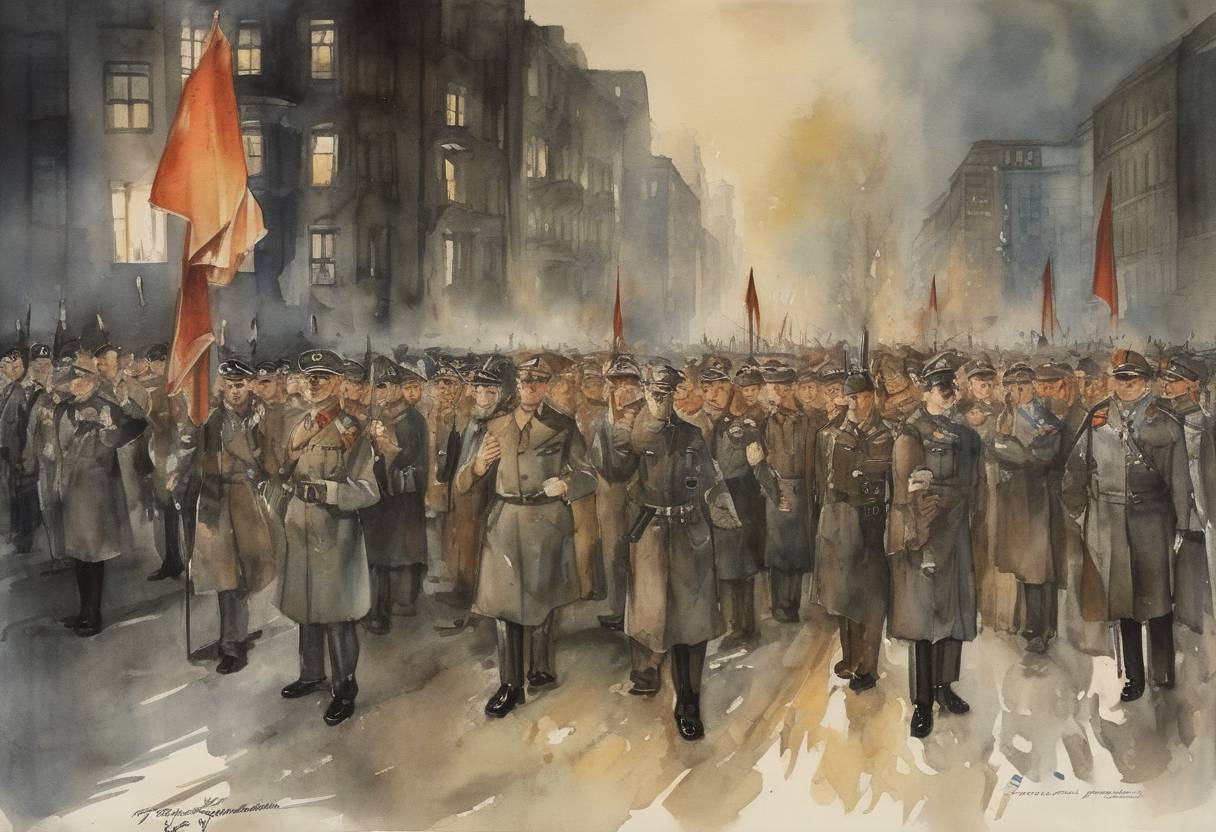
The Night of the Long Knives, also known as the Röhm Purge, was a critical event in Nazi Germany that took place from June 30 to July 2, 1934. This purge was orchestrated by Adolf Hitler to consolidate his power by eliminating potential rivals within the Nazi Party and securing the loyalty of the German military.
Rise of the Nazi Party: By 1933, Adolf Hitler had become Chancellor of Germany, and the Nazi Party was the dominant political force. However, Hitler’s position was not entirely secure, as he faced opposition both within and outside the party.
Ernst Röhm and the SA: One of the key figures in the Nazi Party was Ernst Röhm, the leader of the Sturmabteilung (SA), a paramilitary organization that played a significant role in Hitler’s rise to power. The SA’s growing power and Röhm’s ambitions posed a threat to Hitler’s control.
Pressure from the Military and Conservatives: The German military (Reichswehr) and conservative elites were wary of the SA’s influence and Röhm’s desire to merge the SA with the military. They pressured Hitler to curb Röhm’s power to gain their support.
Initiation of the Purge: On June 30, 1934, Hitler, along with key Nazi officials such as Heinrich Himmler and Hermann Göring, initiated a series of coordinated actions to eliminate Röhm and other perceived threats.
Arrests and Executions: Over the course of the purge, the SS (Schutzstaffel), under Himmler’s command, arrested and executed several SA leaders, including Röhm. Other political adversaries, such as former Chancellor Kurt von Schleicher, were also targeted.
Extent of the Purge: Estimates suggest that between 85 and 200 people were killed during the purge, although the exact number remains uncertain. The operation effectively dismantled the SA’s leadership and quelled any potential dissent within the party.
Consolidation of Power: The Night of the Long Knives significantly strengthened Hitler’s position. By eliminating Röhm and other rivals, Hitler secured the loyalty of the German military and gained the support of conservative factions.
Impact on the SA: The SA’s influence was drastically reduced, and the SS emerged as the dominant paramilitary organization within the Nazi regime.
Legal Justification: In the aftermath, the Nazi regime justified the purge as a necessary action to prevent a coup, portraying it as a defense of the state. This narrative was used to legitimize the extrajudicial killings.
Hitler’s Unchallenged Authority: The purge marked a turning point in Hitler’s dictatorship, as it demonstrated his willingness to use ruthless measures to maintain control. It paved the way for the establishment of a totalitarian state.
The Night of the Long Knives was a pivotal moment in Nazi Germany’s history, illustrating the brutal lengths to which Hitler would go to secure his power and eliminate opposition. It set a precedent for the regime’s future actions and contributed to the consolidation of Hitler’s absolute authority.
Source: en.wikipedia.org