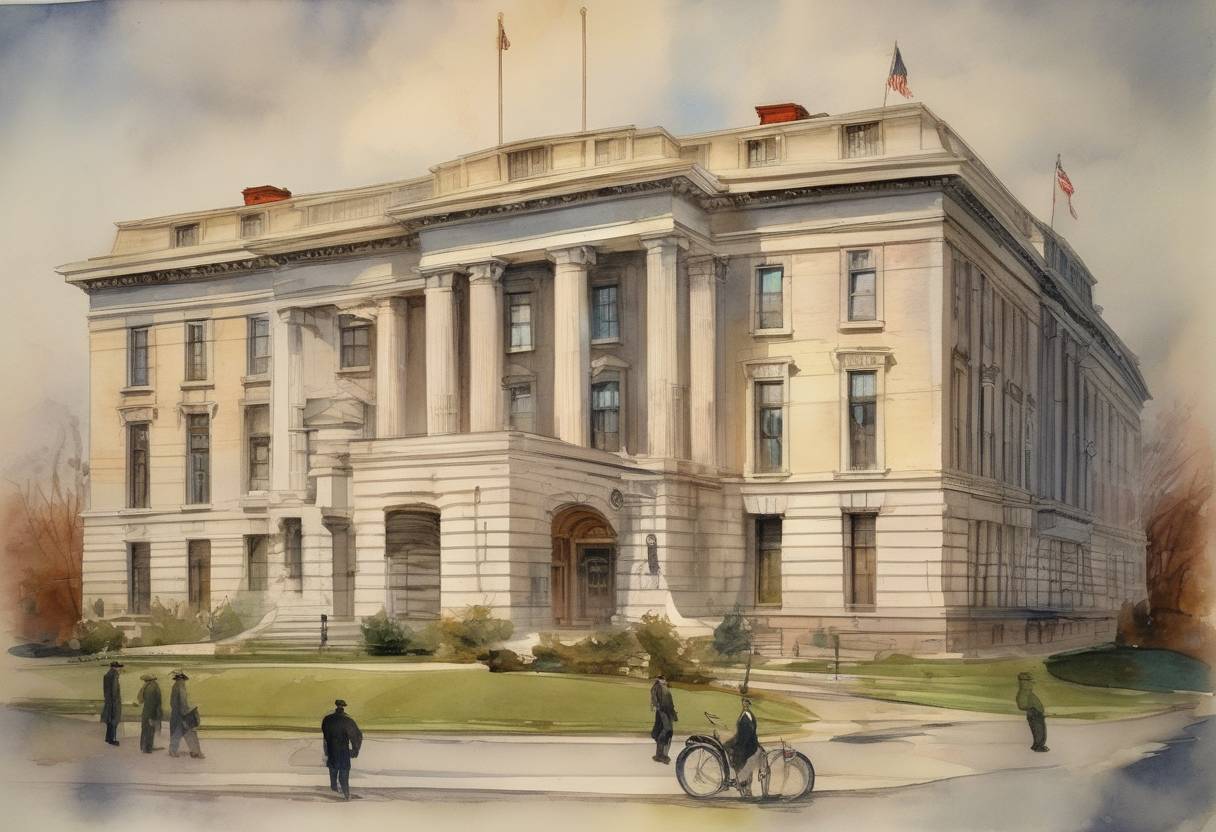
Establishment of the Federal Bureau of Investigation (FBI)
Date: July 26, 1908
Background
The early 20th century in the United States was a period marked by rapid industrialization, urbanization, and the accompanying rise in crime. The federal government recognized the need for a dedicated agency to handle investigations that crossed state lines and required a national scope. Prior to the establishment of the Bureau of Investigation, federal law enforcement was fragmented and lacked a centralized body to address complex criminal activities.
Key Events Leading to the Establishment
Progressive Era Reforms: The Progressive Era (1890s-1920s) was characterized by efforts to reform government and society, including the fight against corruption and crime. This period laid the groundwork for the creation of a federal investigative body.
Department of Justice: Established in 1870, the Department of Justice (DOJ) was responsible for overseeing federal legal affairs. However, it lacked a dedicated investigative arm to enforce federal laws effectively.
Theodore Roosevelt’s Presidency: President Roosevelt, serving from 1901 to 1909, was a proponent of reform and strengthening federal capabilities. His administration saw the need for a more robust federal investigative force.
Establishment of the Bureau of Investigation
On July 26, 1908, the Bureau of Investigation (BOI) was established as a division of the Department of Justice. Attorney General Charles Bonaparte, under President Roosevelt’s administration, played a crucial role in its creation. Initially, the BOI was staffed with a small team of special agents tasked with investigating violations of federal laws, particularly those related to antitrust and interstate commerce.
Initial Challenges and Growth
Limited Scope and Resources: In its early years, the BOI faced challenges due to limited jurisdiction and resources. It primarily focused on financial crimes, land fraud, and neutrality violations.
Expansion of Powers: Over time, the BOI’s powers expanded, particularly during World War I, when it was tasked with investigating espionage and sabotage.
Reorganization and Renaming: In 1935, the Bureau of Investigation was reorganized and renamed the Federal Bureau of Investigation (FBI). This transformation was part of a broader effort to enhance its capabilities and public image.
J. Edgar Hoover’s Leadership: J. Edgar Hoover, appointed as director in 1924, played a pivotal role in shaping the FBI into a premier law enforcement agency. His tenure saw significant advancements in forensic science, criminal databases, and the professionalization of the agency.
Historical Significance
The establishment of the FBI marked a significant step in the federal government’s ability to enforce laws across state lines and address complex criminal activities. Over the decades, the FBI has evolved to tackle a wide range of issues, including organized crime, terrorism, and cybercrime, becoming a cornerstone of national security and law enforcement in the United States.
Conclusion
The creation of the Bureau of Investigation on July 26, 1908, laid the foundation for what would become one of the most influential law enforcement agencies in the world. Its evolution reflects the changing landscape of crime and the ongoing efforts to maintain justice and security in the United States.