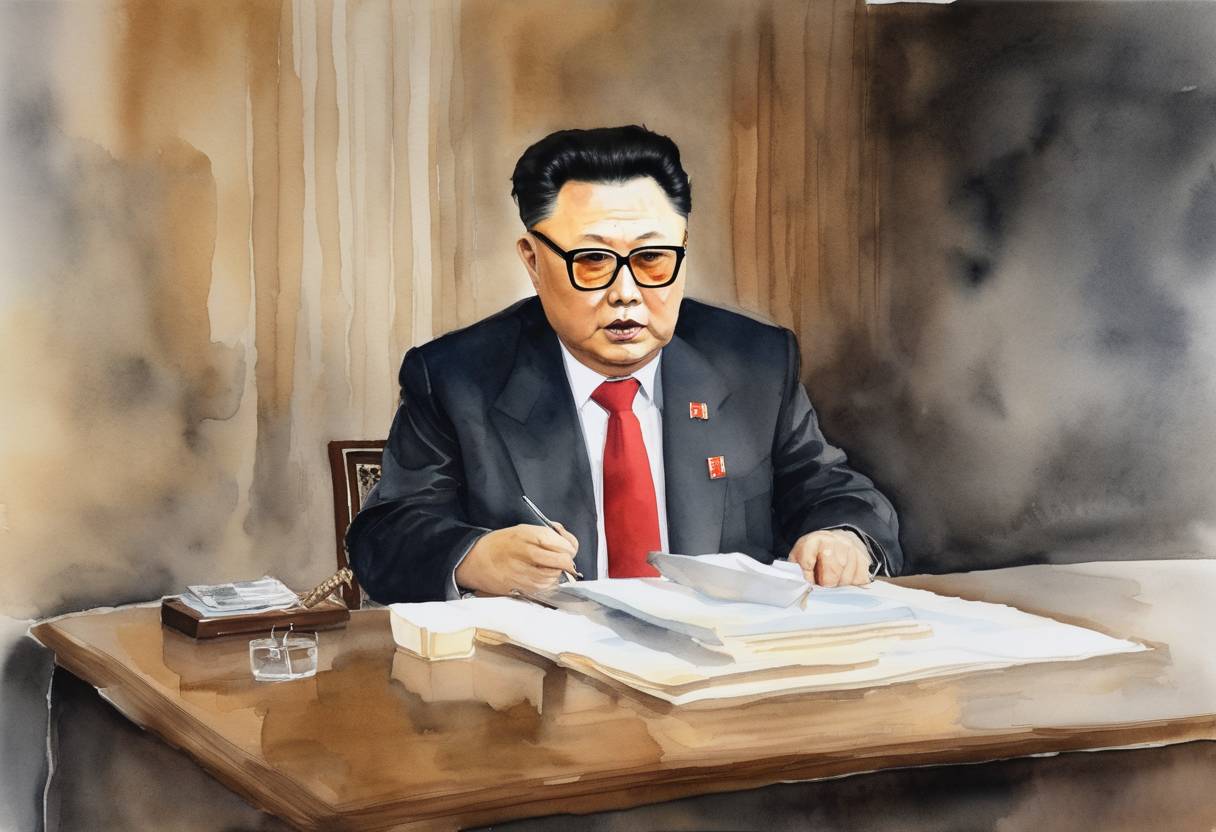
Death of Kim Jong-il and Succession of Kim Jong-un
On December 19, 2011, the world was informed of the death of Kim Jong-il, the Supreme Leader of North Korea, who passed away two days earlier on December 17, 2011. The announcement marked a significant moment in North Korean history, as it initiated a leadership transition to his son, Kim Jong-un.
Background
Kim Jong-il had ruled North Korea since 1994, following the death of his father, Kim Il-sung, the founding leader of the Democratic People’s Republic of Korea (DPRK). His rule was characterized by a strict adherence to the Juche ideology—self-reliance and strong centralized control over the state. During his leadership, North Korea experienced significant political isolation, economic challenges, and military developments, including the country’s withdrawal from the Nuclear Non-Proliferation Treaty and its subsequent nuclear tests.
Announcement and Reaction
The formal announcement of Kim Jong-il’s death was made on state television by a tearful broadcaster, noting that he died from a heart attack while traveling by train for a “field guidance” tour. The announcement specified the date of his passing as December 17, 2011.
The news prompted immediate declarations of national mourning in North Korea, with the government announcing an official mourning period. The death also raised concerns on the international stage regarding the future stability of North Korea, given the unpredictable nature of its political system and its nuclear ambitions.
Succession of Kim Jong-un
Kim Jong-un, the youngest son of Kim Jong-il, was quickly elevated to the position of “Great Successor.” Although relatively unknown before his father’s death, he had been gradually introduced to the North Korean public as a high-ranking government and military official.
The transfer of power to Kim Jong-un was intended to be a smooth transition to maintain regime stability. In the months and years following his ascent to power, Kim Jong-un consolidated his leadership by taking on significant roles, including the Chairman of the Workers’ Party of Korea and the Supreme Commander of the Korean People’s Army.
Historical Significance
The succession of Kim Jong-un represented the third generation of the Kim family’s dynastic rule. His leadership marked a continuation of North Korea’s existing policies, but with some shifts in style and diplomatic engagement on the international front.
The event underscored the importance of understanding the complexities of North Korean politics and its impact on regional and global security dynamics. The change in leadership also sparked discussions about potential reforms within North Korea, although the extent of such reforms remains a topic of debate among analysts and policymakers.
In summary, December 19, 2011, was the day the world came to know about a pivotal leadership change in North Korea, setting the stage for ongoing developments under Kim Jong-un’s rule.