The Attack on Montreal: November 13, 1775
1775 · Montreal, Canada
American Revolutionary War: Patriot revolutionary forces under Colonel Ethan Allen attack Montreal, but are defeated by British defenders.
September 17, 1775
The American Revolutionary War sees the Battle of Fort St. Jean, a significant early conflict between Colonial and British forces in Quebec.
Saint-Jean-sur-Richelieu, Province of Quebec | Continental Army
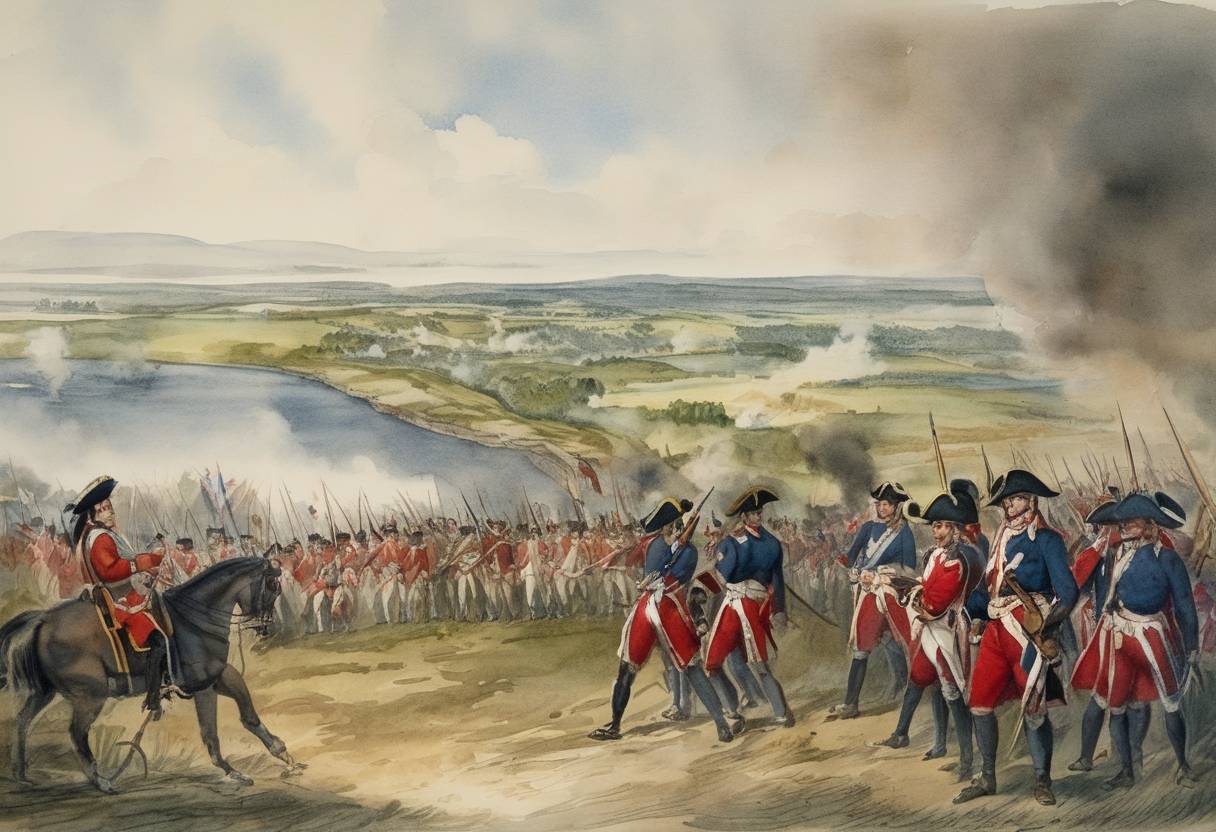
The Battle of Fort St. Jean, also known as the Siege of Fort St. Jean, was a crucial early confrontation during the American Revolutionary War. The focus of this battle was a military stronghold located in Quebec, Canada. The conflict took place in the broader context of the Continental Army’s Invasion of Canada, a campaign aimed at securing Quebec and persuading its residents to join the 13 American colonies in rebellion against British rule.
By the summer of 1775, the Second Continental Congress authorized a military expedition to confront British forces in Canada, aiming to prevent any potential British offensives from the north. General Richard Montgomery led the American forces northward, taking the initiative to capture several strategic locations along the Richelieu River.
The siege of Fort St. Jean began in earnest on September 17, 1775. General Montgomery’s forces consisted of around 1,000 Continental soldiers and militia. They began the siege by encircling the fort, effectively cutting off British supplies and reinforcements. The fort was defended by a garrison of about 700 British regulars and Canadian militia under the command of Major Charles Preston.
Throughout the siege, the Continental forces employed both artillery and psychological tactics, including bombardment and negotiation attempts, to pressure the British defenders into surrendering. Resources for the British were limited, and the prolonged siege began to take a toll on their morale and physical condition.
Although the siege did not conclude on September 17, it marked the beginning of sustained efforts by the American forces to weaken the British hold in Quebec. The siege would continue until the eventual American victory with the surrender of Fort St. Jean on November 3, 1775. This victory allowed the Continental Army to advance further into Canadian territory, although their ultimate goal of converting Quebec into a 14th colony in rebellion against British rule was unsuccessful in the long run.
The events at Fort St. Jean underscored the strategic importance of controlling key military positions and demonstrated the Continental Army’s willingness to take bold actions early in the Revolutionary War. Despite the ultimate failure of the Canadian campaign, the Battle of Fort St. Jean remains a significant episode highlighting the complexities and aspirations of the American quest for independence.
Source: www.britannica.com