Christopher Columbus Departs on His Fourth and Final Voyage
1502 · Cadiz, Spain
Christopher Columbus departs on his fourth and final voyage to the Americas.
September 19, 1493
Christopher Columbus set sail from Cadiz, Spain on his second voyage to the New World. This voyage was notable for its larger fleet and the transportation of settlers and supplies meant to establish lasting colonies in the Americas.
Cadiz, Spain | Spanish Crown
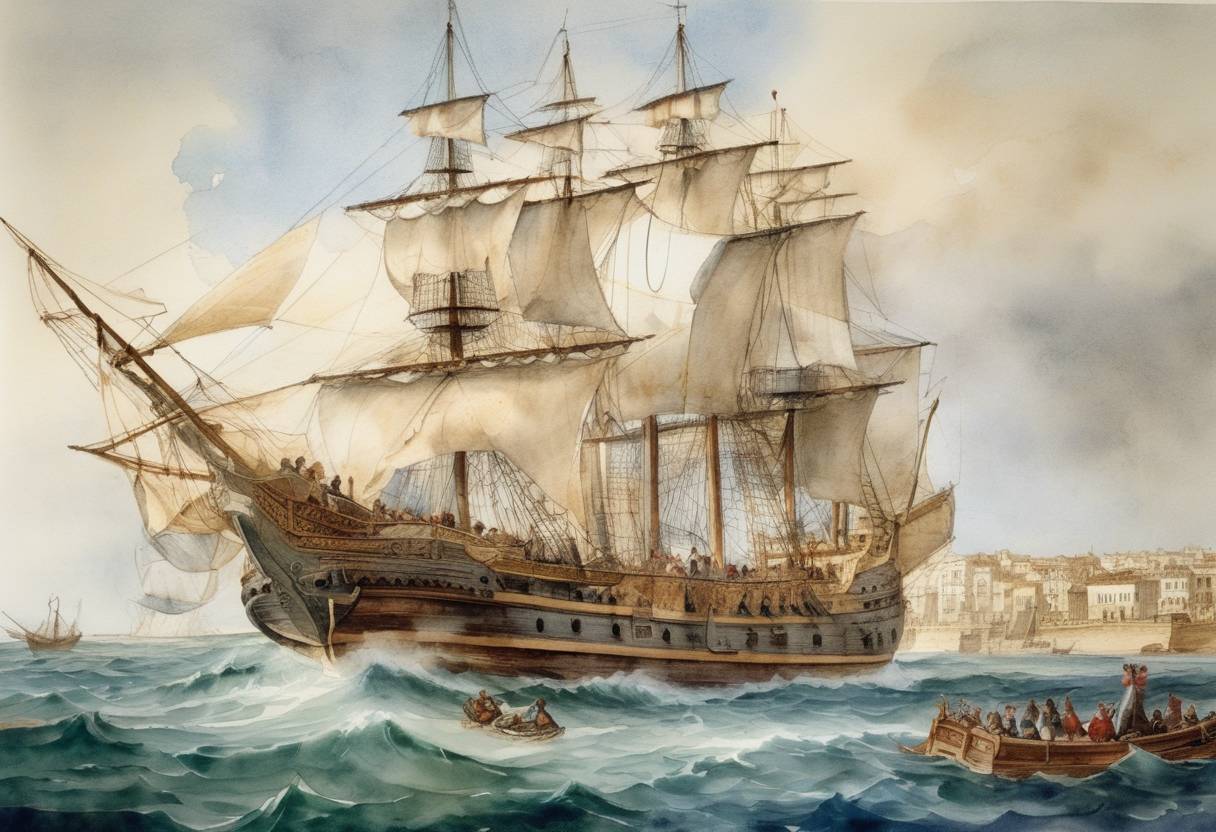
On September 19, 1493, Christopher Columbus departed from the port of Cadiz, Spain, embarking on his second voyage to the New World. This expedition was significantly larger and more ambitious than his first voyage in 1492, highlighting the Spanish Crown’s increasing interest in establishing a strong foothold in the newly discovered lands.
Following the success of his first voyage, Columbus was commissioned by the Catholic Monarchs, Ferdinand II of Aragon and Isabella I of Castile, to establish settlements and assert Spanish sovereignty over the new territories. The second expedition was meticulously organized, reflecting Spain’s strategic goals of exploration, colonization, and conversion of indigenous populations to Christianity.
Unlike his first voyage, which comprised three ships and a small crew, Columbus’ second voyage included a fleet of 17 ships. This fleet carried approximately 1,200 to 1,500 people, including adventurers, colonists, and priests. The mission aimed to lay down the foundations for permanent European settlements in the Americas. In addition to human passengers, the ships were loaded with supplies necessary for establishing and sustaining colonies, such as livestock, seeds, tools, and other essentials.
Upon setting sail on September 19, 1493, Columbus led his significant fleet across the Atlantic. The journey posed many challenges, including navigating the vast ocean with a much larger convoy and managing supplies and morale among the diverse group of settlers and crew. Despite these challenges, Columbus was determined to achieve the goals set forth by the Spanish Crown.
The second voyage of Columbus marked a pivotal moment in the Age of Exploration. It set the stage for the European colonization of the Americas, leading to profound and lasting effects on the history, culture, and demographics of the New World. This journey contributed to the expansion of European influence and sparked interest and competition among European powers for territorial claims and resources in the New World.
The expedition’s legacy is complex, encompassing positive achievements in navigation and exploration while also initiating centuries of colonization that profoundly affected indigenous populations.