The First Successful Kidney Transplant: December 23, 1954
1954 · Boston, United States
The first successful kidney transplant was performed by Dr. Joseph Murray and his team at Peter Bent Brigham Hospital in Boston.
December 29, 1959
The first known human to human kidney transplant with an unrelated donor was performed at the Peter Bent Brigham Hospital in Boston, Massachusetts.
Boston, United States | Peter Bent Brigham Hospital
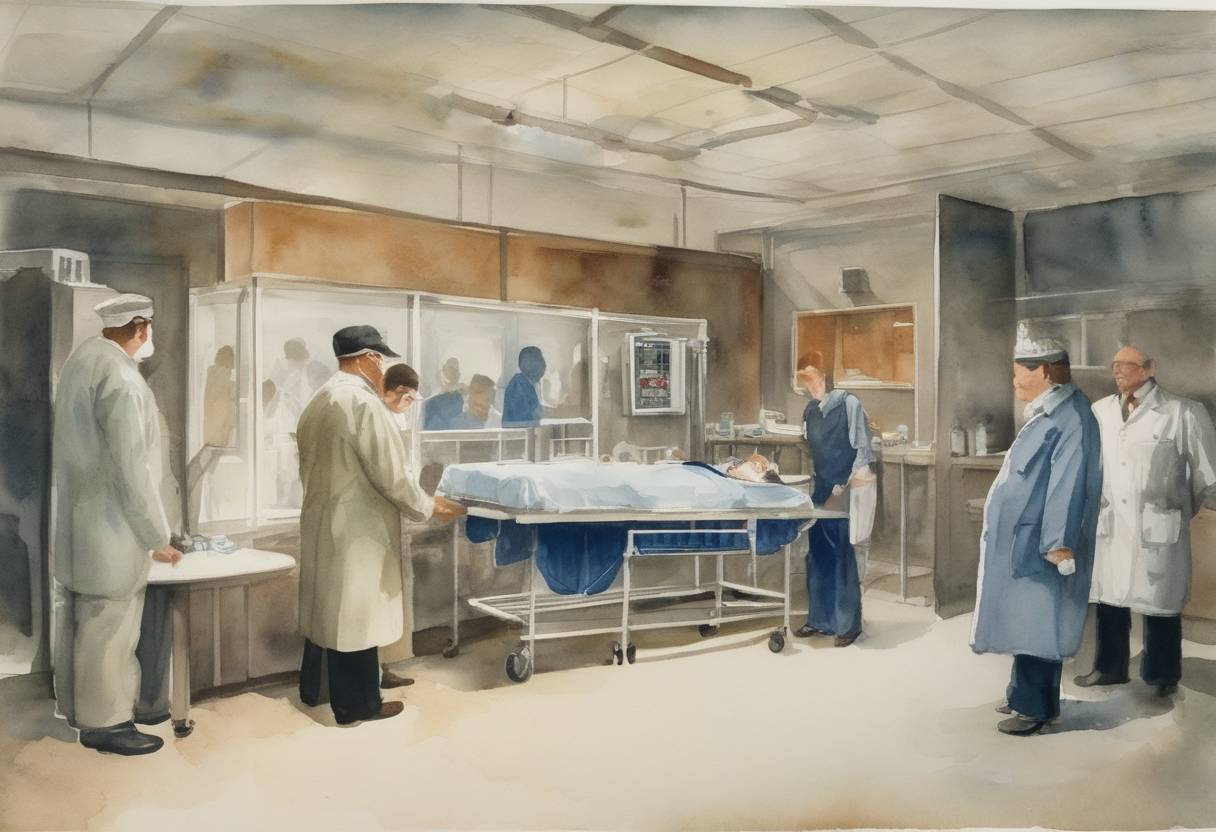
On December 29, 1959, a groundbreaking medical procedure took place at the Peter Bent Brigham Hospital in Boston, Massachusetts, marking a pivotal moment in transplant history. This date is significant for hosting the first successful kidney transplant between unrelated human donors, an achievement that opened new possibilities in the realm of organ transplantation.
Prior to this event, most kidney transplants involved related donors, largely due to the challenges posed by immune rejection. One of the most famous cases was the 1954 kidney transplant between identical twins, Richard and Ronald Herrick, also performed at the Peter Bent Brigham Hospital, which successfully circumvented the issue of rejection due to their identical genetic makeup.
Dr. Joseph Murray, a pioneering figure in transplantation surgery and later recipient of the Nobel Prize in Physiology or Medicine, led the surgical team. The recipient was Ruth Tucker, a patient suffering from kidney disease. The donor was not a blood relative, which significantly increased the complexity of the procedure due to the potential for immune rejection.
To address this, the medical team employed immunosuppressive drugs, including azathioprine, to moderate the recipient’s immune response and prevent rejection of the foreign organ. This innovative approach set the stage for future protocols in transplant surgeries involving unrelated donors.
The successful transplant extended Ruth Tucker’s life significantly, demonstrating the feasibility of using immunosuppression in unrelated donor transplants. This procedure catalyzed advancements in immunology and transplant surgery, impacting countless patients by expanding the potential donor pool beyond immediate family members.
Dr. Murray’s work and this specific surgery highlighted the importance of immunosuppressive therapies, laid the groundwork for further research in the field, and greatly contributed to the evolution of transplantation as a mainstream medical practice.
This landmark event is not only significant for its immediate success but also for its enduring influence on medical science. The introduction of immunosuppressive treatments enabled more diverse and widespread organ transplants, fundamentally altering organ donation protocols and offering hope to those suffering from organ failure.
The success of the 1959 procedure underscored the collaborative achievements of medical science in overcoming complex biomedical challenges, and it is remembered as a cornerstone in the history of organ transplantation.
Source: www.sciencedirect.com