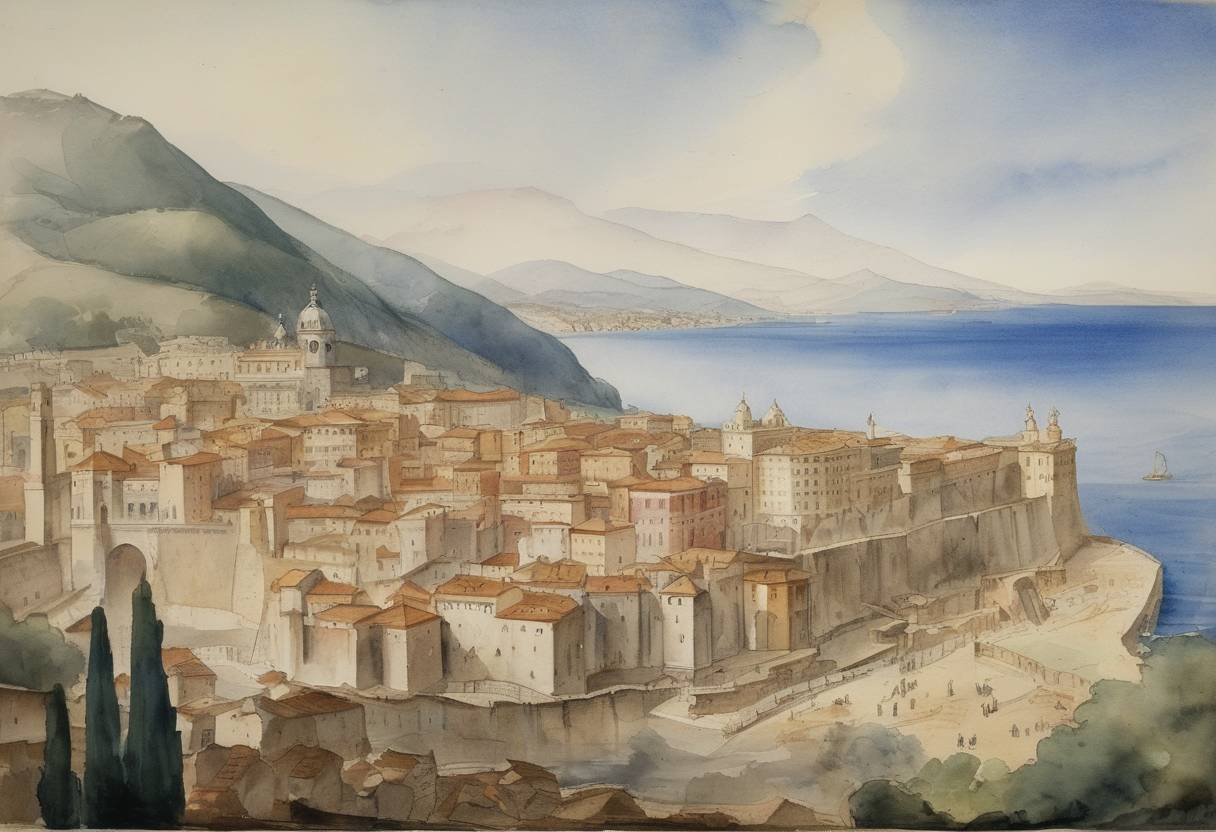
Treaty of Bastia - October 12, 1398
The Treaty of Bastia, signed on October 12, 1398, marked a significant moment in the history of Corsica and its relationship with the Republic of Genoa. This treaty was a result of prolonged conflict and negotiation involving Vanozza Cominella, representing Corsican interests, and the Republic of Genoa, a powerful maritime state of the time.
Background
During the late 14th century, Corsica was a battleground for control among various European powers. The geopolitical importance of the island stemmed from its strategic location in the Mediterranean Sea, making it a valuable asset for trade and military dominance. The island had experienced fluctuating control, with local Corsican leaders often caught between larger powers such as Pisa, Genoa, and the Kingdom of Aragon.
Key Provisions
The treaty explicitly involved the cession of certain Corsican cities to Genoese control. While specific details of the cities and terms remain less documented, the essence of the treaty highlighted a shift in power, reasserting Genoese influence over Corsica—an influence that had been challenged by both internal rebellion and external threats.
Consequences and Significance
Genoese Hegemony: The treaty reinforced Genoa’s control over Corsica, placing the island firmly under Genoese administration for several more decades. This further integrated Corsica into the Genoese maritime empire, impacting its culture, economy, and politics.
Local Autonomy and Resistance: While the treaty granted Genoa official control, local resistance persisted throughout Corsica. The complex legacy of external rule and local autonomy struggles continued to shape Corsican identity and history well beyond the 14th century.
Impact on Corsican Society: The cession enacted by Vanozza Cominella impacted the social and political structures within Corsica, as Genoa restructured the governance of the acquired territories to ensure loyalty and efficient administration.
The Treaty of Bastia is an example of how medieval politics and power dynamics influenced the territorial configurations and regional governance structures that still resonate in historical narratives of Corsica and Genoa. It represents the enduring complexity of Corsican identity and its relationship with continental European powers.