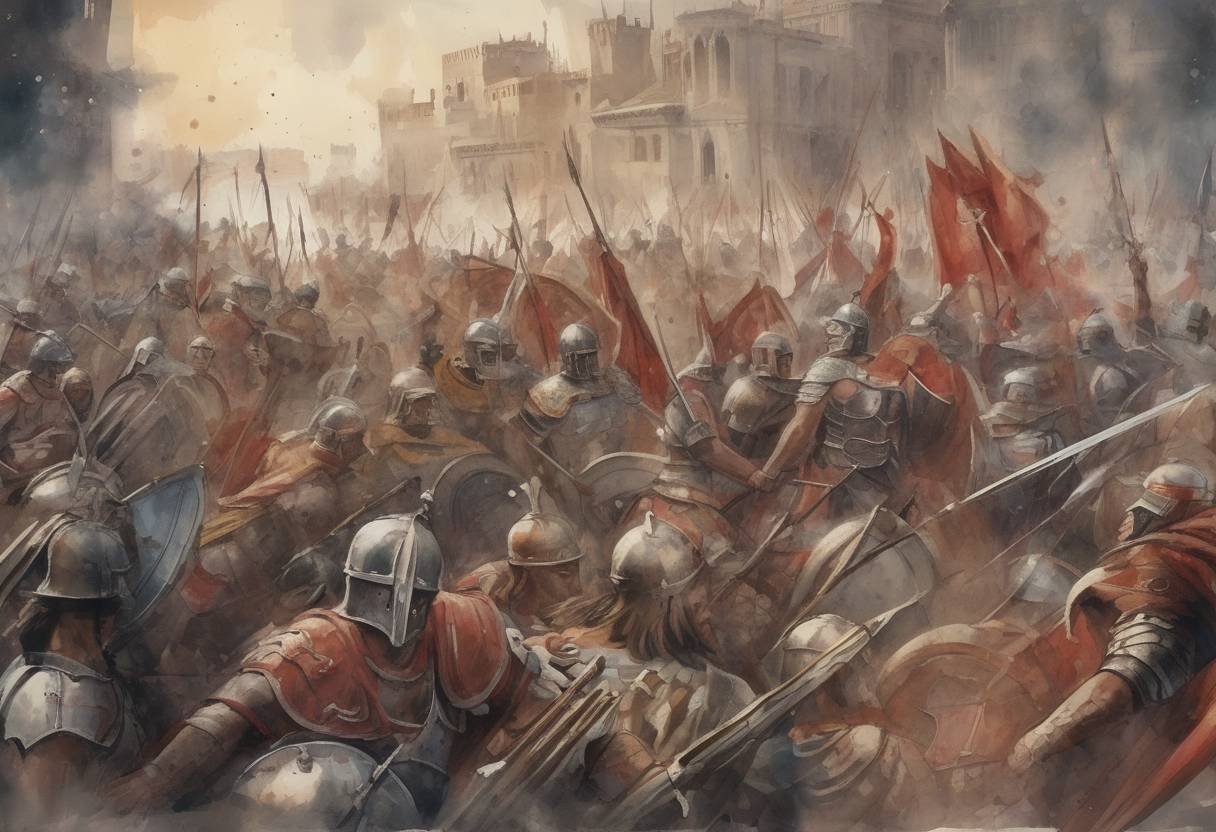
The Gothic War and the Battle of Marcianople
On October 7, 376, a significant event in the history of the Roman Empire and the Gothic tribes unfolded: the beginning of the Gothic War, marked by the Battle of Marcianople. This conflict was a pivotal moment in the series of events that led to the eventual decline of the Western Roman Empire.
Background
The Gothic War (376-382) was a conflict between the Roman Empire and the Gothic tribes, primarily the Thervingi and the Greuthungi. The Goths, led by Fritigern, were seeking refuge within the Roman Empire due to pressure from the Huns, who were expanding into Gothic territories. The Roman Emperor Valens, ruling the Eastern Roman Empire, initially allowed the Goths to settle in the Roman province of Thrace.
However, the situation quickly deteriorated due to the Roman administration’s failure to provide adequate support and resources to the Gothic refugees. Corruption and mismanagement led to severe shortages of food and supplies, causing unrest among the Goths.
The Battle of Marcianople
The tensions between the Roman authorities and the Goths escalated into open conflict. On October 7, 376, the Goths, under the leadership of Fritigern, clashed with the Roman forces near Marcianople, a city in the province of Moesia (modern-day Bulgaria).
The battle was a decisive victory for the Goths. The Roman army, unprepared for the scale of the Gothic uprising and hampered by internal issues, was unable to withstand the Gothic assault. This defeat marked the beginning of a prolonged and challenging conflict for the Roman Empire.
Aftermath and Significance
The Battle of Marcianople set the stage for a series of engagements between the Goths and the Roman Empire, culminating in the disastrous Battle of Adrianople in 378, where the Roman Emperor Valens was killed. This defeat significantly weakened the Roman military and exposed the vulnerabilities of the empire to external threats.
The Gothic War highlighted the challenges faced by the Roman Empire in managing its borders and integrating diverse groups within its territories. It also underscored the shifting power dynamics in Europe, as the Goths emerged as a formidable force capable of challenging Roman authority.
The conflict ultimately led to the Treaty of 382, where the Goths were settled as foederati (allied tribes) within the empire, a temporary solution that foreshadowed further challenges for the Roman state.
In summary, the Battle of Marcianople was a crucial event that marked the beginning of the Gothic War, a conflict that played a significant role in the transformation of the Roman Empire and the broader history of Europe.