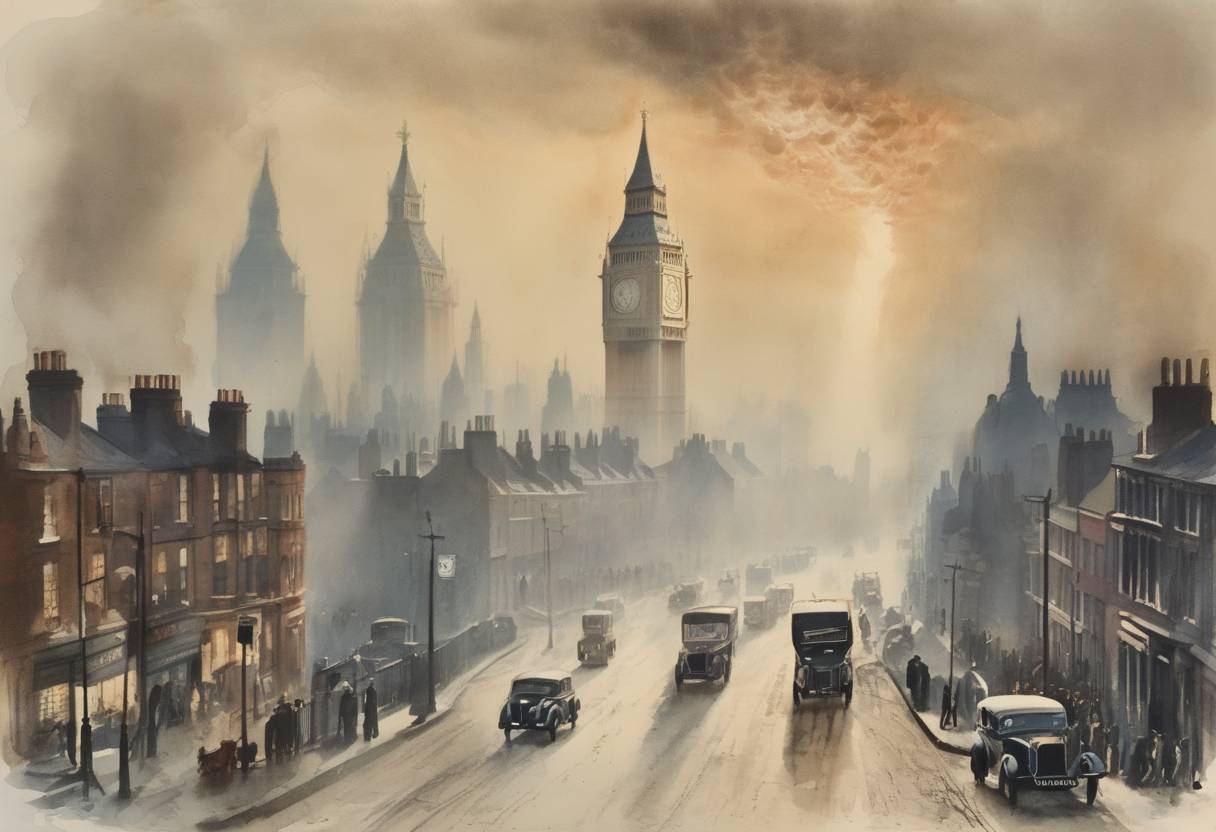
The Great Smog of London: December 5, 1952
Overview
The Great Smog of London, also known as the Big Smoke, began on December 5, 1952, and lasted until December 9, 1952. This environmental disaster was characterized by a dense fog combined with air pollution, which severely affected the city of London and resulted in significant health impacts and fatalities.
Context
- Post-War Britain: In the early 1950s, Britain was recovering from World War II. The economy was heavily reliant on coal as a primary source of energy for both domestic heating and industrial power.
- Weather Conditions: A period of cold weather had settled over London, leading residents to burn more coal to heat their homes. This coincided with an anticyclone, a weather pattern that trapped cold air and pollutants close to the ground.
Key Events
- Formation of the Smog: On December 5, a thick fog descended upon London. The fog mixed with smoke from coal fires, vehicle emissions, and industrial pollutants, creating a dense, yellowish smog.
- Visibility and Disruption: Visibility dropped to a few meters, causing severe disruption to transportation. Public transport, including buses and trains, was halted, and flights were grounded.
- Health Impact: The smog contained high levels of sulfur dioxide and other harmful particulates. It led to respiratory problems, particularly affecting the elderly, children, and those with pre-existing health conditions.
Consequences
- Immediate Impact: It is estimated that the Great Smog caused the deaths of approximately 4,000 people in the immediate aftermath, with some estimates suggesting the death toll could be as high as 12,000 when considering long-term health effects.
- Public Health Awareness: The disaster highlighted the severe impact of air pollution on public health, leading to increased awareness and concern among the public and policymakers.
- Legislative Response: In response to the tragedy, the British government enacted the Clean Air Act of 1956. This legislation aimed to reduce air pollution by controlling the emission of smoke from domestic and industrial sources and promoting the use of cleaner fuels.
Historical Significance
The Great Smog of London is a pivotal event in environmental history. It underscored the need for effective air quality management and regulation, setting a precedent for future environmental legislation. The disaster also served as a catalyst for the global environmental movement, influencing air pollution policies worldwide.
By understanding the causes and consequences of the Great Smog, we gain insight into the challenges of balancing industrial progress with environmental and public health considerations.