The National Maximum Speed Law of 1974
1974 · Washington, D.C., United States
President Richard Nixon signed a bill lowering the maximum U.S. speed limit to 55 MPH as an energy conservation measure.
September 7, 1977
The Torrijos-Carter Treaties were signed, guaranteeing Panama control over the Panama Canal after 1999.
Washington, D.C., United States | United States and Panama
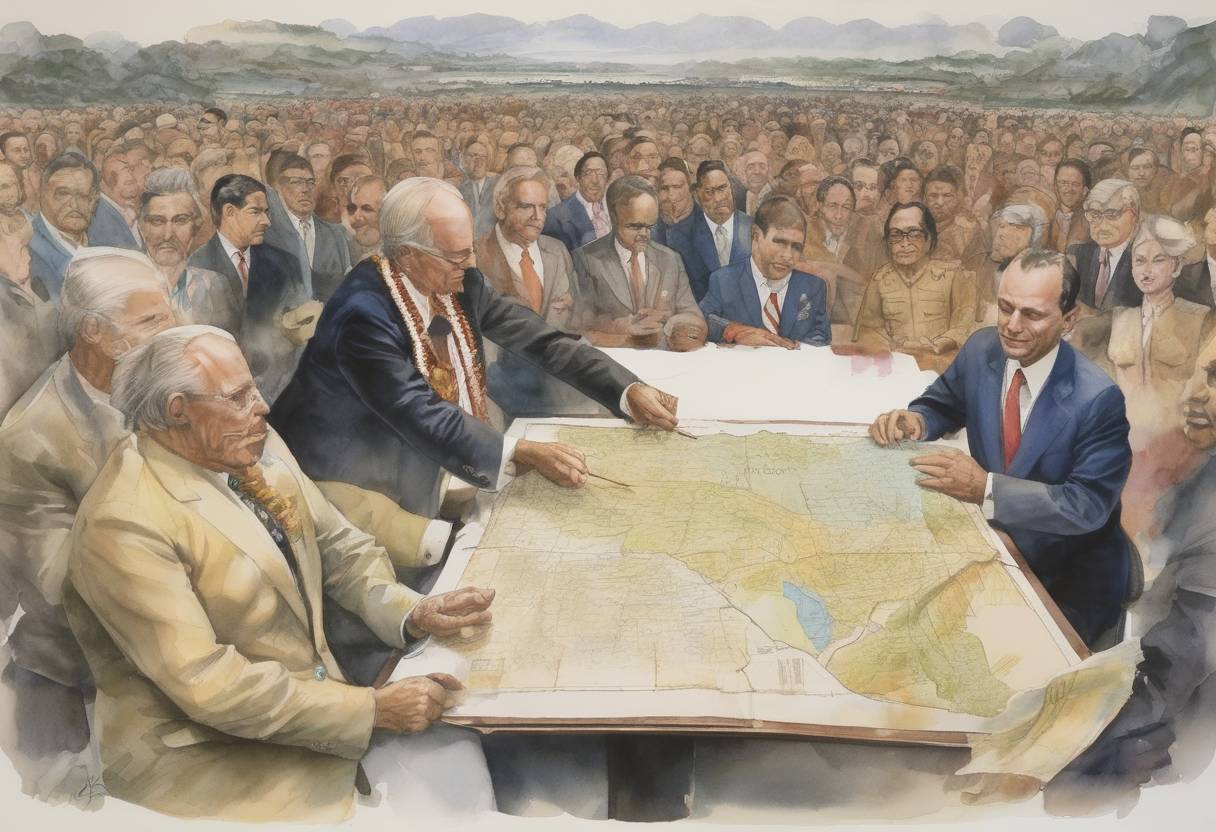
On September 7, 1977, a significant milestone in international diplomacy and U.S.-Latin American relations was achieved with the signing of the Torrijos-Carter Treaties. These treaties were pivotal in transferring control of the Panama Canal from the United States to Panama, marking a new era in the sovereignty and self-determination of Panama.
The Panama Canal, completed in 1914, was a monumental engineering feat that significantly shortened maritime travel by connecting the Atlantic and Pacific Oceans. Initially, the canal was controlled by the United States under the terms of the Hay-Bunau-Varilla Treaty of 1903, which granted the U.S. perpetual rights to the canal zone. This arrangement, however, was a source of tension and resentment in Panama, as it was seen as an infringement on the country’s sovereignty.
The Torrijos-Carter Treaties consisted of two separate agreements:
The Panama Canal Treaty: This treaty stipulated that the United States would gradually relinquish control of the canal to Panama, culminating in full Panamanian control by December 31, 1999. It also ensured the neutrality of the canal, allowing ships of all nations to use it under equal terms.
The Neutrality Treaty: This treaty guaranteed the permanent neutrality of the Panama Canal. It allowed the United States to defend the canal against any threat that might interfere with its continued operation and neutrality.
The signing of the Torrijos-Carter Treaties was a landmark event with several significant implications:
The treaties faced considerable opposition in the United States, with critics concerned about the loss of strategic control. Nonetheless, they were ratified by the U.S. Senate in 1978, and the gradual transfer of control proceeded as planned.
The Torrijos-Carter Treaties stand as a testament to the power of diplomacy and negotiation in resolving complex international issues. By addressing longstanding grievances and ensuring the fair and neutral operation of the Panama Canal, these treaties helped pave the way for a more equitable and cooperative relationship between the United States and Panama.
Source: en.wikipedia.org