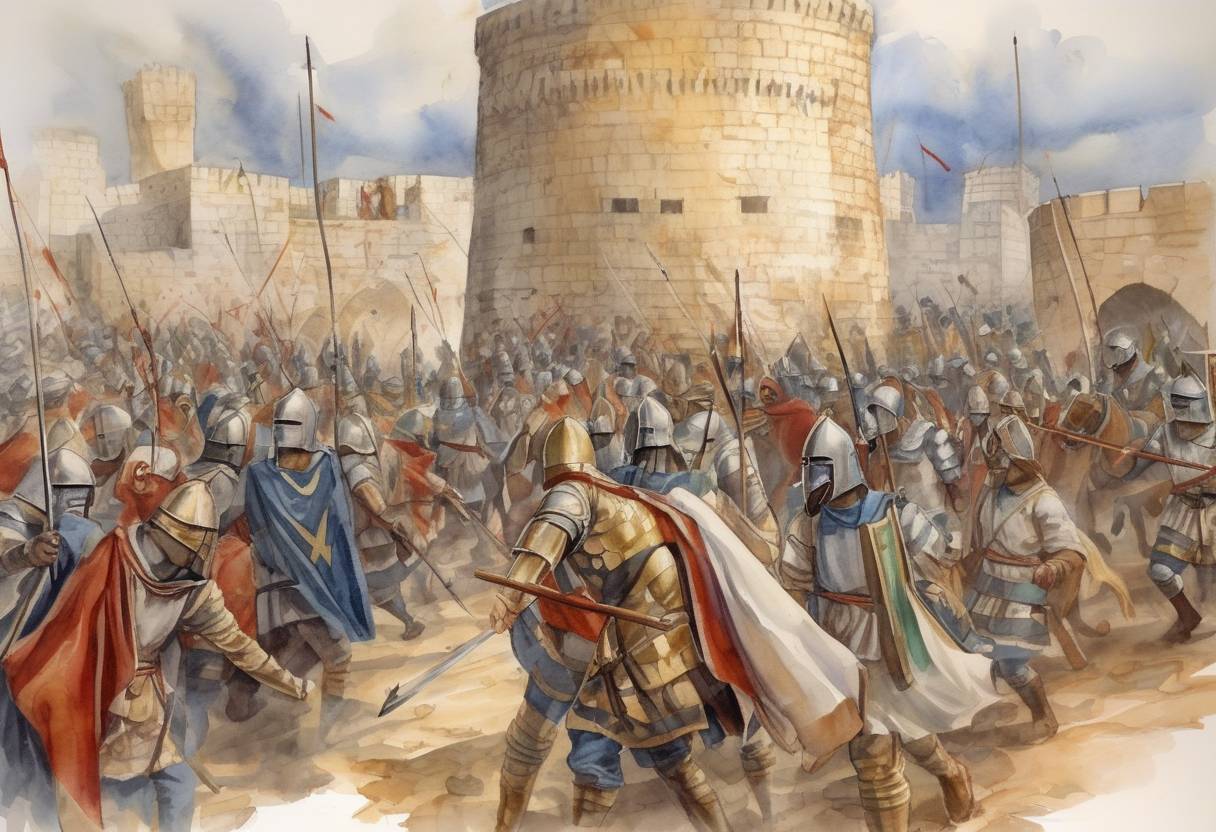
The Siege of Acre: Beginning of a Pivotal Battle in the Third Crusade
Background
The Third Crusade (1189–1192) was launched in response to the capture of Jerusalem by the Muslim leader Saladin in 1187. The fall of Jerusalem shocked the Christian world and prompted European leaders to organize a military expedition to reclaim the Holy Land. Key figures in this crusade included Richard I of England, Philip II of France, and Frederick I Barbarossa of the Holy Roman Empire.
The Siege of Acre Begins
On August 28, 1189, the Crusaders commenced the Siege of Acre, marking a critical phase in their campaign. Acre, a strategic port city in the Kingdom of Jerusalem, was of immense importance due to its location and fortifications. The siege was initiated by Guy of Lusignan, the deposed King of Jerusalem, who sought to regain his throne and bolster the Crusader presence in the region.
Key Events Leading to the Siege
- 1187: Saladin’s forces decisively defeated the Crusaders at the Battle of Hattin, leading to the capture of Jerusalem.
- 1188-1189: European monarchs began mobilizing their forces for the Third Crusade, driven by religious fervor and the desire to reclaim lost territories.
- 1189: Guy of Lusignan, with a small force, laid the groundwork for the siege by encamping outside Acre and calling for reinforcements.
The Siege
The siege was characterized by its prolonged and grueling nature, lasting nearly two years. It involved a series of assaults, counterattacks, and naval blockades. Both the Crusaders and the Muslim defenders, led by Saladin, displayed remarkable resilience and strategic acumen.
- Crusader Forces: The besieging army was a diverse coalition of European knights, soldiers, and volunteers, bolstered by the arrival of Richard I and Philip II in 1191.
- Muslim Defenders: Saladin’s forces were well-prepared and received continuous reinforcements, making the siege a protracted and bloody affair.
Aftermath and Significance
The Siege of Acre concluded on July 12, 1191, with the Crusaders capturing the city. This victory was a significant morale booster for the Crusader forces and marked a turning point in the Third Crusade. However, despite this success, the ultimate goal of recapturing Jerusalem remained elusive.
Broader Historical Impact
- Military and Political: The siege demonstrated the complexities of medieval warfare, involving both land and naval operations. It also highlighted the challenges of maintaining a cohesive alliance among diverse European forces.
- Cultural and Religious: The siege and the broader crusade intensified the cultural and religious conflicts between the Christian and Muslim worlds, leaving a lasting legacy on both sides.
The Siege of Acre remains a pivotal moment in the history of the Crusades, illustrating the enduring struggle for control over the Holy Land and the interplay of power, faith, and ambition in medieval geopolitics.