January 26, 1788

The British First Fleet, led by Captain Arthur Phillip, arrived at Port Jackson, marking the founding of the colony of New South Wales, now part of Australia.


Sydney, Australia | British Empire
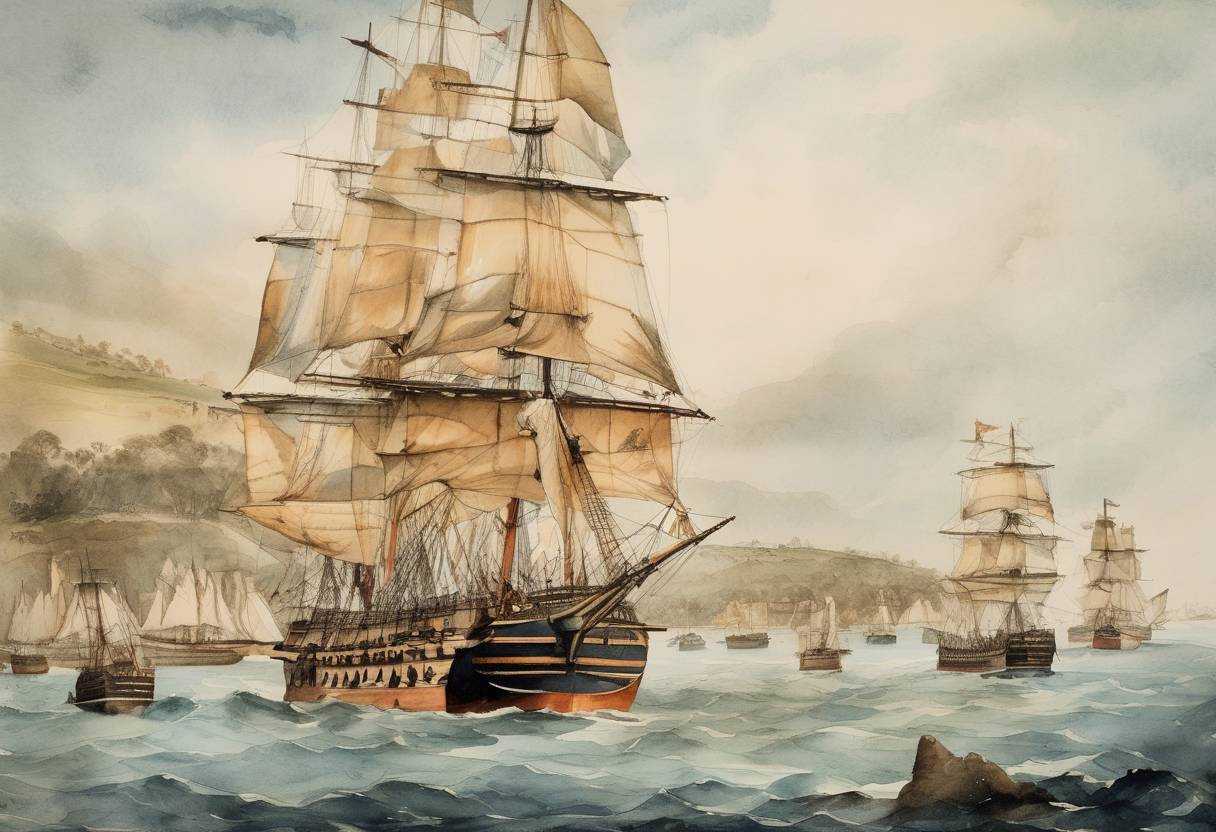
Watercolor painting based depiction of The British First Fleet, led by Captain Arthur Phillip, arrived at Port Jackson, marking the founding of the colony of New South Wales, now part of Australia. (1788)

The Arrival of the First Fleet at Port Jackson - January 26, 1788

On January 26, 1788, the British First Fleet, under the command of Captain Arthur Phillip, arrived at Port Jackson, marking a pivotal moment in Australian history with the founding of the colony of New South Wales. This event laid the foundation for modern Australia and is commemorated annually as Australia Day.

Background

The establishment of a penal colony in Australia was driven by several factors:

  • Overcrowding in British Prisons: By the late 18th century, Britain’s prisons were overcrowded due to increasing crime rates and the loss of the American colonies, which had previously served as a destination for transported convicts.
  • Strategic Interests: Establishing a presence in the Pacific was seen as beneficial for trade and as a strategic naval base.
  • Scientific Exploration: The Enlightenment era spurred interest in exploring and documenting new lands.

The Journey of the First Fleet

The First Fleet consisted of 11 ships, carrying over 1,400 people, including convicts, marines, and officers. The fleet departed from Portsmouth, England, on May 13, 1787, and took a route via Tenerife, Rio de Janeiro, and the Cape of Good Hope before reaching Botany Bay on January 18, 1788.

Key Ships in the Fleet

  • HMS Sirius: The flagship of the fleet.
  • HMS Supply: The armed tender.
  • Six Convict Transports: Including the Alexander, Charlotte, and Scarborough.
  • Three Store Ships: Including the Fishburn and Golden Grove.

Arrival at Port Jackson

Upon arrival at Botany Bay, Captain Phillip found the area unsuitable for settlement due to poor soil and lack of fresh water. Consequently, he explored further north and discovered Port Jackson, which offered a more favorable environment. On January 26, 1788, the fleet relocated to Port Jackson, where they established the settlement that would become Sydney.

Establishing the Colony

  • Initial Challenges: The settlers faced numerous challenges, including food shortages, unfamiliar climate, and tensions with the Indigenous peoples.
  • Relations with Indigenous Peoples: The arrival of the British marked the beginning of significant disruption for the Aboriginal communities, leading to conflicts and profound cultural impacts.

Significance and Legacy

The arrival of the First Fleet and the establishment of New South Wales marked the beginning of British colonization in Australia. This event had lasting implications:

  • Expansion of British Influence: It paved the way for further exploration and settlement across the continent.
  • Cultural and Demographic Changes: The introduction of European settlers led to dramatic changes in the social and cultural landscape of Australia.
  • Australia Day: January 26 is observed as Australia Day, a national holiday that celebrates the founding of the colony, though it is also a day of reflection and mourning for many Indigenous Australians, who refer to it as “Invasion Day.”

The founding of New South Wales was a complex event with far-reaching consequences, shaping the future of Australia and its people.