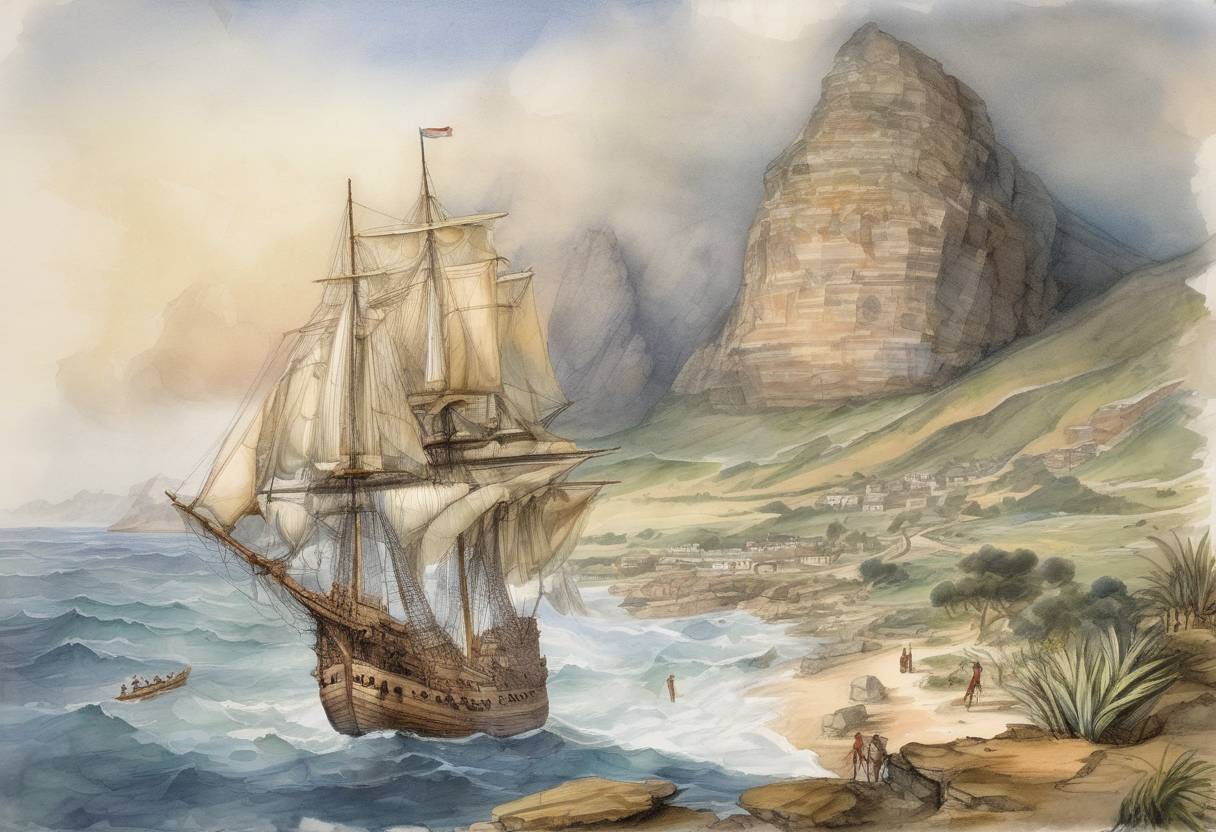
Vasco da Gama Rounds the Cape of Good Hope - November 22, 1497
On November 22, 1497, the Portuguese explorer Vasco da Gama achieved a significant milestone in the Age of Exploration by successfully rounding the Cape of Good Hope, the southern tip of Africa. This event marked a pivotal moment in the search for a sea route to India, which was crucial for establishing direct trade links with Asia, bypassing the overland routes dominated by Middle Eastern and Venetian traders.
Context and Background
Portuguese Exploration: The late 15th century was a period of intense maritime exploration for Portugal, driven by the desire to find new trade routes and expand its influence. Under the patronage of Prince Henry the Navigator, Portuguese explorers had been gradually mapping the west coast of Africa.
Strategic Importance: The Cape of Good Hope was a key geographical landmark. Successfully navigating around it meant that sailors could continue their journey up the eastern coast of Africa and eventually reach the Indian Ocean, opening up direct access to the lucrative spice markets of India and the East Indies.
The Voyage
Departure: Vasco da Gama set sail from Lisbon on July 8, 1497, with a fleet of four ships. His mission was to find a maritime route to the East, building on the earlier voyages of Bartolomeu Dias, who had first rounded the Cape in 1488 but did not proceed further.
Rounding the Cape: On November 22, 1497, da Gama’s fleet successfully navigated the treacherous waters of the Cape of Good Hope. This achievement demonstrated the feasibility of a sea route to India, which had been a long-standing goal for European powers seeking to bypass the land routes controlled by Islamic empires.
Aftermath and Significance
Continued Journey: After rounding the Cape, da Gama continued his voyage along the eastern coast of Africa, stopping at various ports to establish relations and gather information. He eventually reached Calicut (present-day Kozhikode) on the Malabar Coast of India in May 1498.
Impact on Trade: Vasco da Gama’s successful voyage opened the door for direct maritime trade between Europe and Asia. This had profound economic and political implications, leading to the establishment of Portuguese colonies and trading posts in Africa and Asia.
Legacy: The opening of the sea route to India marked the beginning of a new era in global trade and European colonial expansion. It significantly contributed to the rise of the Portuguese Empire as a major maritime power in the 16th century.
Vasco da Gama’s expedition was a landmark achievement in the history of exploration, setting the stage for future voyages that would further connect the world through trade and cultural exchange.