The Battle of Maserfield: August 5, 642
642 · Oswestry, England
The Battle of Maserfield took place, where King Oswald of Northumbria was defeated and killed by the forces of Penda of Mercia.
September 17, 0642
The Battle of Maserfield took place, where Penda of Mercia defeated and killed Oswald of Northumbria, leading to significant shifts in power among the Anglo-Saxon kingdoms.
Oswestry, England | Mercian Kingdom
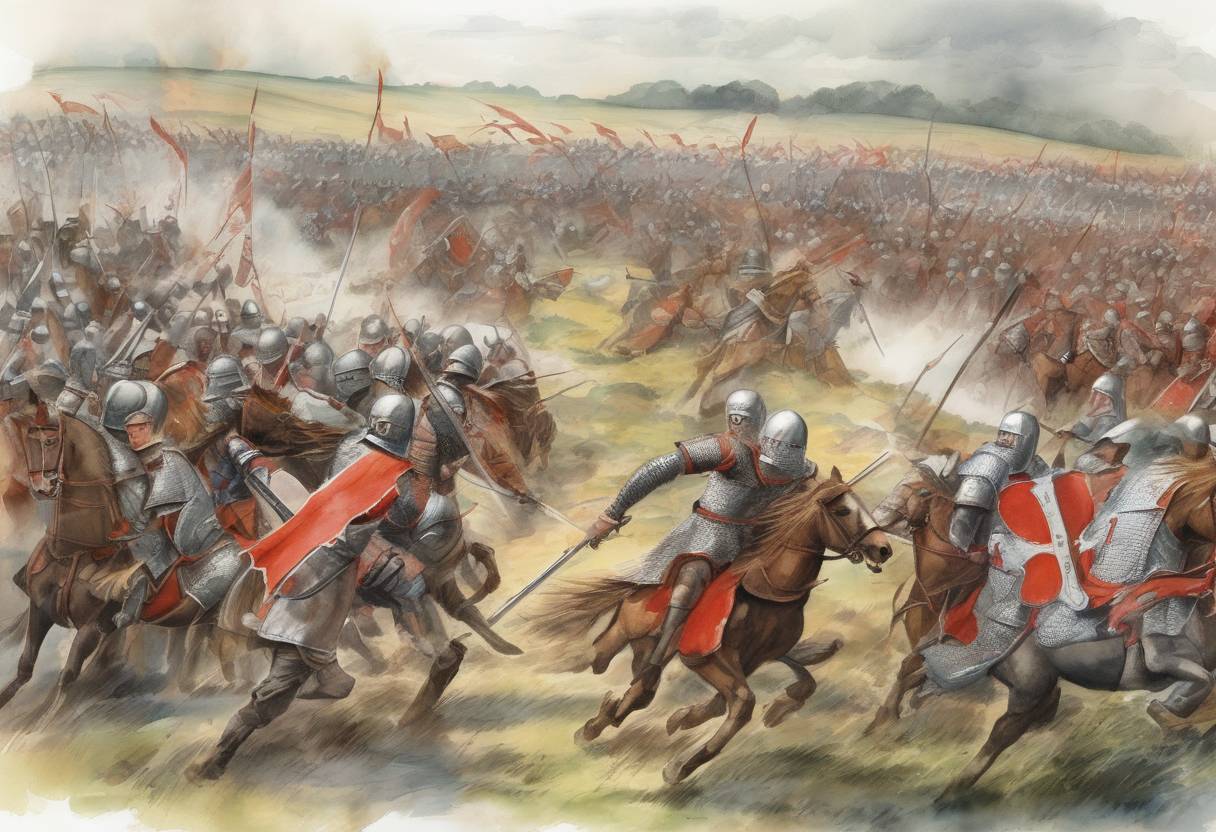
The Battle of Maserfield, fought on September 17, 642, was a pivotal conflict in the early medieval history of the British Isles. This battle saw Penda of Mercia defeat and kill Oswald of Northumbria, leading to significant shifts in power among the Anglo-Saxon kingdoms.
Anglo-Saxon England: During the early 7th century, England was divided into several kingdoms, with Northumbria and Mercia being two of the most powerful. Northumbria, under King Oswald, had become a dominant force, extending its influence over neighboring territories.
Oswald of Northumbria: Oswald was a Christian king who had established his rule after the Battle of Heavenfield in 634. His reign was marked by efforts to spread Christianity and consolidate power across the region.
Penda of Mercia: Penda was a pagan king known for his military prowess and opposition to Northumbrian dominance. His reign was characterized by frequent conflicts with neighboring kingdoms.
Location: The exact location of Maserfield is debated, but it is generally believed to have been near present-day Oswestry in Shropshire, England.
Conflict: The battle was part of ongoing hostilities between Mercia and Northumbria. Penda, allied with Welsh forces, sought to curb Northumbrian expansion and assert Mercian power.
Outcome: Penda’s forces decisively defeated the Northumbrians. Oswald was killed in the battle, and his body was dismembered, a fate that underscored the brutality of the conflict.
Power Shift: Oswald’s death marked a significant shift in the balance of power. Northumbria’s influence waned, while Mercia emerged as a dominant force in the region.
Religious Impact: Oswald was later venerated as a martyr and saint, particularly in Northumbria, due to his efforts to promote Christianity. His death was seen as a setback for the Christianization of the region.
Penda’s Reign: Penda continued to rule Mercia until his death in 655. His reign was marked by further conflicts with Northumbria and other kingdoms, as he sought to expand Mercian influence.
Legacy: The battle and its outcome had long-lasting effects on the political landscape of Anglo-Saxon England, influencing the power dynamics among the various kingdoms for decades.
The Battle of Maserfield remains a significant event in the history of early medieval England, illustrating the complex interplay of politics, religion, and warfare during this period.
Source: en.wikipedia.org