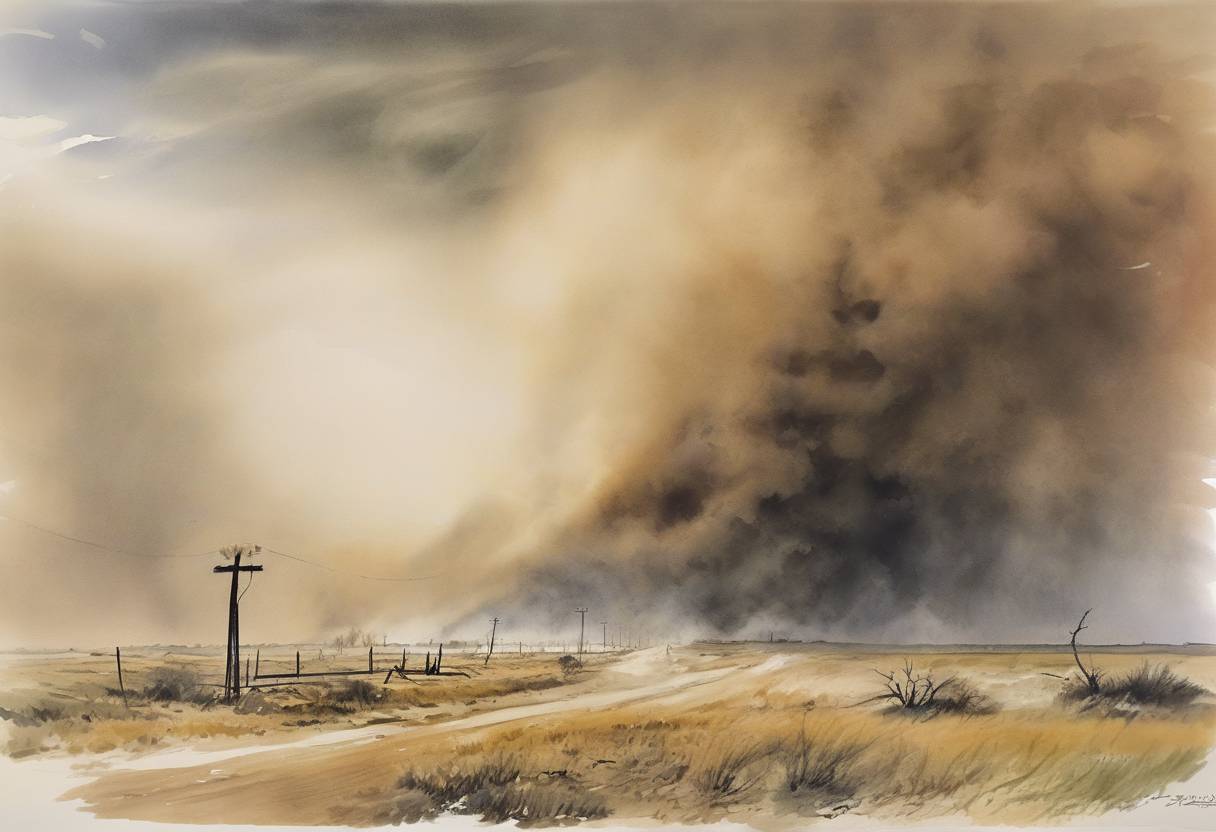
The Black Sunday Dust Storm: April 14, 1935
On April 14, 1935, one of the most devastating dust storms in American history, known as “Black Sunday,” swept across the Midwest, marking a significant moment in the Dust Bowl era. This catastrophic event underscored the severe environmental and agricultural challenges faced by the United States during the 1930s.
Context and Causes
The Dust Bowl was a period of severe dust storms that greatly damaged the ecology and agriculture of the American and Canadian prairies during the 1930s. It was primarily caused by a combination of severe drought and the failure to apply dryland farming methods to prevent wind erosion. The Great Plains had been extensively plowed and over-farmed, leaving the soil exposed and vulnerable to the elements.
The Event
On Black Sunday, a massive dust storm, often described as a “black blizzard,” swept across the Great Plains, affecting states such as Oklahoma, Texas, Kansas, and Colorado. The storm was so intense that it turned day into night, with winds reaching speeds of up to 60 miles per hour. The dust was so thick that visibility was reduced to a few feet, and people were forced to take shelter indoors.
Impact
Agricultural Devastation: The storm caused significant damage to crops and farmland, exacerbating the already dire economic conditions of the Great Depression. Many farmers were left destitute, unable to cultivate their land or repay debts.
Health Hazards: The dust storms posed serious health risks, leading to respiratory problems such as “dust pneumonia.” The fine dust particles infiltrated homes and buildings, making it difficult for people to breathe.
Migration: The harsh conditions forced many families to abandon their farms and migrate westward in search of better opportunities. This migration was famously depicted in John Steinbeck’s novel The Grapes of Wrath.
Aftermath and Significance
The Black Sunday storm was a turning point that drew national attention to the environmental disaster unfolding in the Great Plains. It prompted the federal government to take action, leading to the establishment of the Soil Conservation Service in 1935, which implemented measures to prevent soil erosion and promote sustainable farming practices.
The Dust Bowl era highlighted the need for better land management and conservation practices, lessons that continue to influence agricultural policy and environmental awareness today. Black Sunday remains a stark reminder of the impact of human activity on the environment and the importance of sustainable practices.