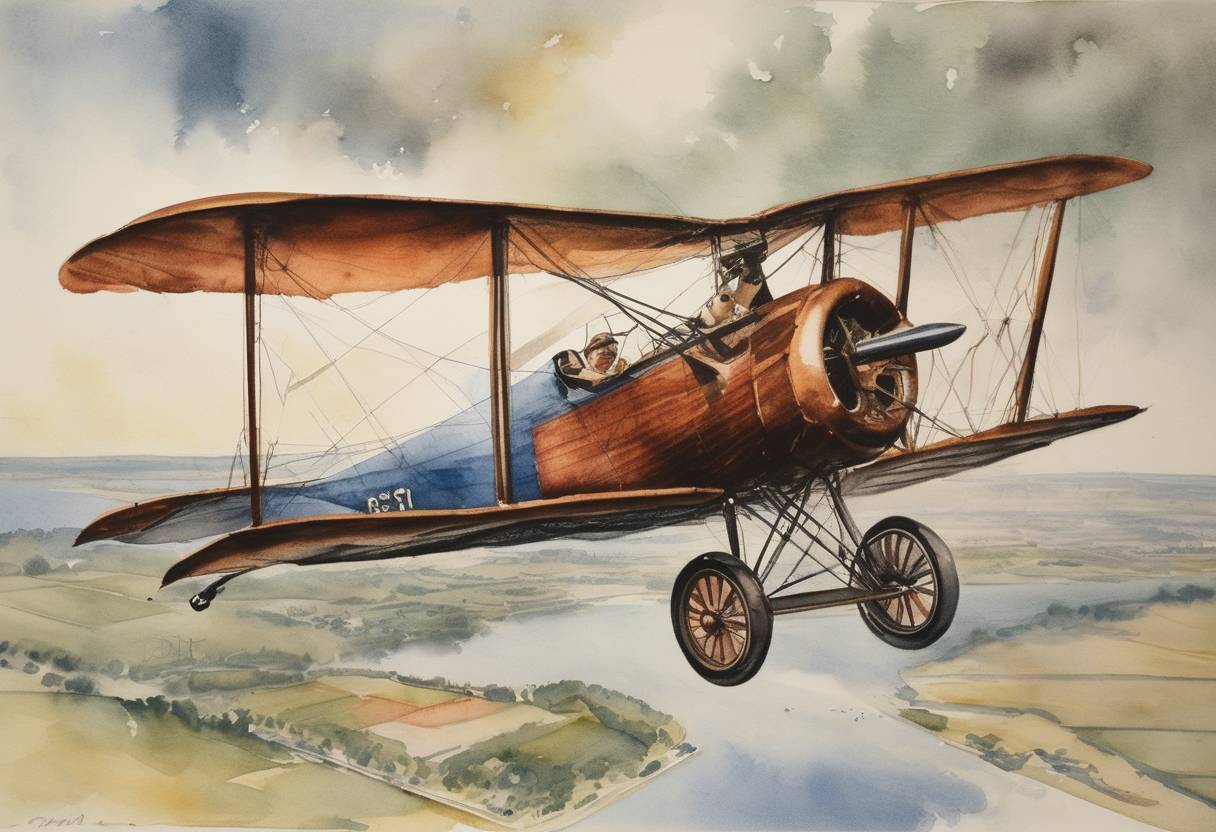
On May 21, 1927, Charles Lindbergh completed the first solo nonstop transatlantic flight, landing in Paris, France, after taking off from New York City. This historic achievement marked a significant milestone in aviation history and elevated Lindbergh to international fame.
Flight Details
- Aircraft: Lindbergh flew the Spirit of St. Louis, a custom-built, single-engine monoplane designed by Ryan Airlines. The aircraft was stripped down to optimize for the long-distance journey, emphasizing fuel capacity over comfort.
- Takeoff: Lindbergh departed from Roosevelt Field in Long Island, New York, at 7:52 a.m. on May 20, 1927.
- Journey: The flight covered approximately 3,600 miles (5,800 km) and lasted 33.5 hours. Lindbergh navigated using simple tools such as a compass and relied on dead reckoning while flying through challenging weather conditions.
- Landing: He touched down at Le Bourget Aerodrome near Paris at 10:22 p.m. local time (5:22 p.m. EDT) on May 21, greeted by a crowd estimated at 150,000 people.
Historical Context
- Financial Incentive: The flight was inspired by the Orteig Prize, a $25,000 reward offered by Raymond Orteig in 1919 for the first aviator to fly nonstop from New York to Paris or vice versa.
- Aviation Pioneering: Prior to Lindbergh’s triumph, there had been multiple attempts to cross the Atlantic, but none had succeeded without stops. His solo success underscored the potential of aviation for long-distance travel.
Significance and Aftermath
- Public Recognition: The feat catapulted Lindbergh to instant celebrity status. He received accolades from around the world, and upon his return to the United States, he was given a ticker-tape parade in New York City.
- Impact on Aviation: Lindbergh’s flight demonstrated the feasibility of transatlantic air travel and spurred advancements in aviation technology and commercial aviation development.
- Legacy: The achievement remains a symbol of human ingenuity and determination, influencing future generations of aviators and inspiring international interest in the exploration of air travel.
Lindbergh’s accomplishment not only represented a personal milestone but also marked a pivotal moment in the evolution of global transportation, opening the skies for future aviation pioneers.