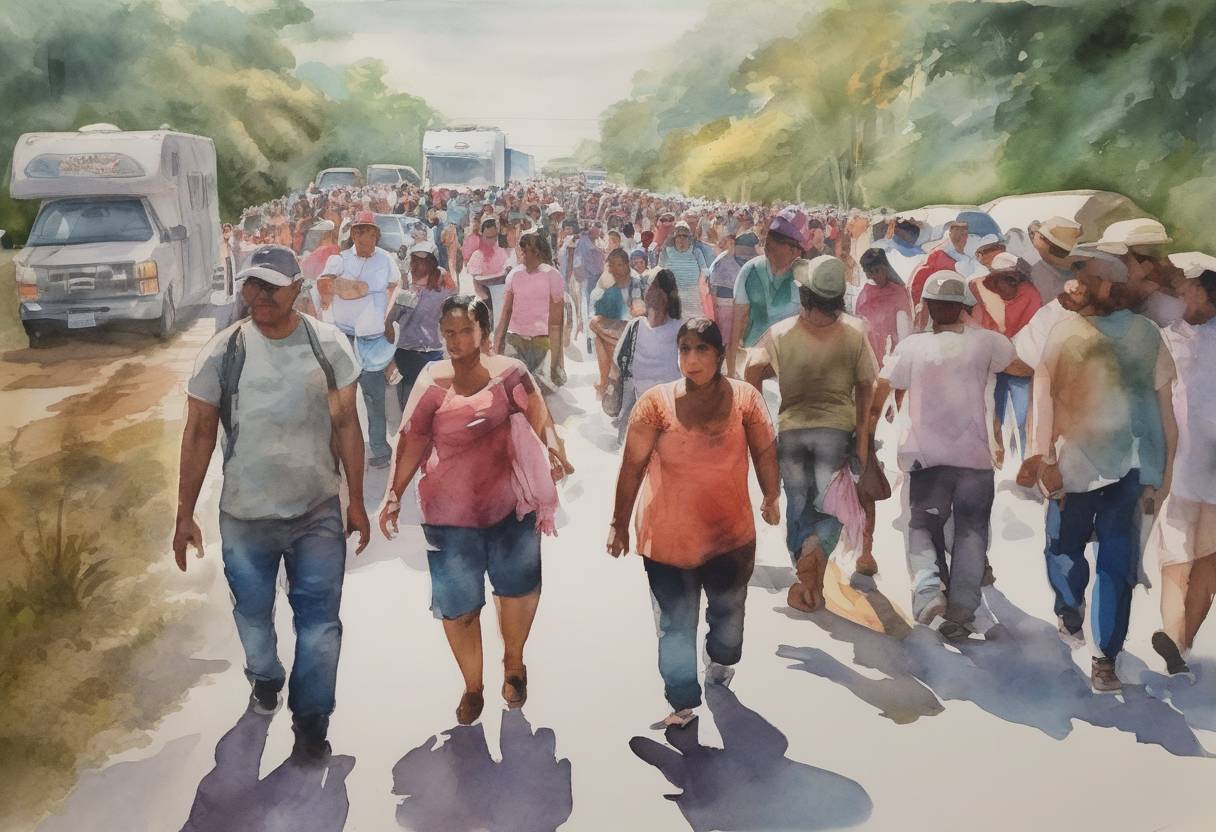
Migrant Caravan Begins Journey Northward - October 20, 2018
On October 20, 2018, a large caravan of migrants from Central America, primarily from Honduras, began its journey northward through Mexico towards the United States border. This event drew significant international attention and highlighted ongoing issues related to immigration, asylum, and border security.
Background
The caravan was part of a broader trend of migration from Central America, driven by factors such as violence, poverty, and political instability in countries like Honduras, El Salvador, and Guatemala. Many participants in the caravan were fleeing gang violence, seeking better economic opportunities, or attempting to reunite with family members already in the United States.
Key Events
Formation and Departure: The caravan initially formed in San Pedro Sula, Honduras, in early October 2018. It quickly grew in size as it moved through Guatemala, with estimates of participants ranging from a few thousand to over 7,000 at its peak.
Journey Through Mexico: As the caravan entered Mexico, it faced various challenges, including logistical difficulties, harsh weather conditions, and the need for food and medical assistance. Mexican authorities initially attempted to stop the caravan at the border with Guatemala but later allowed it to proceed, offering temporary humanitarian visas to some migrants.
International Attention: The caravan garnered widespread media coverage and became a focal point in discussions about immigration policy, particularly in the United States. It was frequently mentioned in political debates, especially in the context of the U.S. midterm elections in November 2018.
Broader Significance
Immigration Policy: The caravan underscored the complexities of immigration policy in North America, highlighting the challenges faced by migrants and the responses of governments in the region. It prompted discussions about the need for comprehensive immigration reform and better cooperation among countries to address the root causes of migration.
Humanitarian Concerns: The journey of the caravan brought attention to the humanitarian needs of migrants, including access to shelter, healthcare, and legal assistance. It also raised questions about the treatment of asylum seekers and the responsibilities of countries to protect vulnerable populations.
Political Impact: In the United States, the caravan became a contentious issue, influencing public opinion and political rhetoric. It was used by some political figures to advocate for stricter border controls and changes to asylum policies.
Aftermath
As the caravan approached the U.S. border, many migrants sought asylum, while others attempted to cross the border illegally. The situation led to increased security measures and a heightened presence of U.S. border enforcement. The caravan’s journey highlighted the ongoing challenges of managing migration flows and the need for international cooperation to address the complex factors driving migration from Central America.