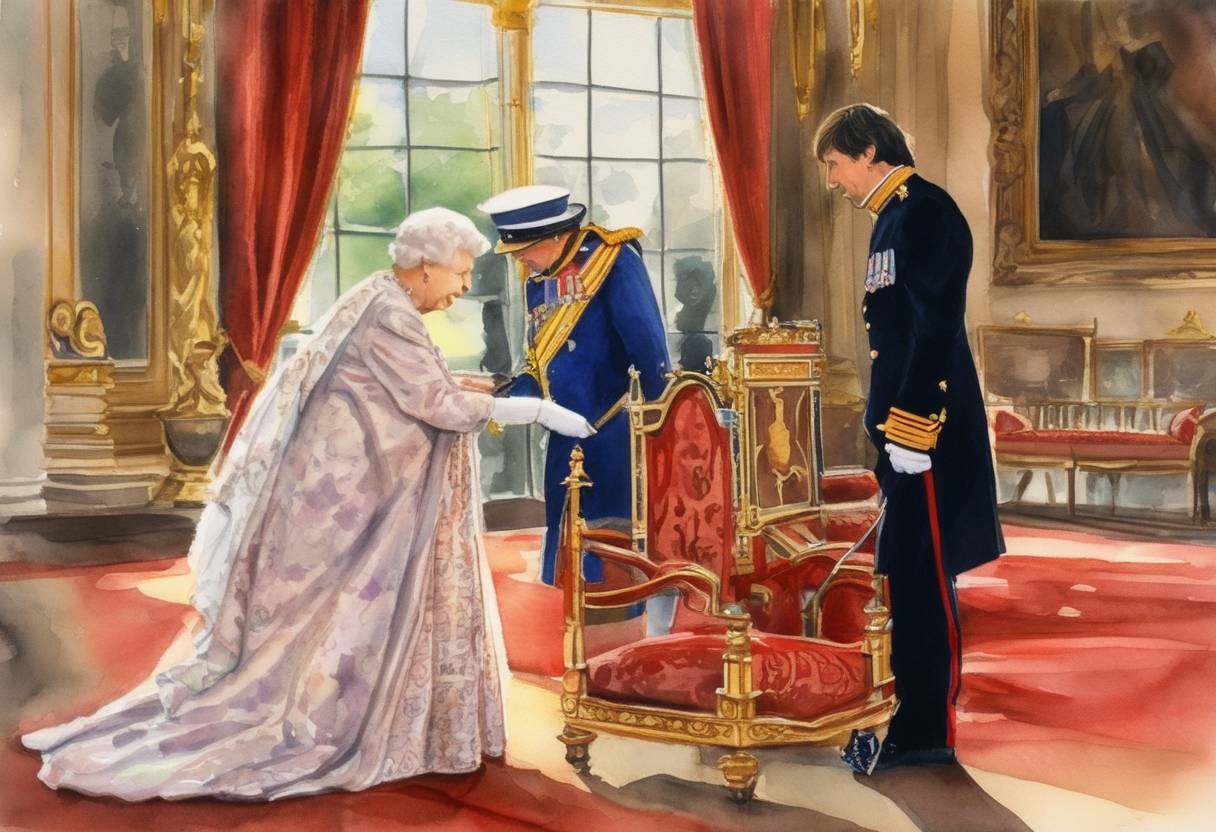
Paul McCartney’s Knighthood
Date: March 11, 1997
Location: Buckingham Palace, London, United Kingdom
On March 11, 1997, Sir Paul McCartney was honored with a knighthood by Queen Elizabeth II in recognition of his outstanding contributions to music. The investiture ceremony took place at Buckingham Palace, a prestigious setting for such an accolade.
Background
Paul McCartney, born in Liverpool in 1942, rose to fame as a member of the Beatles, one of the most influential bands in the history of music. Formed in 1960, the Beatles, consisting of McCartney, John Lennon, George Harrison, and Ringo Starr, revolutionized the music industry with their innovative sound and cultural impact. Following the Beatles’ disbandment in 1970, McCartney embarked on a successful solo career and formed the band Wings, further cementing his legacy as a music icon.
The Ceremony
The knighthood, bestowed upon McCartney as part of the United Kingdom’s New Year Honours List, acknowledged his significant influence and prolific career in the music industry. During the ceremony, McCartney was addressed as “Sir James Paul McCartney” and received the title of Knight Bachelor.
Significance
McCartney’s knighthood symbolized the recognition of popular music’s importance in contemporary British culture and its global influence. It highlighted McCartney’s enduring legacy and his contributions to music, which have spanned several decades. The honor also underscored the cultural transformation facilitated by the Beatles, illustrating how their music reshaped attitudes and trends worldwide during the 1960s and beyond.
Aftermath
Following his knighthood, Sir Paul McCartney continued to be an active figure in the music scene, releasing albums, touring, and engaging in various charitable activities. His knighthood remains a testament to his enduring influence and the timeless appeal of his work.
McCartney joined the ranks of fellow rock musicians knighted for their contributions to music and philanthropy, further bridging the gap between rock ‘n’ roll and formal recognition by traditional institutions.