The Treaty of Edinburgh (1560)
1560 · Edinburgh, Scotland
The Treaty of Edinburgh is signed between England, France, and Scotland, agreeing to remove French and English troops from Scotland.
August 21, 1560
The Treaty of Edinburgh, aimed at ending the fighting between Scotland, France, and England, was signed and required French and English troops to withdraw from Scotland.
Edinburgh, Scotland
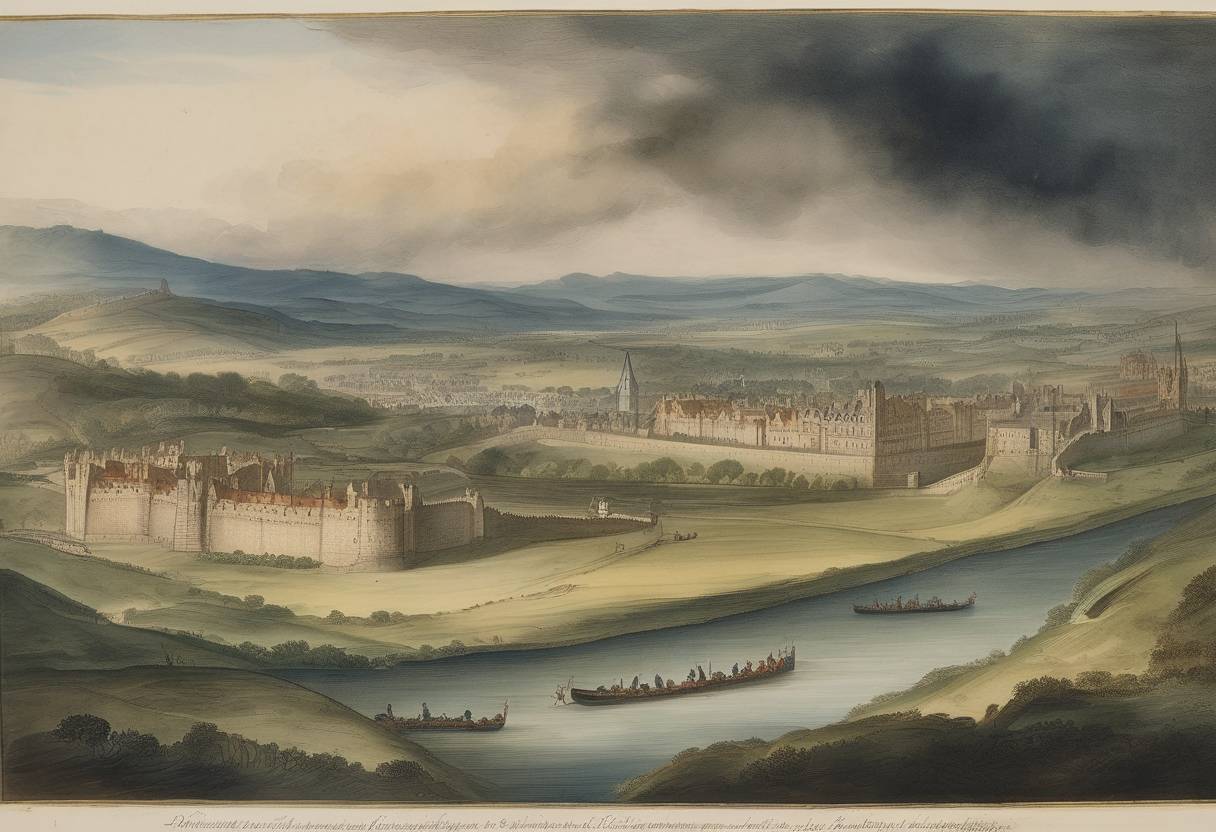
The Treaty of Edinburgh, signed on August 21, 1560, represented a significant turning point in the diplomatic and military engagements between Scotland, France, and England. This treaty aimed to bring an end to hostilities that had been fueled by political and religious tensions.
In the mid-16th century, Scotland became embroiled in a complex web of alliances and conflicts driven by the Reformation’s religious upheavals and the power struggles of European monarchies. The young Mary, Queen of Scots, was married to Francis II of France, creating a Franco-Scottish alliance that threatened English interests, particularly under Queen Elizabeth I.
The presence of French troops in Scotland, in support of Mary and the Catholic faction, became a source of contention for Protestant reformers and England. The Scottish Protestant lords, seeking to curb French influence and ensure the Protestant Reformation’s continuation, requested aid from Elizabeth I, leading to England’s military intervention.
The Treaty of Edinburgh was negotiated among representatives of Scotland, England, and France with several crucial terms:
These provisions were aimed at stabilizing the region by reducing hostilities and allowing Scottish nobles and religious reformers to gain the upper hand within their own country without external interference.
The Treaty of Edinburgh was significant as it effectively ended French dominance in Scottish affairs and marked a shift in the region’s political balance of power. Though intended to be ratified by all parties, Mary, Queen of Scots, never formally accepted the treaty’s terms, maintaining her claims to the English throne, which later contributed to conflicts during her reign.
Nevertheless, the treaty exemplified Elizabeth I’s diplomatic engagement strategy and her ability to navigate international challenges through negotiation and alliances rather than prolonged military confrontation.
This event had lasting implications for the relationship between England and Scotland, promoting a period of relative peace and enabling the further establishment of Protestantism as a dominant force in Scotland, thus influencing the trajectory of both the Scottish Reformation and broader European religious and political dynamics.
Source: en.wikipedia.org