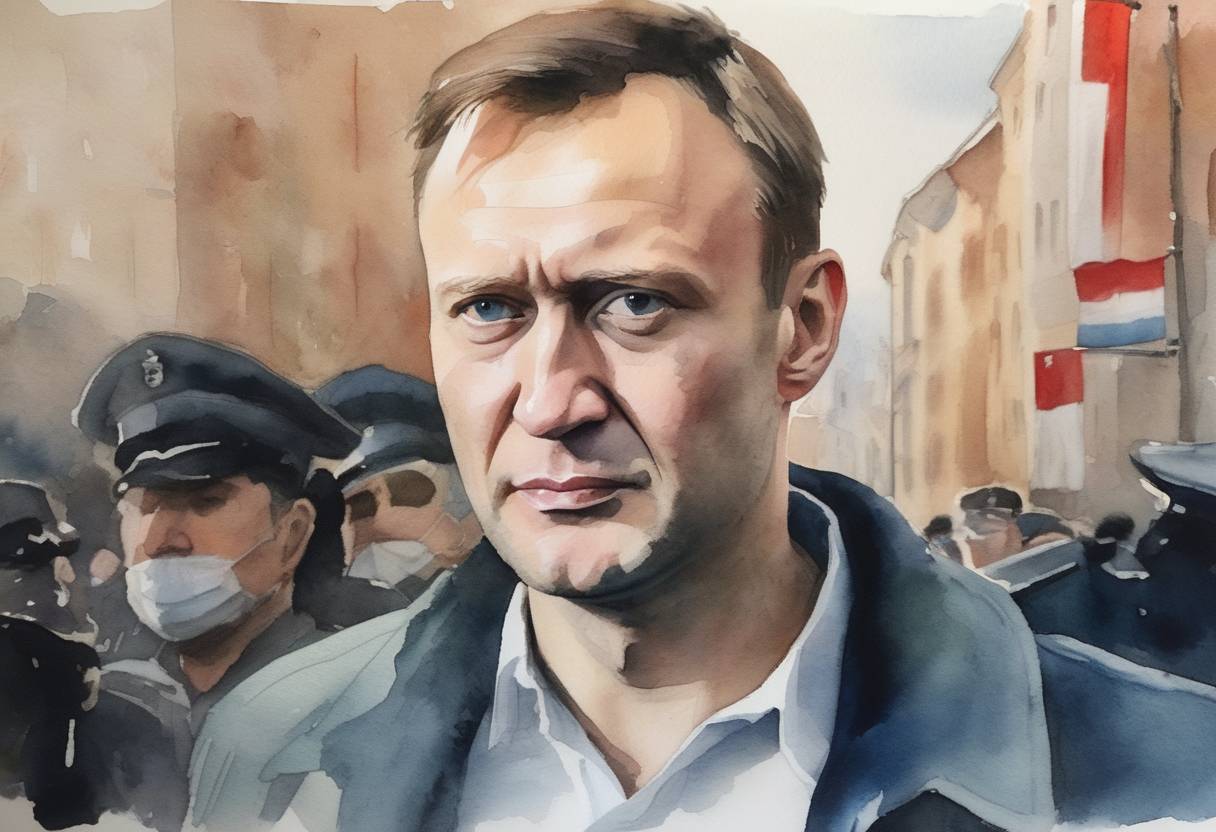
Arrest of Alexei Navalny on January 17, 2021
On January 17, 2021, Alexei Navalny, a leading opposition figure and critic of the Russian government, was detained by Russian authorities shortly after arriving in Moscow from Germany. This arrest marked a significant moment in Russian politics and international relations.
Context
Prior to his arrest, in August 2020, Navalny had been poisoned in Russia with a potent nerve agent, Novichok. After falling gravely ill, he was evacuated to Germany for medical treatment, where he made a recovery. The poisoning incident was widely condemned by Western governments and human rights organizations, who attributed the attack to the Russian state, allegations which Moscow denied.
Arrival and Arrest
Navalny’s return to Russia was highly publicized as he called on his supporters to meet him at Moscow’s Vnukovo Airport. However, the plane was redirected to Sheremetyevo Airport, where he was apprehended at passport control. The Russian Federal Penitentiary Service (FSIN) claimed that Navalny had violated the terms of a suspended prison sentence from 2014, related to a previous embezzlement case, by failing to report in person while in Germany.
Aftermath and Protests
Navalny’s arrest triggered widespread protests across Russia, with tens of thousands of people taking to the streets in support of him. Demonstrations occurred in various cities, including Moscow and St. Petersburg, despite harsh weather conditions and the risk of reprisals. The Russian authorities responded with heavy police presence and mass detentions, highlighting the domestic unrest and the population’s dissent against perceived corruption and authoritarianism.
Broader Significance
The arrest underscored the tension between Russia and Western countries, amplifying calls for further sanctions against Russian officials by the European Union and the United States. Navalny’s detention also drew attention to the broader issues of political repression and human rights violations in Russia, influencing international dialogues on democracy and governance.
Through these developments, Navalny became a central figure symbolizing resistance against the current political regime in Russia, illustrating the ongoing struggle for political freedom and reform within the country.