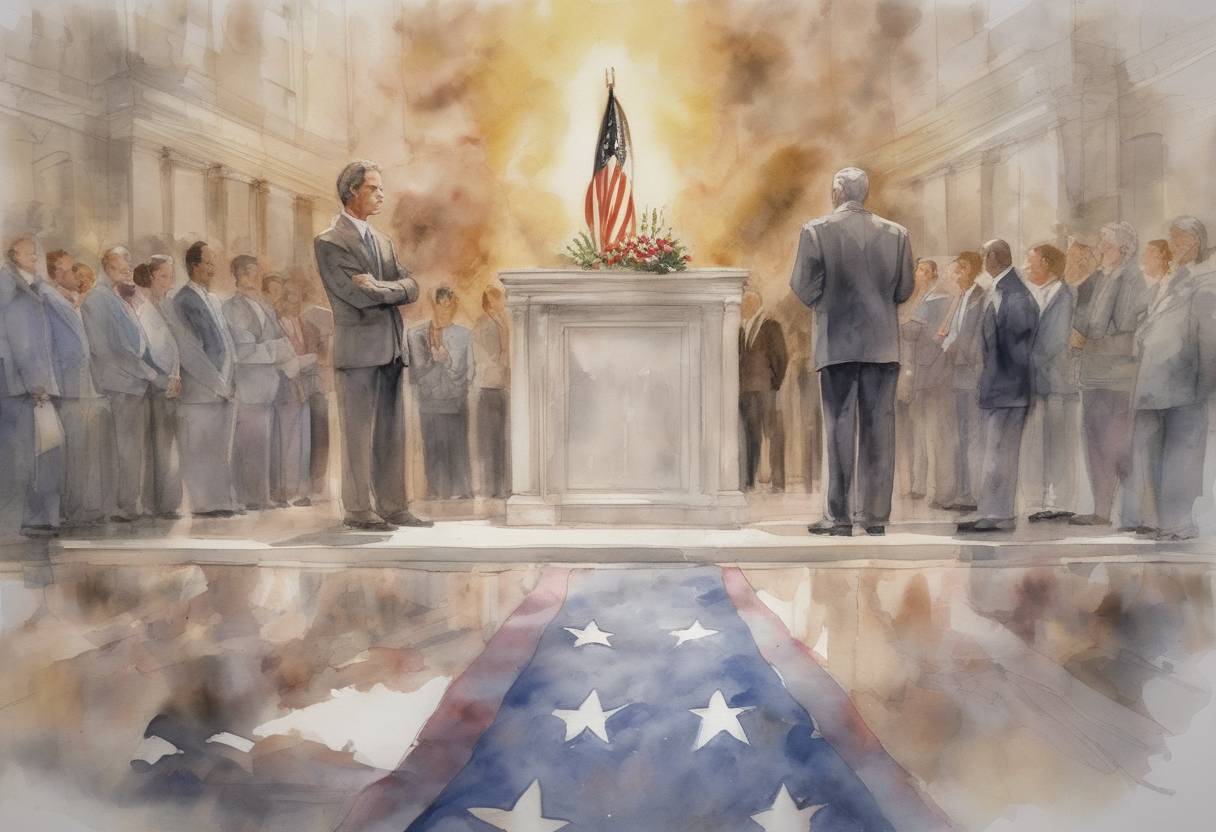
National Day of Prayer and Remembrance - September 14, 2001
On September 14, 2001, President George W. Bush declared a National Day of Prayer and Remembrance in response to the tragic events of September 11, 2001. This declaration was a pivotal moment in the immediate aftermath of the terrorist attacks that had shocked the United States and the world.
Context and Background
September 11 Attacks: On September 11, 2001, a series of coordinated terrorist attacks were carried out by the extremist group al-Qaeda. Four commercial airplanes were hijacked; two were flown into the Twin Towers of the World Trade Center in New York City, one into the Pentagon in Arlington, Virginia, and the fourth, United Airlines Flight 93, crashed into a field in Pennsylvania after passengers attempted to overcome the hijackers.
Casualties and Impact: The attacks resulted in the deaths of nearly 3,000 people and caused significant destruction, particularly in New York City. The events of 9⁄11 had profound effects on the United States, leading to widespread fear, grief, and a call for unity and resilience.
The Declaration
Purpose: President Bush’s declaration aimed to provide a moment for Americans to come together in mourning and reflection. It was intended to honor the victims, support their families, and recognize the heroism of first responders and ordinary citizens who acted bravely during the crisis.
Activities: The day was marked by various activities across the nation, including prayer services, moments of silence, and memorial events. Churches, synagogues, mosques, and other places of worship opened their doors for people to gather in solidarity.
Presidential Address: On this day, President Bush delivered a speech at the National Cathedral in Washington, D.C., emphasizing themes of unity, resilience, and the enduring spirit of the American people. He called for national healing and reaffirmed the country’s commitment to justice and peace.
Aftermath and Significance
National Unity: The National Day of Prayer and Remembrance served as a unifying moment for the country, bringing together people of different faiths and backgrounds in a shared expression of grief and hope.
Long-term Impact: The events of September 11 and the subsequent declaration had lasting effects on U.S. domestic and foreign policy, including the initiation of the War on Terror, increased security measures, and changes in international relations.
Cultural Memory: The day became a part of the broader cultural memory of 9⁄11, symbolizing the resilience and solidarity of the American people in the face of adversity.
In summary, the National Day of Prayer and Remembrance on September 14, 2001, was a significant moment of collective mourning and reflection, providing a foundation for national healing and unity in the wake of one of the most devastating events in American history.