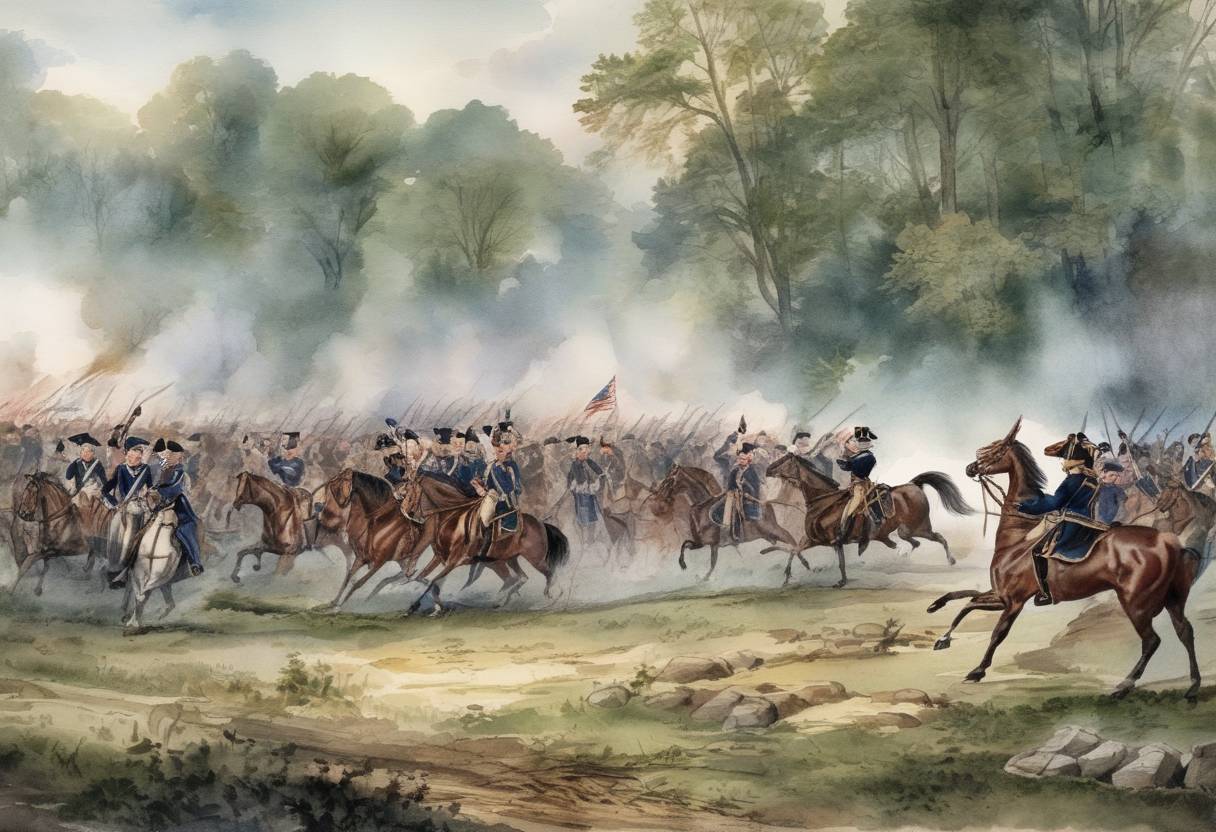
The First Battle of Saratoga: The Battle of Freeman’s Farm
Context
The First Battle of Saratoga, also known as the Battle of Freeman’s Farm, took place on September 19, 1777, during the American Revolutionary War. This battle was a pivotal moment in the Saratoga campaign, which was a crucial turning point in the war. The campaign was part of the British strategy to divide and conquer the rebellious American colonies by isolating New England from the southern colonies.
- General Horatio Gates: Commanded the American forces. Gates was a seasoned military leader who had previously served in the British Army before joining the American cause.
- General John Burgoyne: Led the British troops. Burgoyne was tasked with advancing south from Canada to meet other British forces, aiming to cut off New England from the rest of the colonies.
The Battle
- Location: The battle occurred near Saratoga, New York, specifically at a clearing known as Freeman’s Farm.
- American Strategy: The American forces, numbering around 9,000, were strategically positioned to intercept Burgoyne’s advance. They utilized the dense forests to their advantage, engaging in guerrilla tactics.
- British Strategy: Burgoyne’s forces, approximately 7,200 strong, aimed to push through the American defenses and continue their southward march. The British troops were well-trained and heavily armed, including German mercenaries known as Hessians.
Course of the Battle
- Initial Engagement: The battle began when American forces, led by Benedict Arnold and Daniel Morgan, engaged the British vanguard. The Americans used the cover of the woods to launch surprise attacks.
- Intense Fighting: The battle was characterized by intense and chaotic fighting. The Americans, despite being outnumbered in the field, managed to inflict significant casualties on the British.
- Tactical Stalemate: By the end of the day, neither side had gained a decisive advantage. The British held the field, but their advance was effectively stalled.
Aftermath and Significance
- Casualties: The British suffered approximately 600 casualties, while the Americans incurred around 300.
- Strategic Impact: Although technically a British tactical victory, the battle significantly weakened Burgoyne’s forces and morale. The delay allowed American reinforcements to bolster their defenses.
- Prelude to Victory: The First Battle of Saratoga set the stage for the Second Battle of Saratoga, which occurred on October 7, 1777. This subsequent battle resulted in a decisive American victory and led to Burgoyne’s surrender on October 17, 1777.
Broader Historical Significance
The Battle of Freeman’s Farm was crucial in the American Revolutionary War as it marked the beginning of the end for the British campaign in the north. The eventual American victory at Saratoga was instrumental in securing French support for the American cause, which proved vital for the ultimate success of the revolution. The battle demonstrated the effectiveness of American tactics and the resilience of their forces, boosting morale and solidifying the resolve of the Continental Army and its allies.