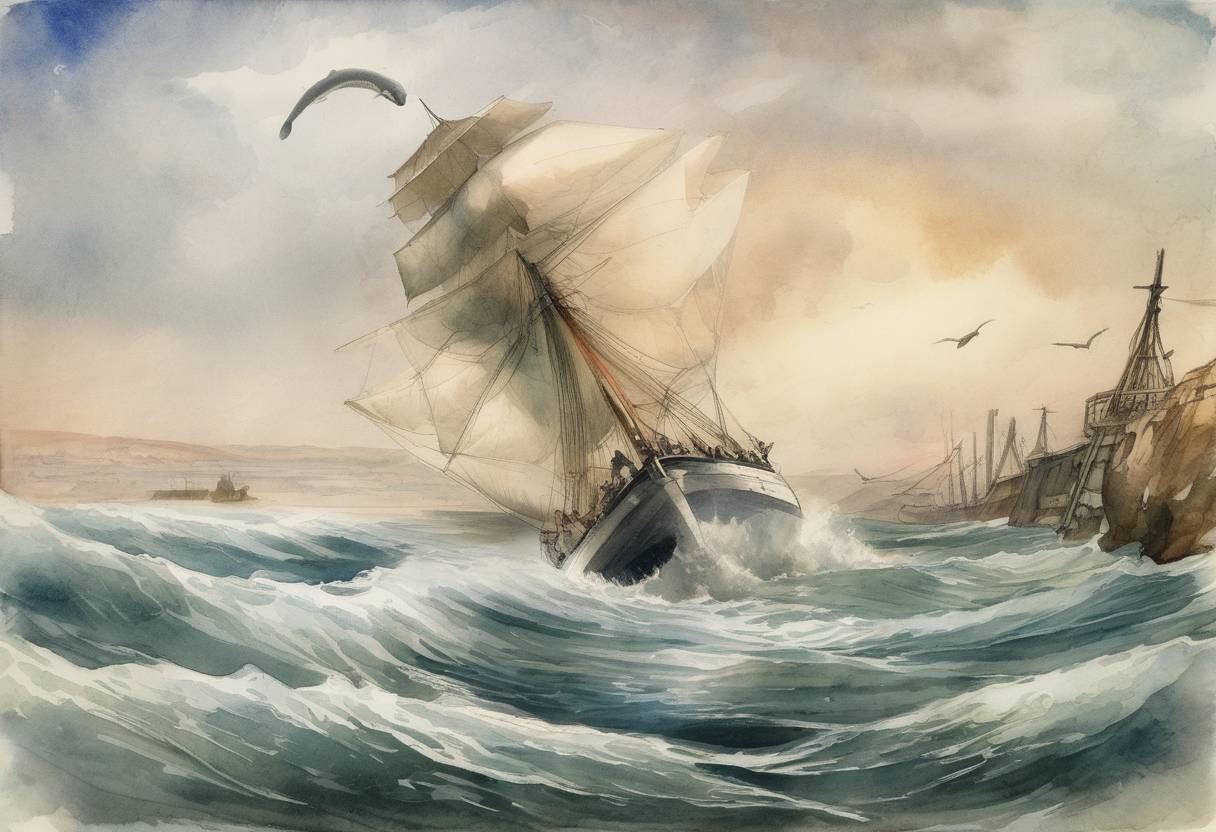
Publication of Herman Melville’s Moby-Dick as The Whale
On October 18, 1851, Herman Melville’s novel Moby-Dick was first published under the title The Whale by Richard Bentley in London. This initial publication marked the beginning of what would become one of the most celebrated works in American literature.
Context and Background
- Herman Melville: By 1851, Melville was an established author, known for his earlier works such as Typee and Omoo, which drew upon his experiences at sea and in the South Pacific.
- Inspiration: Melville’s inspiration for Moby-Dick came from his own whaling experiences aboard the whaler Acushnet and from reading accounts of the real-life sinking of the Essex, a whaling ship destroyed by a sperm whale in 1820.
Publication Details
- Title: The novel was initially published as The Whale in a three-volume edition by Richard Bentley in London. The title Moby-Dick was used for the American edition, published a month later by Harper & Brothers in New York.
- Differences: The British edition, The Whale, differed slightly from the American edition, with some textual variations and the omission of the “Epilogue,” which led to initial confusion about the fate of the protagonist, Ishmael.
Plot Overview
Moby-Dick follows the narrative of Ishmael, a sailor aboard the whaling ship Pequod, commanded by the obsessive Captain Ahab. Ahab is fixated on hunting the titular white whale, Moby Dick, which had previously maimed him. The novel explores themes of obsession, revenge, and the struggle between man and nature.
Reception and Legacy
- Initial Reception: Upon its release, Moby-Dick received mixed reviews. Some critics praised its adventurous spirit and depth, while others found its complex narrative and philosophical musings challenging.
- Legacy: Over time, Moby-Dick has been recognized as a masterpiece of American literature, celebrated for its rich symbolism, intricate narrative structure, and profound thematic exploration. It has influenced countless writers and remains a staple in literary studies.
Broader Historical Significance
- Literary Impact: Moby-Dick is often cited as a precursor to modernist literature, with its experimental style and deep psychological insights.
- Cultural Influence: The novel has permeated popular culture, inspiring adaptations in film, theater, and other media, and continues to be a subject of scholarly analysis and interpretation.
The publication of Moby-Dick as The Whale on October 18, 1851, represents a pivotal moment in literary history, marking the emergence of a work that would eventually be hailed as a cornerstone of American literature.