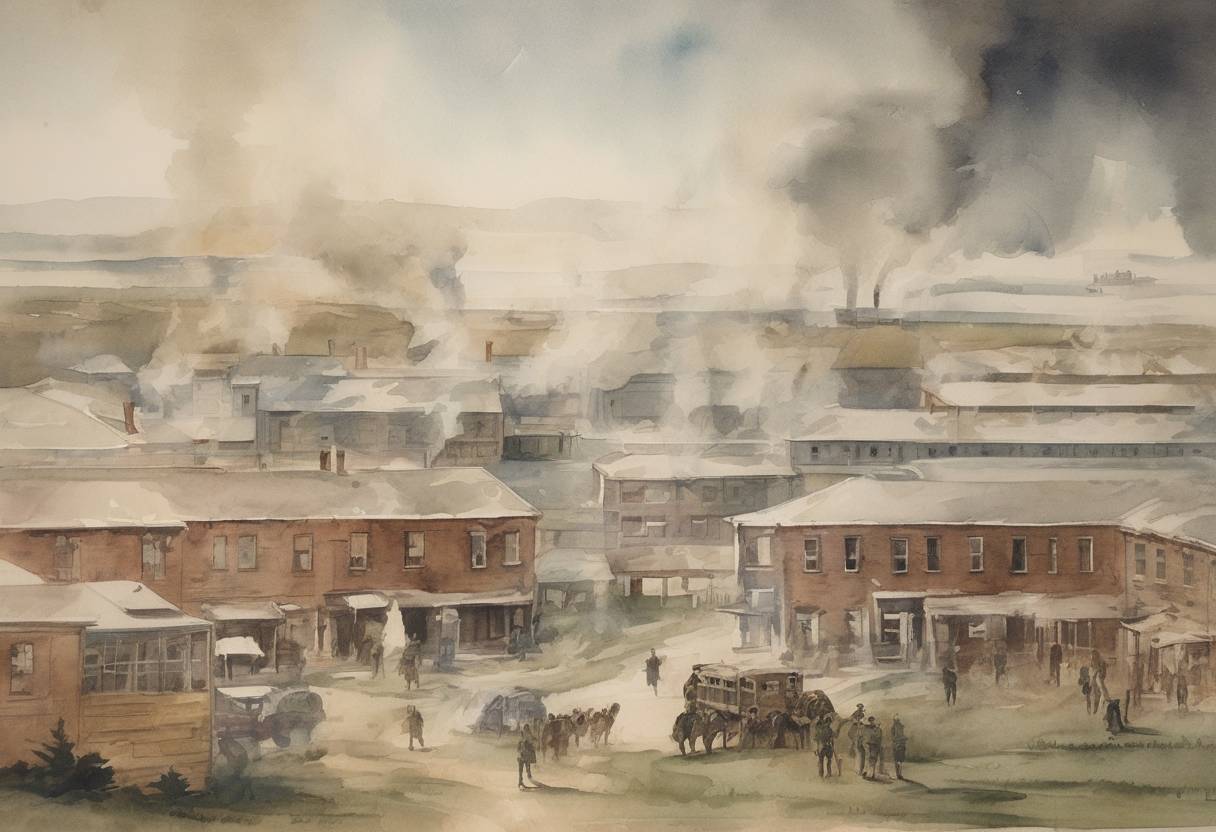
The Beginning of the 1918 Influenza Pandemic: Fort Riley, Kansas
On March 11, 1918, the first confirmed cases of what would become known as the Spanish flu were reported at Fort Riley, Kansas. This event marked the beginning of one of the deadliest pandemics in human history, which would eventually claim the lives of an estimated 50 million people worldwide.
Context and Background
World War I: The world was in the throes of World War I, which played a significant role in the spread of the influenza virus. The movement of troops and the crowded conditions in military camps and trenches facilitated the rapid transmission of the disease.
Fort Riley: Located in the central United States, Fort Riley was a major training camp for American troops. It was here that the first known cases of the influenza pandemic were identified.
Key Events
Initial Outbreak: On March 11, 1918, an Army cook named Albert Gitchell reported to the camp hospital with flu-like symptoms. By noon, over 100 soldiers had fallen ill, and within a week, the number of cases had surged to 500.
Spread of the Virus: The virus spread quickly beyond Fort Riley, carried by soldiers deploying to Europe and other parts of the United States. The movement of troops and the global nature of the war contributed to the pandemic’s rapid expansion.
Broader Historical Significance
Global Impact: The Spanish flu pandemic affected nearly every part of the world, with a mortality rate that disproportionately affected young adults, a demographic typically less vulnerable to influenza.
Public Health Response: The pandemic highlighted the need for improved public health infrastructure and responses. It led to changes in how governments and health organizations approached disease prevention and control.
Legacy: The 1918 influenza pandemic remains a critical point of study for epidemiologists and historians, offering lessons on the importance of preparedness and the potential impact of global pandemics.
Aftermath
End of the Pandemic: The pandemic lasted until 1919, with subsequent waves causing additional deaths. The virus eventually subsided as those infected either died or developed immunity.
Long-term Effects: The pandemic had lasting effects on public health policies and practices, influencing future responses to outbreaks and the development of vaccines and antiviral drugs.
The outbreak at Fort Riley on March 11, 1918, was a pivotal moment in history, marking the start of a pandemic that would have profound and lasting impacts on the world.