Frederick I Barbarossa: The Drowning in the Saleph River
1190 · Göksu River, Turkey
Frederick I Barbarossa, Holy Roman Emperor, drowned in the Saleph River (now Göksu River) in present-day Turkey during the Third Crusade.
December 5, 1133
Lothair III, Holy Roman Emperor, Emperor of the Holy Roman Empire, passed away. His death marked the end of a contentious reign characterized by factional conflict within the Empire and ongoing disputes with the papacy.
Breitenwang, Holy Roman Empire (present-day Austria) | Holy Roman Empire
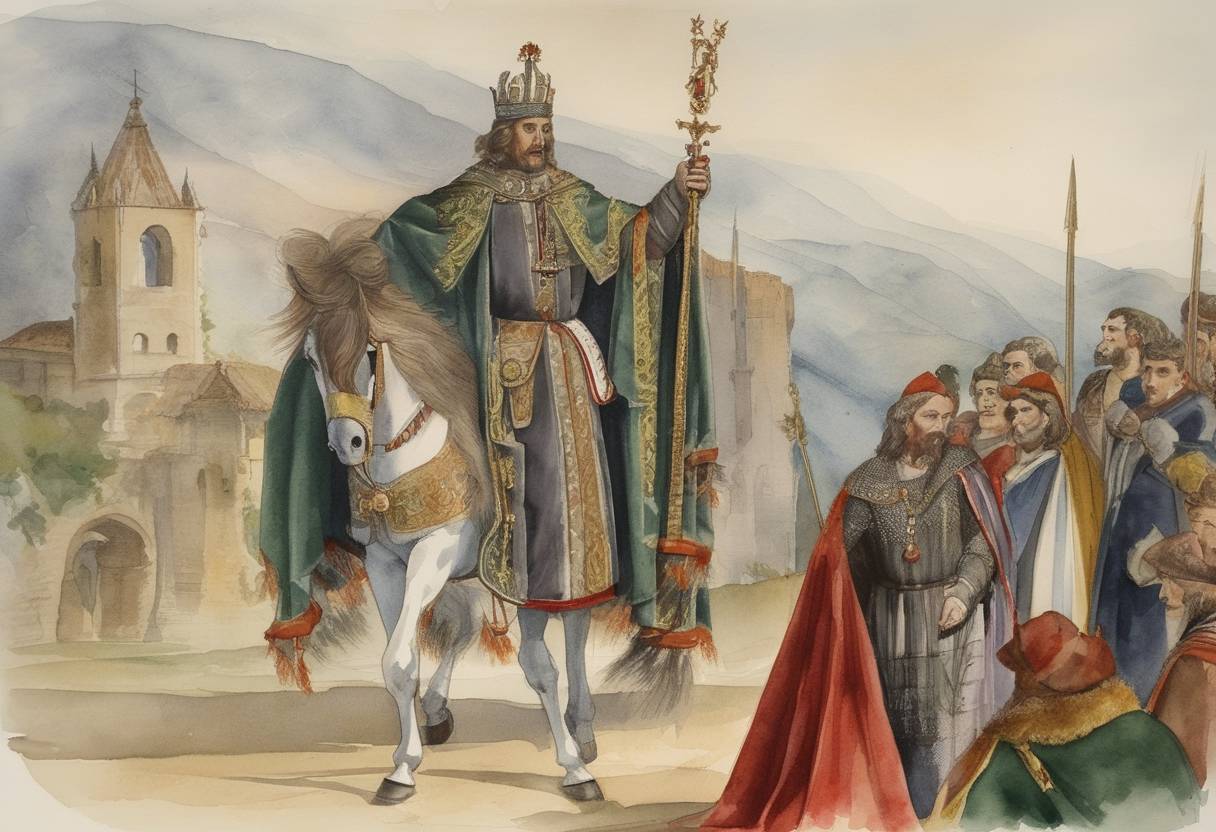
Lothair III, also known as Lothair of Supplinburg, was the Holy Roman Emperor from 1133 to 1137. His reign was marked by significant internal conflict within the Empire as well as ongoing disputes with the papacy. Lothair ascended to the German throne in 1125, following the end of the Salian dynasty with Emperor Henry V’s death. His election as King of the Romans was heavily contested, notably by the Hohenstaufen family.
Lothair III’s reign was characterized by a period of intense factional conflict. As a candidate initially supported by the ecclesiastical princes and the Pope, he faced continuous opposition from rival nobles and the powerful Hohenstaufen dynasty. Despite these challenges, Lothair embarked on campaigns to assert his authority, striving to maintain control over the fragmented territories of the empire.
One of the significant international aspects of Lothair’s reign was his relationship with the papacy. Although initially supported by Pope Honorius II, Lothair’s rule involved complex negotiations and occasional conflicts with successive popes over issues of imperial rights and influence in Italy. Nevertheless, Lothair managed to maintain a relatively stable position by aligning with the papacy’s interests on several occasions.
Lothair III passed away on December 5, 1137, concluding a complex and contentious reign that lasted over a decade. His death marked a critical juncture in the history of the Holy Roman Empire, as it precipitated a power struggle that led to the eventual ascension of the Hohenstaufen dynasty with the election of Conrad III.
Lothair’s death led to increased political instability, further aggravated by the lack of a direct heir, as his only daughter had married Henry the Proud of the influential Welf family, a rival to the Hohenstaufens. This factional rivalry set the stage for decades of conflict within the empire, known as the “Guelphs and Ghibellines” conflicts.
Lothair III’s reign remains significant for its attempts to balance imperial authority with papal relations and for navigating the intricate politics of the German nobility. Despite his moderate success in securing his legacy, his death underscored and exacerbated the prevailing factional divisions within the Holy Roman Empire, shaping its medieval trajectory.
Source: en.wikipedia.org