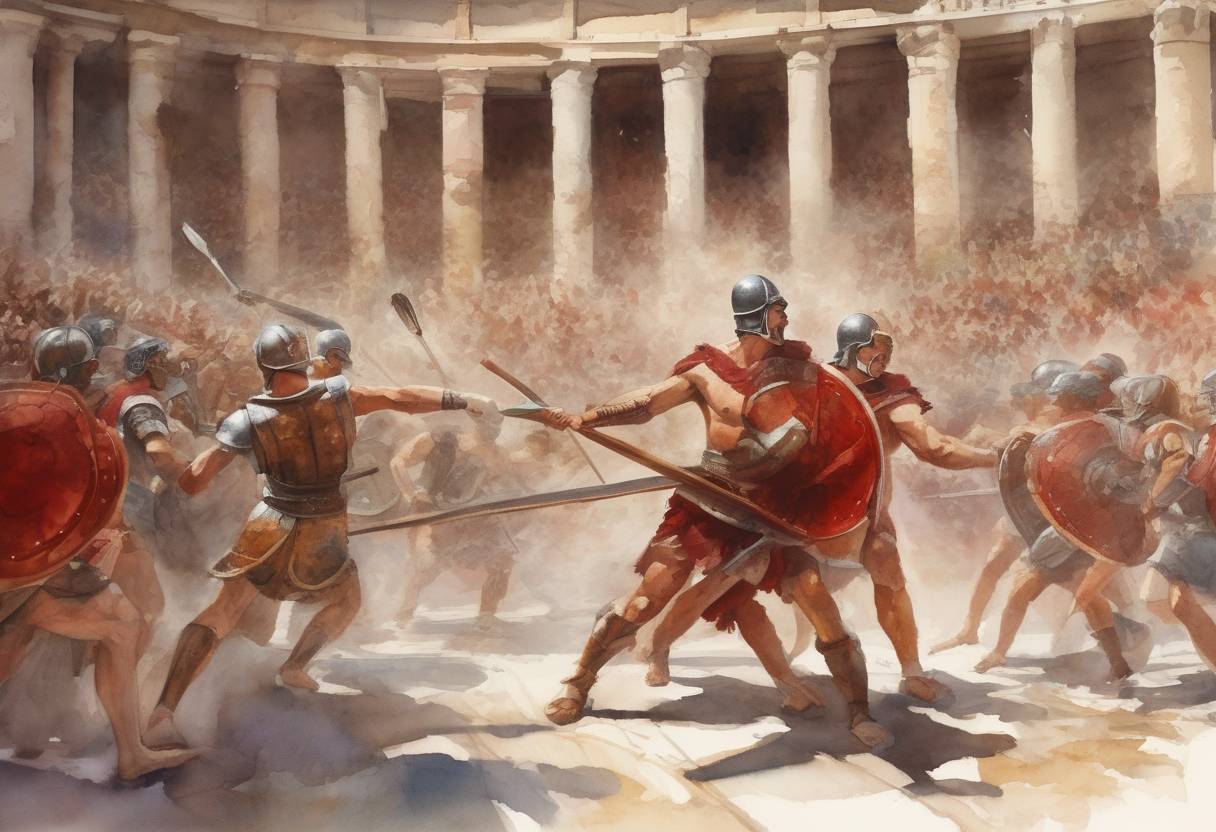
The Last Known Gladiatorial Games in Rome - January 1, 404
On January 1, 404, the last known gladiatorial games were held in Rome, marking the end of a centuries-old tradition of public spectacles that had been a significant aspect of Roman culture and society. These games, which involved combat between gladiators, were a form of entertainment that captivated Roman audiences and were deeply embedded in the social and political fabric of the Roman Empire.
Historical Context
Gladiatorial games, or “munera,” originated as part of funeral rites, evolving over time into public spectacles sponsored by wealthy individuals or the state. These events were held in amphitheaters, the most famous being the Colosseum in Rome, and were used to display power, celebrate military victories, and appease the populace.
By the late Roman Empire, however, the popularity and frequency of these games began to wane due to several factors:
Christian Influence: As Christianity spread throughout the Roman Empire, its leaders increasingly condemned the games as barbaric and contrary to Christian values. The growing Christian population began to view the games as morally objectionable.
Economic Strain: The Roman Empire faced significant economic challenges, and the cost of staging these elaborate spectacles became burdensome.
Political Changes: The shifting political landscape and the decline of the Western Roman Empire also contributed to the reduction in the number of games.
The Last Games
The final gladiatorial games in Rome are traditionally dated to January 1, 404. This event is often associated with the intervention of Saint Telemachus, a Christian monk who reportedly entered the arena and attempted to stop the combat. According to some accounts, his actions led to his martyrdom, but they also reportedly influenced Emperor Honorius to issue a ban on gladiatorial games.
Aftermath and Significance
The cessation of gladiatorial games marked a significant cultural shift in the Roman Empire. It reflected the changing values of Roman society as it transitioned from pagan traditions to a Christian-dominated culture. The end of these games also symbolized the broader decline of the Western Roman Empire, which would eventually fall in 476 AD.
The legacy of the gladiatorial games, however, has endured through history, influencing literature, art, and modern media. They remain a powerful symbol of the complexities and contradictions of Roman civilization, illustrating both its grandeur and its brutality.
In conclusion, the last known gladiatorial games in Rome on January 1, 404, represent a pivotal moment in the history of the Roman Empire, highlighting the intersection of cultural, religious, and political transformations that defined the late antiquity period.