The Beginning of the Muslim Conquest of Hispania: April 29, 711
711 · Gibraltar, Spain
The Umayyad forces, led by Tariq ibn Ziyad, began their invasion of the Iberian Peninsula, marking the start of the Muslim conquest of Hispania.
July 19, 0711
The Battle of Guadalete begins, marking the start of the Muslim conquest of the Iberian Peninsula. The forces of the Umayyad Caliphate, led by Tariq ibn Ziyad, faced the Visigothic army under King Roderic.
Guadalete, Spain | Umayyad Caliphate
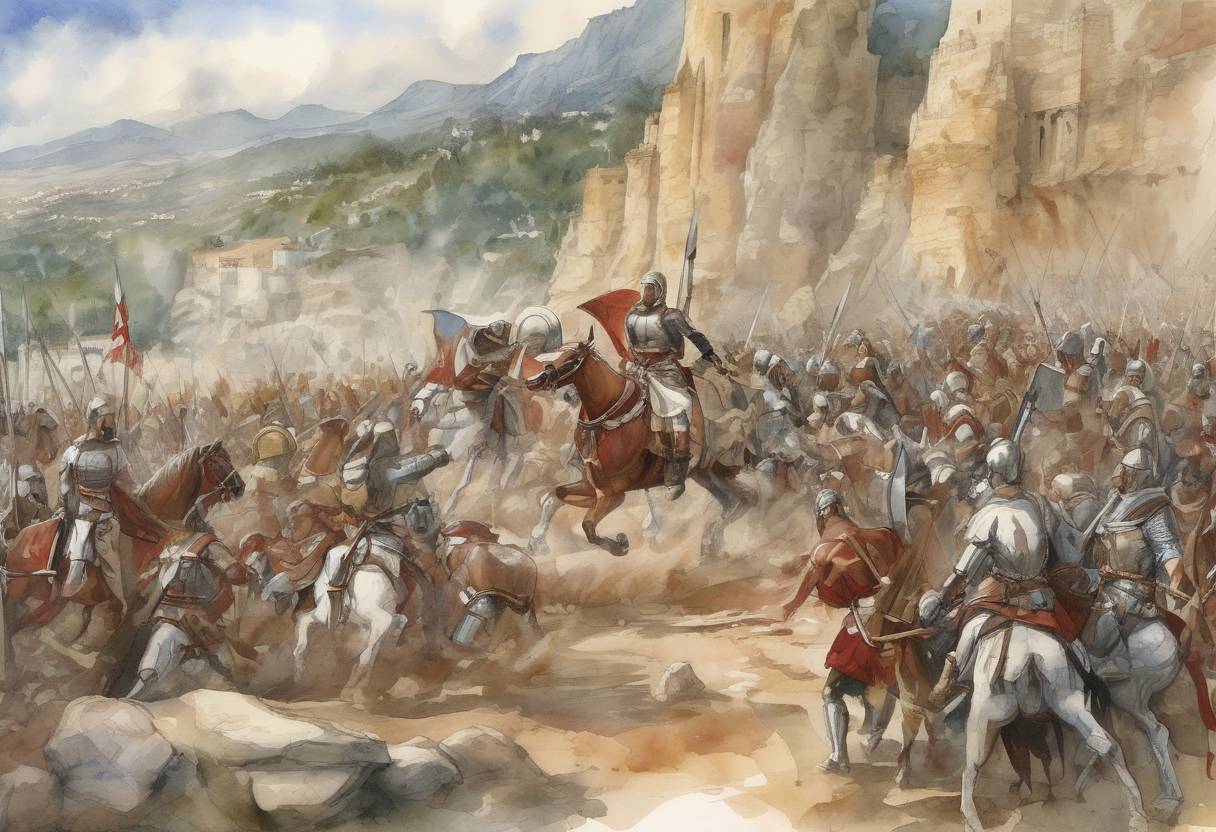
The Battle of Guadalete, which began on July 19, 711, marks a pivotal moment in the history of the Iberian Peninsula, as it initiated the Muslim conquest of the region. This confrontation saw the forces of the Umayyad Caliphate, led by the Berber general Tariq ibn Ziyad, clash with the Visigothic army commanded by King Roderic.
Visigothic Spain: Prior to the battle, the Iberian Peninsula was under the rule of the Visigoths, a Germanic people who had established a kingdom there after the fall of the Western Roman Empire. The Visigothic Kingdom was marked by internal strife and political instability, which weakened its ability to defend against external threats.
Umayyad Expansion: The Umayyad Caliphate, based in Damascus, was in a period of rapid expansion. Having already conquered North Africa, they set their sights on the Iberian Peninsula, seeing it as a land of opportunity and strategic importance.
Tariq ibn Ziyad: A Berber general in the service of the Umayyad governor of North Africa, Tariq ibn Ziyad was tasked with leading the invasion. He landed at Gibraltar, which is named after him (Jabal Tariq, meaning “Mountain of Tariq”), with a force of approximately 7,000 troops.
Location: The battle took place near the Guadalete River, in the southern part of the Iberian Peninsula, although the exact location remains uncertain.
Forces: Tariq’s army was composed mainly of Berbers, with some Arab contingents. King Roderic’s forces were larger, estimated to be between 20,000 and 30,000 men, but they were poorly coordinated due to internal divisions and recent civil conflicts.
Outcome: The battle resulted in a decisive victory for Tariq ibn Ziyad. King Roderic was killed, and his army was routed. The defeat effectively shattered the Visigothic hold on the region, paving the way for further Muslim advances.
Muslim Conquest: Following the victory at Guadalete, Muslim forces rapidly advanced through the Iberian Peninsula. Within a few years, most of the territory was under Muslim control, marking the beginning of nearly eight centuries of Muslim presence in Spain.
Cultural and Historical Impact: The Muslim conquest introduced significant cultural, scientific, and architectural influences to the region, which would later be known as Al-Andalus. This period saw the flourishing of a rich, multicultural society that contributed to the broader European Renaissance.
Legacy: The Battle of Guadalete is often seen as a turning point that reshaped the political and cultural landscape of the Iberian Peninsula. It set the stage for the Reconquista, a centuries-long series of campaigns by Christian states to reclaim the territory.
In summary, the Battle of Guadalete was not just a military engagement but a catalyst for profound changes in the Iberian Peninsula, influencing its history, culture, and demographics for generations to come.
Source: en.wikipedia.org