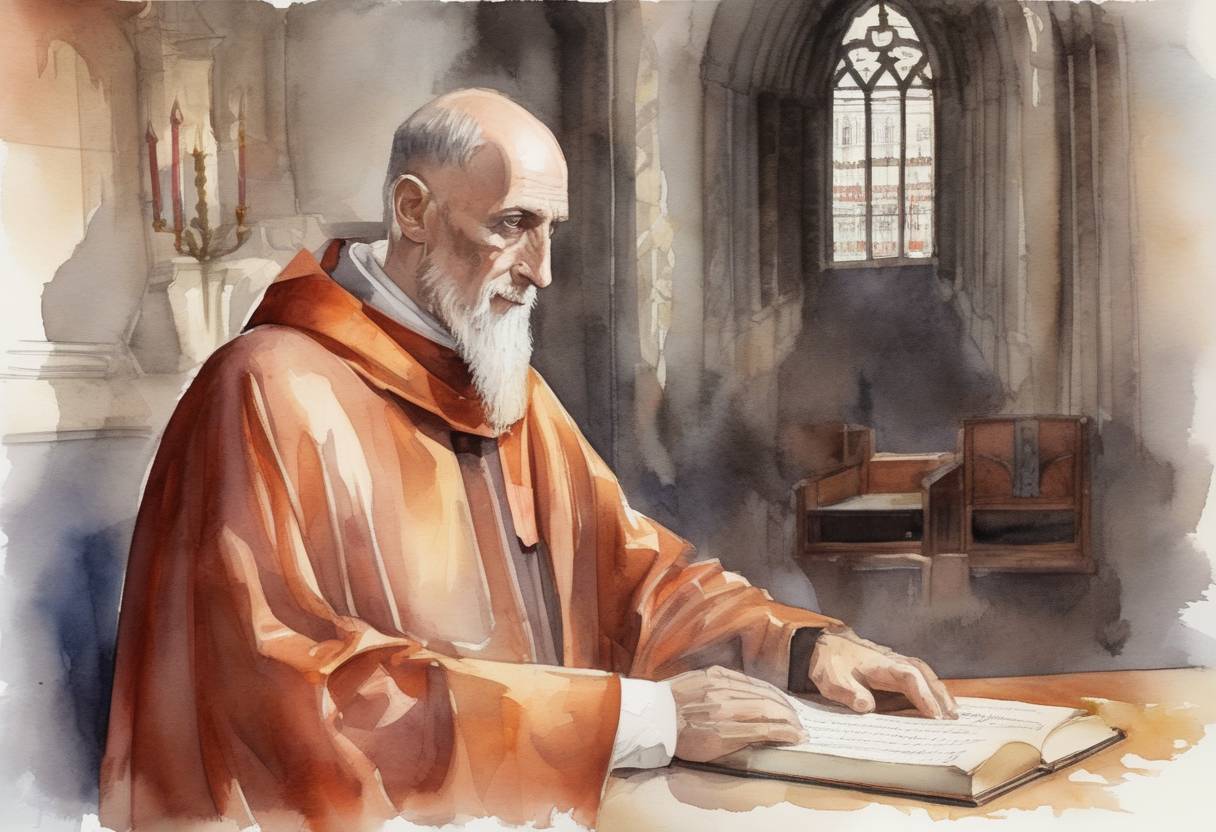
Certainly! Here’s a detailed account of Anselm of Canterbury’s consecration as the Archbishop of Canterbury, formatted in Markdown:
Anselm of Canterbury: Consecration as Archbishop
Background
Anselm of Canterbury, born in 1033 in Aosta, Italy, was a Benedictine monk renowned for his philosophical and theological contributions. Before his consecration as Archbishop, Anselm was the abbot of the Benedictine monastery of Bec in Normandy, where he gained a reputation for his intellectual rigor and spiritual leadership.
The Path to Archbishopric
Anselm’s journey to becoming the Archbishop of Canterbury was marked by his close relationship with the English monarchy and the church. His predecessor, Lanfranc, had established a strong connection between the church and the Norman rulers of England. After Lanfranc’s death in 1089, the see of Canterbury remained vacant for several years, during which King William II (Rufus) delayed the appointment of a new archbishop, likely to retain control over the church’s revenues.
Consecration on November 2, 1093
Anselm was finally consecrated as the Archbishop of Canterbury on November 2, 1093. His appointment was initially met with reluctance on his part, as he was aware of the challenges he would face in balancing the demands of the monarchy with the autonomy of the church. However, his consecration was a significant event, as it marked the beginning of a new chapter in the relationship between the English church and the monarchy.
Key Events Leading to the Consecration
- Vacancy of the See: The see of Canterbury remained vacant for four years after Lanfranc’s death, during which King William II exploited the situation for financial gain.
- Anselm’s Reluctance: Despite his initial hesitation, Anselm was persuaded to accept the position due to his sense of duty and the urging of the church and nobility.
- Royal Approval: Anselm’s appointment required the approval of King William II, who eventually consented, albeit with reservations about Anselm’s potential challenges to royal authority.
Significance and Aftermath
Anselm’s tenure as Archbishop was marked by his efforts to assert the independence of the church from secular influence. He became a key figure in the Investiture Controversy, a conflict between church and state over the appointment of church officials. Anselm’s theological works, including the “Proslogion,” where he formulated the ontological argument for the existence of God, further cemented his legacy as a leading intellectual figure of the medieval church.
Anselm’s consecration as Archbishop of Canterbury was not just a pivotal moment for the English church but also for the broader medieval church, as it highlighted the ongoing struggle for ecclesiastical independence and the role of theology in shaping church doctrine.
This account provides a comprehensive overview of Anselm’s consecration and its historical significance.