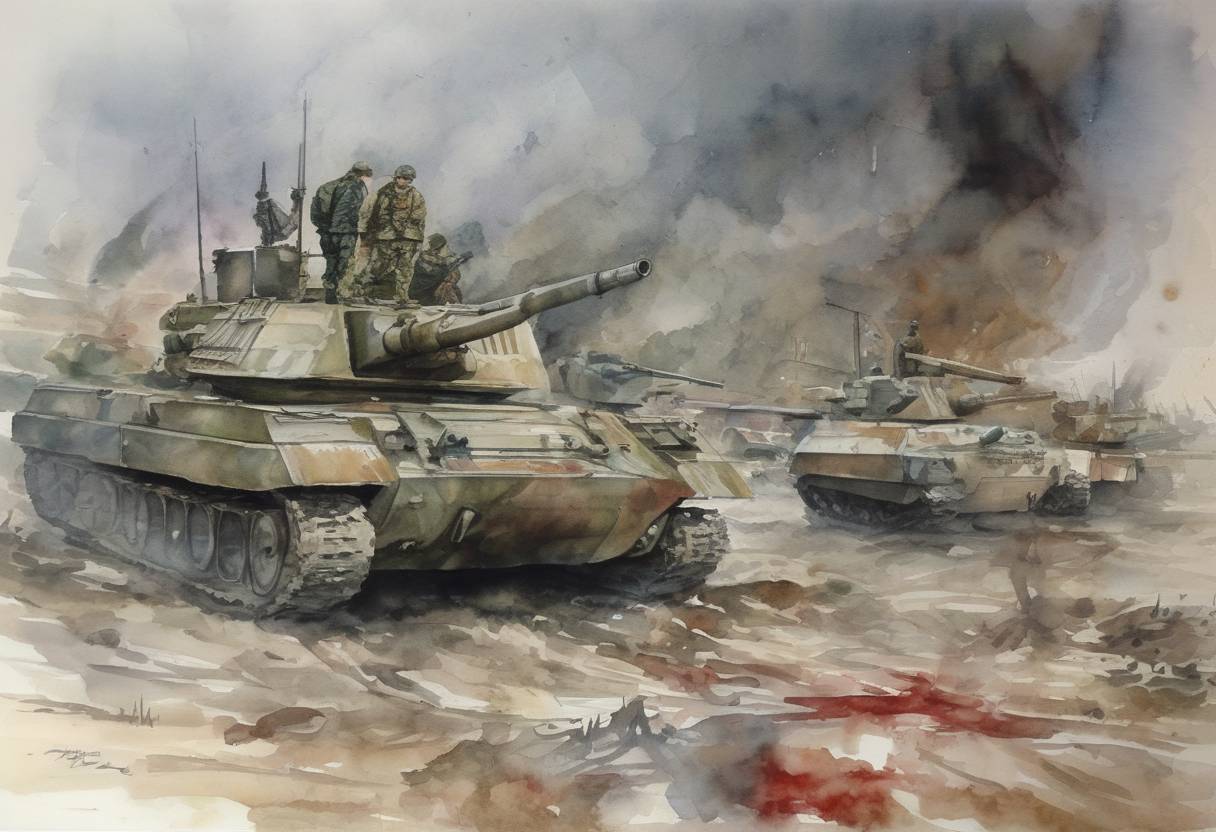
The First Chechen War: Russian Forces Enter Chechnya on December 11, 1994
Background
The First Chechen War was a significant conflict that erupted in the aftermath of the Soviet Union’s dissolution. The Chechen Republic of Ichkeria, located in the North Caucasus, declared independence from Russia in 1991, following the collapse of the Soviet Union. However, the Russian Federation, under President Boris Yeltsin, refused to recognize Chechen independence, viewing it as a threat to the territorial integrity of the Russian state and fearing a domino effect of secessionist movements within its borders.
Key Events Leading Up to the Conflict
- 1991: Dzhokhar Dudayev, a former Soviet Air Force general, declared Chechen independence and became the president of the self-proclaimed Chechen Republic of Ichkeria.
- 1992-1994: Tensions escalated as Chechnya operated independently, refusing to sign the Russian Federation Treaty. The region experienced internal instability and was accused by Russia of harboring criminal activities.
- 1994: Russia attempted to influence Chechen politics through covert operations and support for opposition factions, but these efforts failed to unseat Dudayev.
The Invasion
On December 11, 1994, Russian forces officially entered Chechnya, marking the beginning of the First Chechen War. The Russian government anticipated a swift military campaign, expecting to quickly subdue the Chechen separatists and restore federal control over the region.
The Conflict
- Initial Assault: The Russian military faced unexpected resistance from Chechen fighters, who were well-acquainted with the mountainous terrain and employed guerrilla tactics.
- Battle of Grozny: One of the most brutal and pivotal battles occurred in Grozny, the Chechen capital. Russian forces encountered fierce urban warfare, resulting in significant casualties and destruction.
- Humanitarian Impact: The war caused immense suffering for civilians, with thousands killed and many more displaced. Reports of human rights abuses, including indiscriminate bombing and atrocities committed by both sides, emerged.
Aftermath and Consequences
- Stalemate and Ceasefire: By 1996, the conflict had reached a stalemate. The Khasavyurt Accord was signed in August 1996, leading to a ceasefire and the withdrawal of Russian troops.
- Political Ramifications: The war severely damaged President Yeltsin’s popularity and exposed weaknesses in the Russian military. It also set the stage for the Second Chechen War, which began in 1999.
- Chechen Independence: Although the war ended with a de facto Chechen independence, the issue remained unresolved, contributing to ongoing instability in the region.
Broader Historical Significance
The First Chechen War highlighted the challenges faced by post-Soviet Russia in maintaining its territorial integrity and dealing with ethnic and regional conflicts. It also underscored the complexities of military intervention in regions with strong nationalist sentiments and the potential for prolonged insurgencies.
The conflict had lasting implications for Russian domestic and foreign policy, influencing the country’s approach to internal dissent and its relations with neighboring regions.