Battle of Kleidion: July 29, 1014
1014 · Kleidion, Bulgaria
Byzantine Emperor Basil II emerges victorious against a Bulgarian revolt led by Gavril Radomir at the Battle of Kleidion.
July 16, 0997
The Battle of Spercheios takes place, where the Byzantine forces under General Nikephoros Ouranos defeat the Bulgarian army led by Tsar Samuel.
Spercheios River, Greece | Byzantine Empire
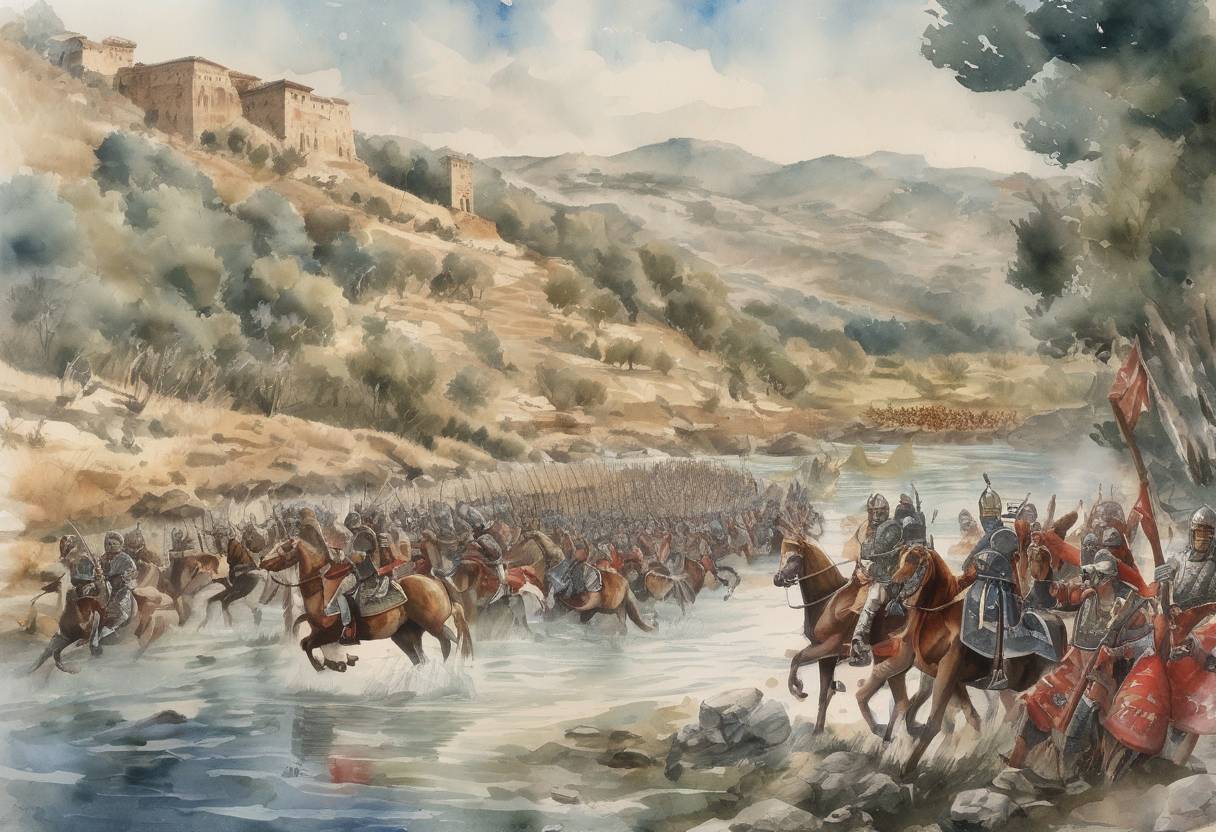
The Battle of Spercheios, fought on July 16, 997, was a significant military engagement between the Byzantine Empire and the Bulgarian Empire. This battle marked a crucial moment in the Byzantine-Bulgarian Wars, which were a series of conflicts that spanned several decades.
The Byzantine Empire, under the leadership of Emperor Basil II, was engaged in a prolonged struggle to reassert control over the Balkans, which had been under Bulgarian influence. The Bulgarian Empire, led by Tsar Samuel, had been expanding its territory and posed a significant threat to Byzantine interests in the region.
In the late 10th century, Tsar Samuel capitalized on internal Byzantine strife and external threats to expand his domain, capturing territories in the Balkans and even threatening Byzantine-held Greece. This expansion prompted a decisive response from the Byzantine Empire.
The Byzantine forces were commanded by General Nikephoros Ouranos, a trusted military leader under Emperor Basil II. Ouranos was tasked with halting the Bulgarian advance and securing the empire’s northern borders.
The battle took place near the Spercheios River, a strategic location that played a crucial role in the outcome. The Byzantine army, utilizing superior tactics and knowledge of the terrain, managed to surprise the Bulgarian forces. The Byzantines took advantage of a sudden rise in the river’s water level, which trapped the Bulgarian army and disrupted their formations.
The Byzantine victory at Spercheios was decisive. The Bulgarian army suffered heavy casualties, and Tsar Samuel narrowly escaped capture. This defeat significantly weakened Bulgarian military capabilities and marked a turning point in the Byzantine-Bulgarian Wars.
In the aftermath, the Byzantine Empire regained momentum in the region, allowing Basil II to continue his campaigns against the Bulgarians. This victory laid the groundwork for the eventual Byzantine conquest of Bulgaria in the early 11th century, culminating in the Battle of Kleidion in 1014 and the subsequent annexation of Bulgaria into the Byzantine Empire.
The Battle of Spercheios exemplifies the strategic acumen of Byzantine military leadership and the empire’s resilience in the face of external threats. It also highlights the shifting power dynamics in the Balkans during this period, as the Byzantine Empire sought to reassert its dominance over the region.
This battle is a testament to the enduring conflict between the Byzantine and Bulgarian empires, reflecting the broader geopolitical struggles of medieval Eastern Europe.
Source: en.wikipedia.org