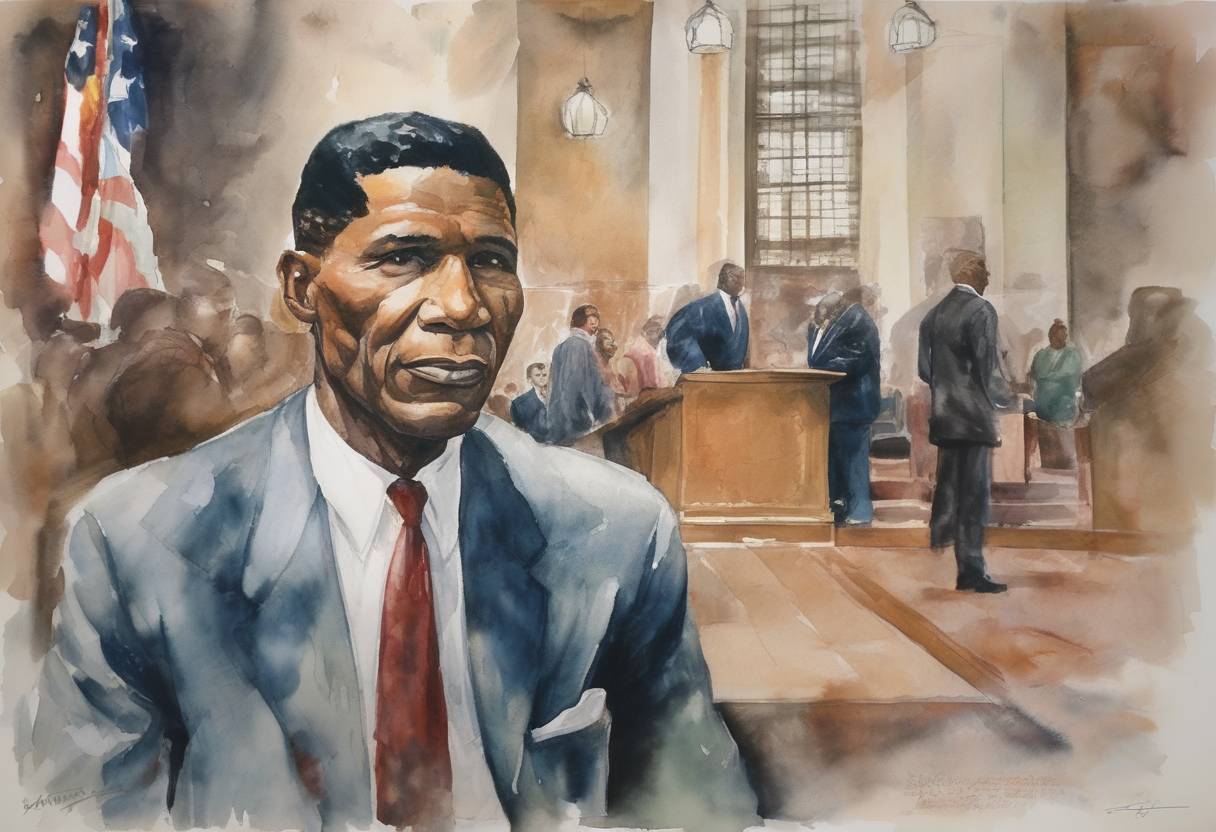
Conviction of Byron De La Beckwith for the Murder of Medgar Evers
On February 5, 1994, Byron De La Beckwith was convicted for the murder of Medgar Evers, a prominent civil rights leader, over 30 years after the crime was committed. This conviction marked a significant moment in the history of the American civil rights movement and the ongoing struggle for justice and equality.
Background
- Medgar Evers: Evers was a key figure in the civil rights movement, serving as the first field secretary for the NAACP in Mississippi. He was instrumental in organizing voter registration efforts and challenging segregation laws.
- The Murder: On June 12, 1963, Evers was assassinated outside his home in Jackson, Mississippi. He was shot in the back by a sniper’s bullet as he returned home from a meeting.
Initial Trials
- Early Trials: Byron De La Beckwith, a known white supremacist and member of the Ku Klux Klan, was arrested and tried twice in 1964 for Evers’ murder. Both trials ended in hung juries, with all-white juries unable to reach a verdict, reflecting the racial tensions and biases of the time.
The 1994 Conviction
- Reopening the Case: The case was reopened in the late 1980s due to new evidence and renewed interest in civil rights-era cold cases. Key to the reopening was the discovery of new witnesses and the persistence of Evers’ widow, Myrlie Evers-Williams, who tirelessly campaigned for justice.
- Trial and Verdict: In 1994, Beckwith was tried once more. This time, the jury was racially mixed, and the prosecution presented new evidence, including testimony that Beckwith had bragged about the murder. On February 5, 1994, Beckwith was found guilty of first-degree murder and sentenced to life in prison.
Significance
- Justice Delayed: The conviction was seen as a long-overdue justice for the Evers family and a symbolic victory for the civil rights movement. It highlighted the systemic racism and legal challenges faced by African Americans in the pursuit of justice.
- Legacy: The case underscored the importance of revisiting unsolved civil rights cases and set a precedent for future prosecutions. It also served as a reminder of the enduring impact of the civil rights movement and the ongoing fight against racial injustice.
Byron De La Beckwith’s conviction was a pivotal moment in American history, demonstrating the possibility of achieving justice despite decades of delay and the resilience of those who continue to fight for civil rights.