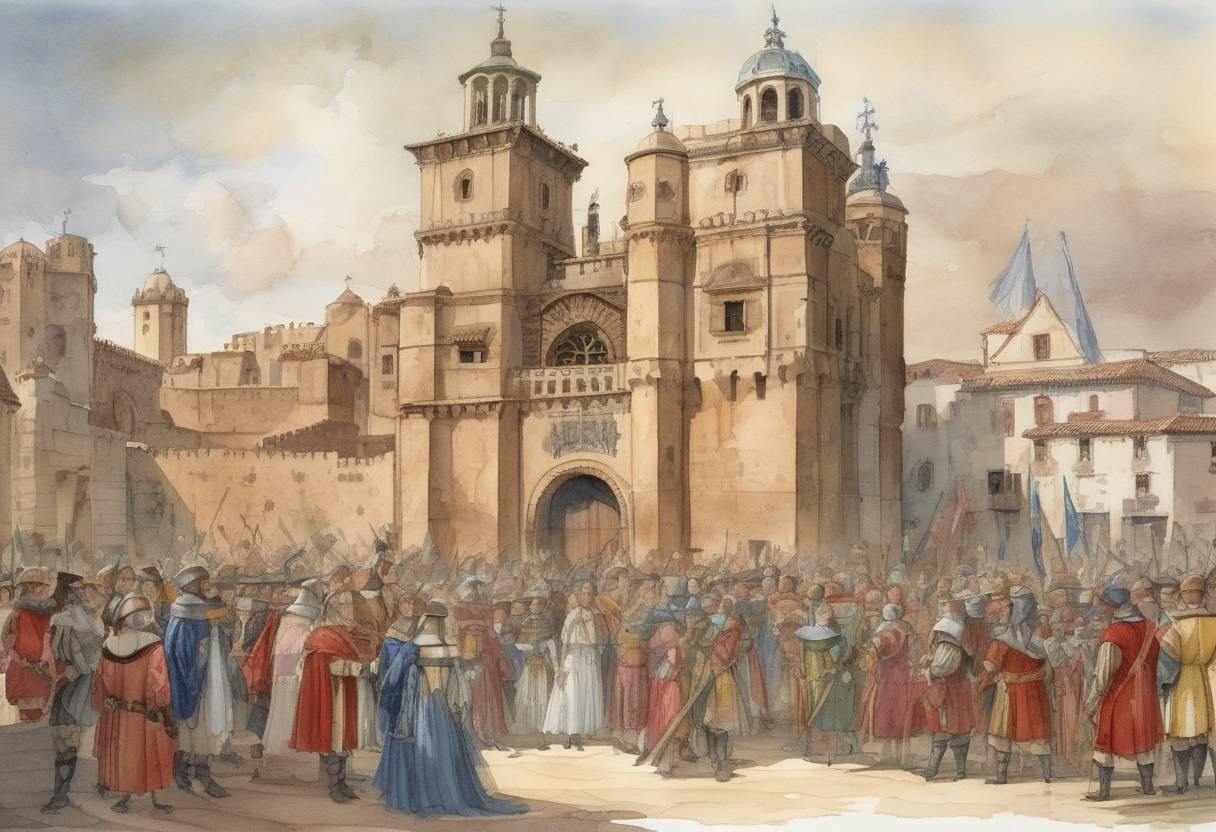
The Capitulations of Santa Fe: April 17, 1492
On April 17, 1492, a pivotal moment in world history occurred with the signing of the Capitulations of Santa Fe. This agreement was made between the Catholic Monarchs of Spain, King Ferdinand II of Aragon and Queen Isabella I of Castile, and the Genoese navigator Christopher Columbus. The document granted Columbus the authority and resources to embark on a voyage to discover a westward maritime route to Asia.
Context and Background
The late 15th century was a period marked by European exploration and expansion. The fall of Constantinople in 1453 had disrupted traditional land routes to Asia, prompting European powers to seek alternative paths for trade, particularly for spices and other valuable goods. Columbus, driven by the idea that the Earth was round and that Asia could be reached by sailing west, sought patronage for his ambitious plan.
After being rejected by several European monarchs, Columbus turned to the Spanish crown. The timing was fortuitous; in January 1492, the Reconquista concluded with the capture of Granada, freeing up resources and attention for new ventures. The Spanish monarchs, eager to compete with Portugal’s maritime dominance, saw potential in Columbus’s proposal.
Key Provisions of the Capitulations
The Capitulations of Santa Fe outlined several key provisions that would define Columbus’s expedition:
Title and Authority: Columbus was granted the titles of “Admiral of the Ocean Sea,” “Viceroy,” and “Governor” of any lands he might discover. These titles were hereditary, ensuring his family’s future status and influence.
Financial Arrangements: Columbus was promised a tenth of all riches obtained from the voyage, including gold, silver, and spices. He was also entitled to a portion of the profits from any trade conducted with the newly discovered lands.
Judicial Powers: Columbus was given the authority to adjudicate disputes and administer justice in the territories he discovered.
Support and Resources: The Spanish crown agreed to provide ships and crew for the expedition, demonstrating their commitment to the venture.
Significance and Consequences
The Capitulations of Santa Fe were instrumental in launching Columbus’s first voyage, which ultimately led to the European discovery of the Americas. Although Columbus did not reach Asia as intended, his voyages opened the door to the widespread exploration and eventual colonization of the New World.
The agreement marked the beginning of Spain’s vast overseas empire and had profound implications for global history. It initiated a period of exploration that reshaped the world’s economic, cultural, and political landscapes, leading to the Columbian Exchange and significant interactions between the Old and New Worlds.
In summary, the Capitulations of Santa Fe were a foundational document in the Age of Exploration, setting the stage for a new era of global connectivity and transformation.